
Influence Marketing Detailed Documentation
The Influencer Marketing System is a comprehensive platform designed to connect brands with influencers for effective marketing campaigns
Introduction
The Influence Marketing Add-On is a platform that connects brands with influencers and helps manage influencer marketing activities efficiently. It allows administrators to oversee influencers, brands, campaigns, transactions, and website content from a centralized dashboard. Influencers can register, apply for campaigns, track earnings, and request withdrawals, while brands can create campaigns, deposit funds, and collaborate with influencers. The system also includes customizable frontend sections and analytics tools to support smooth campaign management and platform operation.
How to Install the Add-On?
To Set Up the Influence Marketing Add-On, you can follow this link: Setup Add-On
How to Use the Influence Marketing Add-On?
Influencer Marketing Dashboard
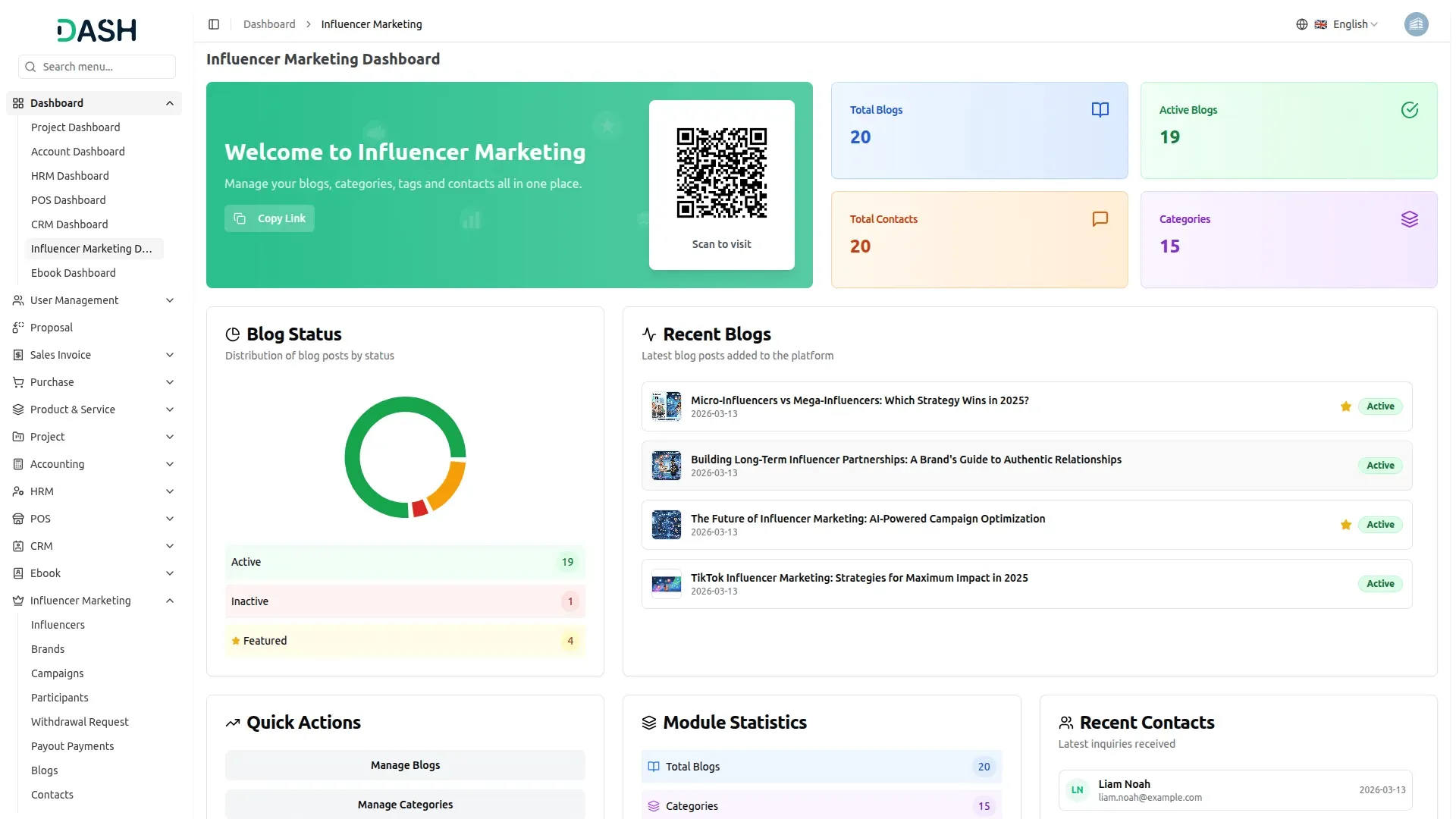
- The dashboard provides a complete overview of your influencer marketing platform’s performance through various visual elements and quick access features.
- At the top, you will find a QR code that visitors can scan to directly access the platform’s website, along with a Copy Link button to easily share the website link with others.
- The dashboard displays important summary cards showing Total Blogs, Active Blogs, Total Contacts, and Categories, giving you instant insights into your platform’s key metrics at a glance.
- The Blog Status panel on the left displays a donut chart showing the distribution of blog posts by status, broken down into Active, Inactive, and Featured counts, allowing you to quickly understand the overall health and visibility of your content library.
- The Recent Blogs panel displays the latest blog posts added to the platform, with each entry showing the blog thumbnail, title, publication date, featured status marked with a star icon, and current active status, giving you a quick view of your most recently published content.
- The Quick Actions panel provides shortcut buttons to directly navigate to Manage Blogs, Manage Categories, Manage Tags, and View Contacts, allowing administrators to reach the most frequently used sections of the platform in a single click.
- The Module Statistics panel gives a consolidated numerical summary of all key data points across the platform, including Total Blogs, Categories, Tags, Contacts, Featured Blogs, and This Month’s Contacts, providing a complete snapshot of platform activity in one place.
- The Recent Contacts panel on the right displays the latest enquiries received through the website’s Contact Us form, with each entry showing the contact’s initials, avatar, full name, email address, and submission date, allowing administrators to stay on top of incoming messages without leaving the dashboard.
Theme Setup
Brand Setting
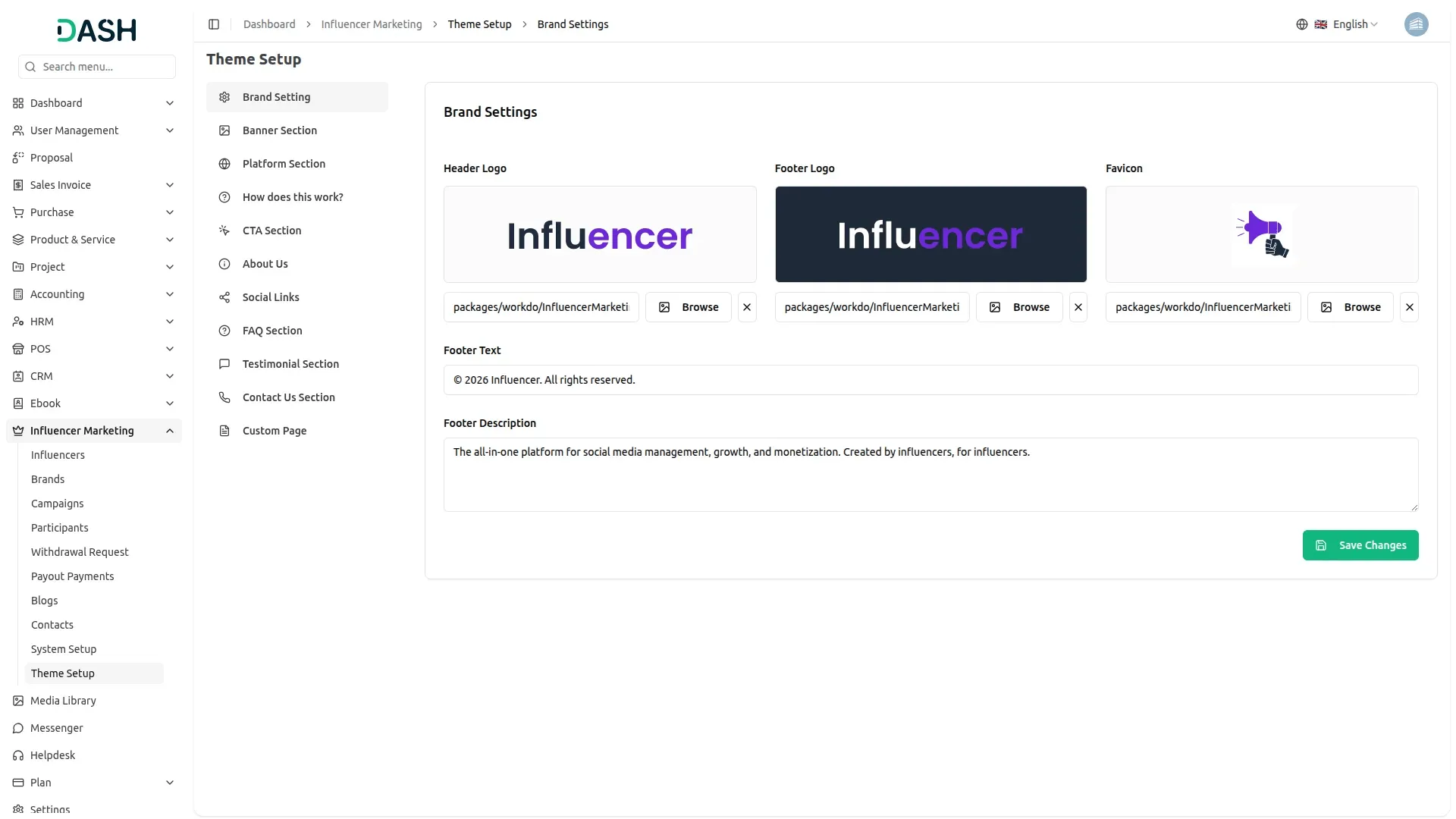
- In the Brand Setting section, you will find fields for Header Logo, Footer Logo, Favicon, Footer Text, and Footer Description. Upload your logo images using the Browse button, enter the footer text and description, and click Save Changes.
- Once saved, the Header Logo will appear as a clickable brand link in the top navigation bar across all pages, the Footer Logo will display in the website footer area, the Favicon will appear as a small icon in the browser tab, and the Footer Text and Footer Description will consistently show at the bottom of every page, creating a complete branded experience throughout the website.
Banner Section
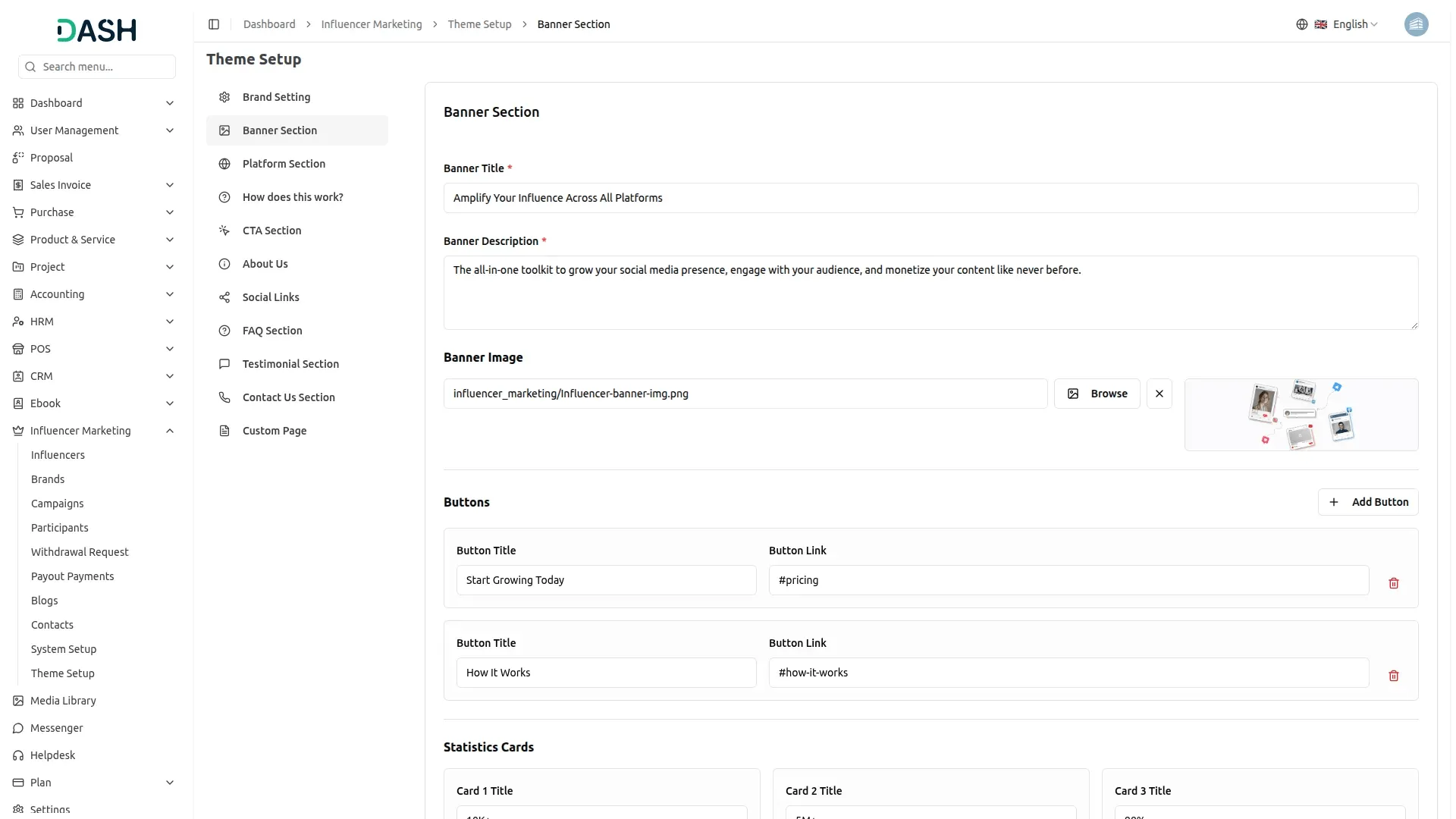
- In the Banner Section, you will find fields for Banner Title, Banner Description, Banner Image, Buttons, and Statistics Cards. Enter the banner title and description, upload the banner image using the Browse button, add buttons by entering the Button Title and Button Link, and fill in the Statistics Card titles and subtitles. Click Save Changes when done.
- Once saved, the Banner Title and Description will appear as the main headline and supporting text in the homepage hero section, the Banner Image will display as the visual alongside the text, the Buttons will appear as clickable call-to-action buttons beneath the description, and the Statistics Cards will show as highlight numbers below the hero area, giving visitors an immediate snapshot of platform achievements.
Platform Section
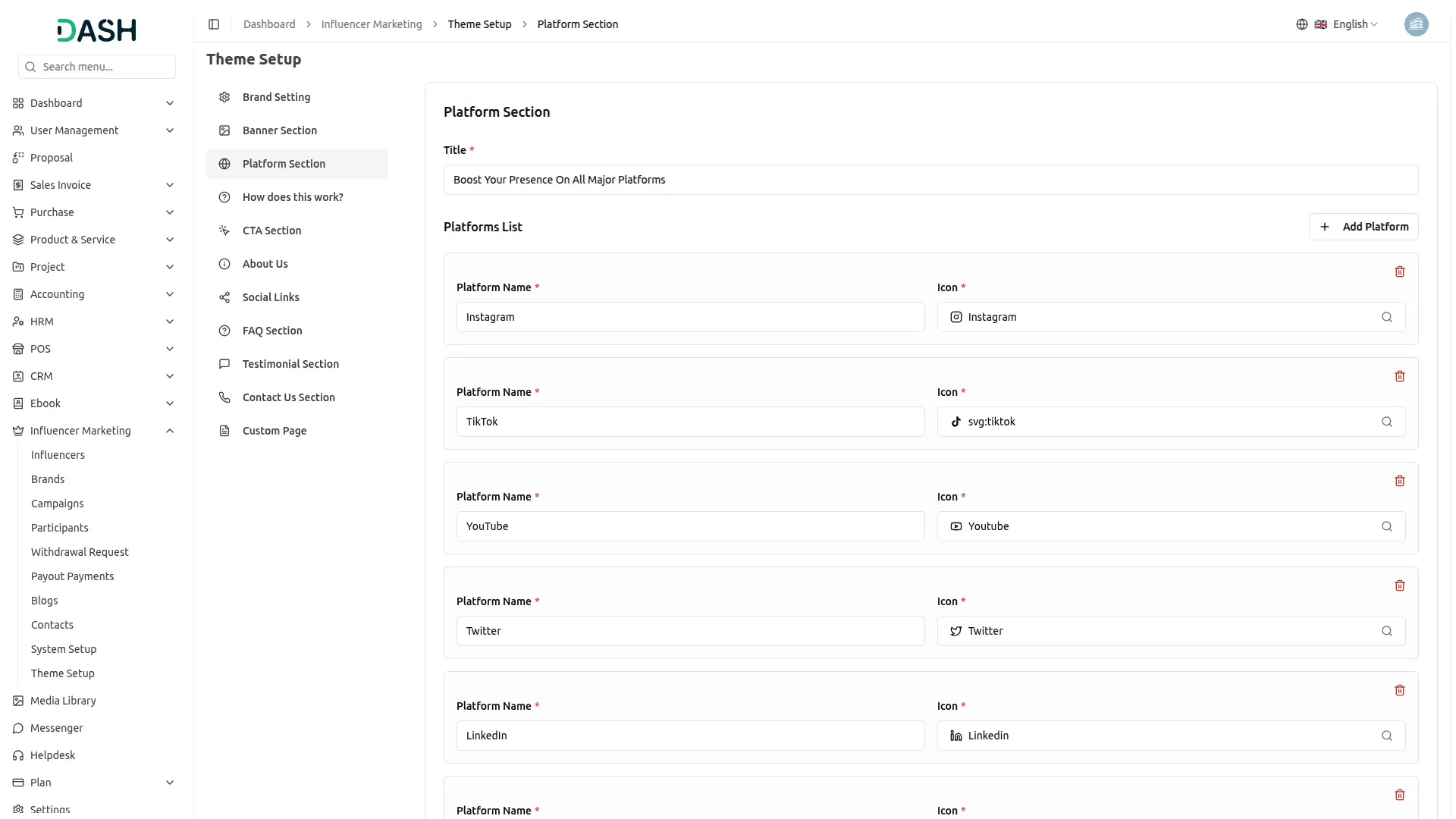
- In the Platform Section, you will find a Title field and a Platforms List. Enter the section title, then add each platform by entering the Platform Name and selecting the corresponding Icon. Use the Add Platform button to include additional platforms and click Save Changes when done.
- Once saved, the section title will appear as the heading of the platform area on the homepage, and each platform you added will display with its name and icon below the hero section, showing visitors all the major social media platforms your service supports.
How Does It Work?
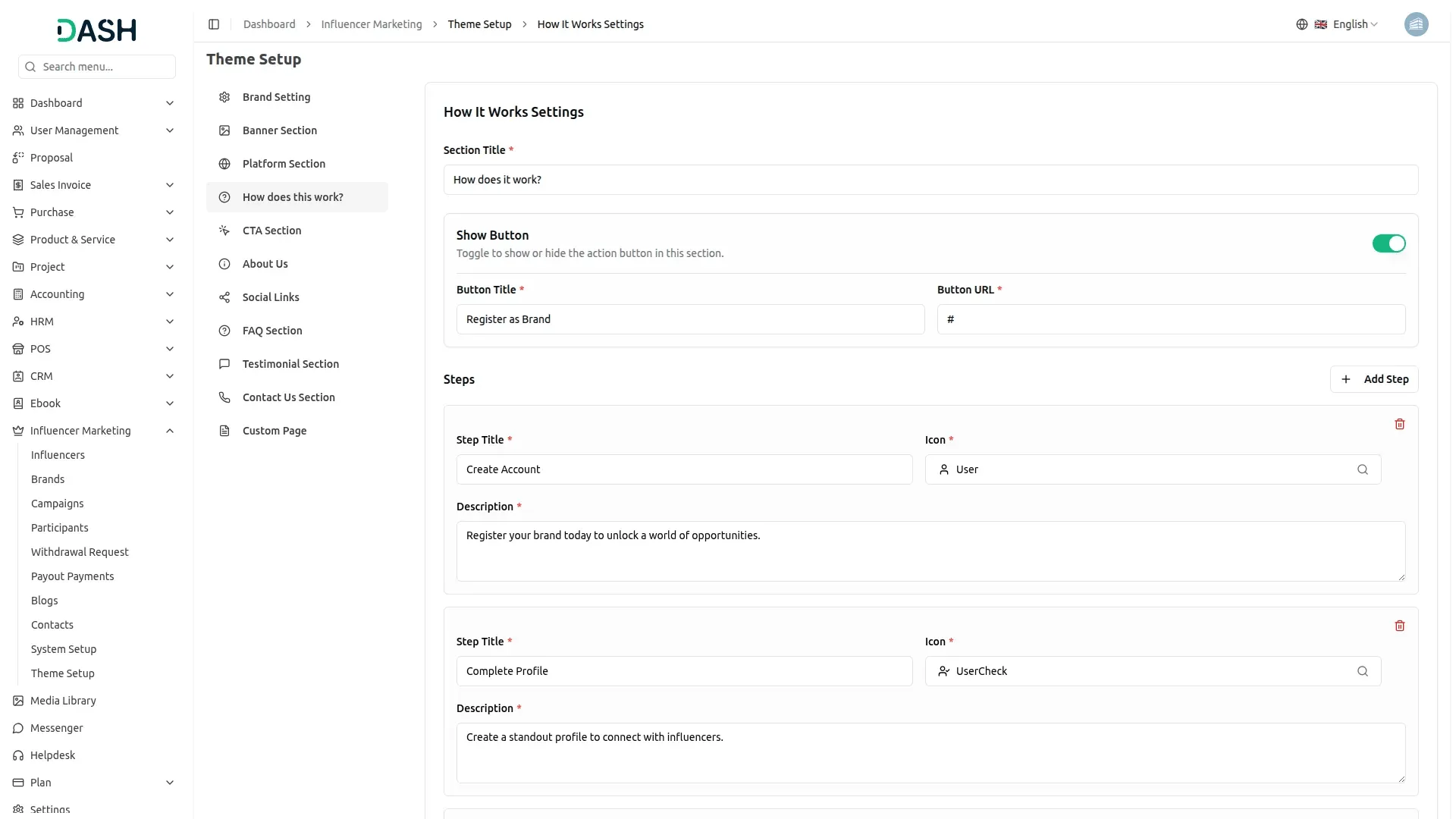
- In the How Does It Work? Settings, you will find fields for Section Title, a Show Button toggle, Button Title, Button URL, and Steps. Enter the section title, toggle the button on or off as needed, fill in the button title and URL, then add each step by entering the Step Title, selecting an Icon, and writing a Description. Use the Add Step button to include additional steps and click Save Changes when done.
- Once saved, the Section Title will appear as the heading of this area on the homepage, each step will display as a numbered process card with its icon, title, and description, and the action button will appear below the steps if the toggle is enabled, guiding visitors through the platform’s onboarding process in a clear and visual flow.
CTA Section
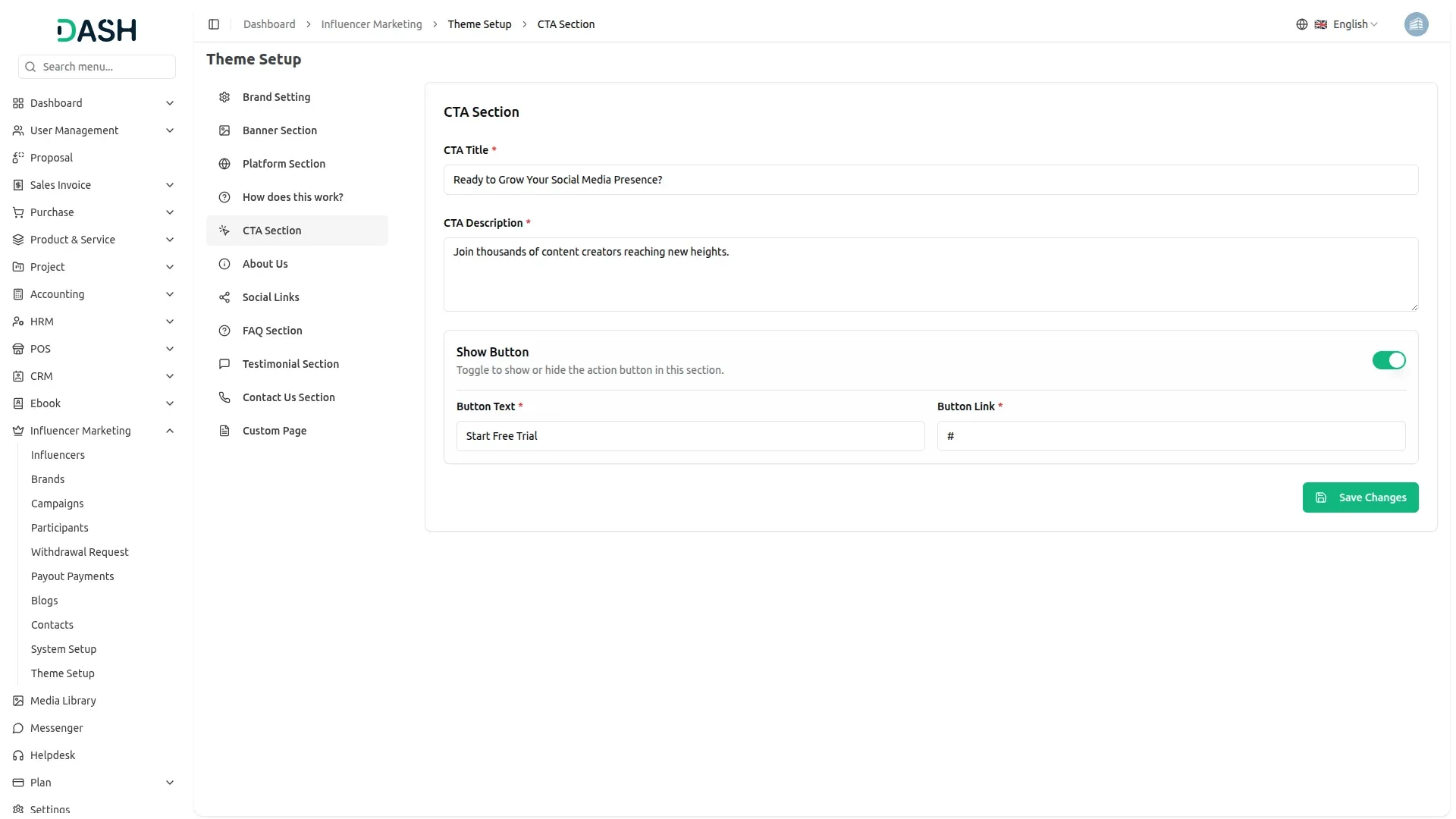
- In the CTA Section, you will find fields for CTA Title, CTA Description, a Show Button toggle, Button Text, and Button Link. Enter the title and description for your call-to-action, toggle the button on or off, fill in the button text and its destination link, and click Save Changes.
- Once saved, the CTA Title and Description will appear inside the full-width purple banner section displayed across multiple pages of the website, and the action button will show within the banner if the toggle is enabled, prompting visitors to take the next step, such as starting a free trial or signing up.
About Us
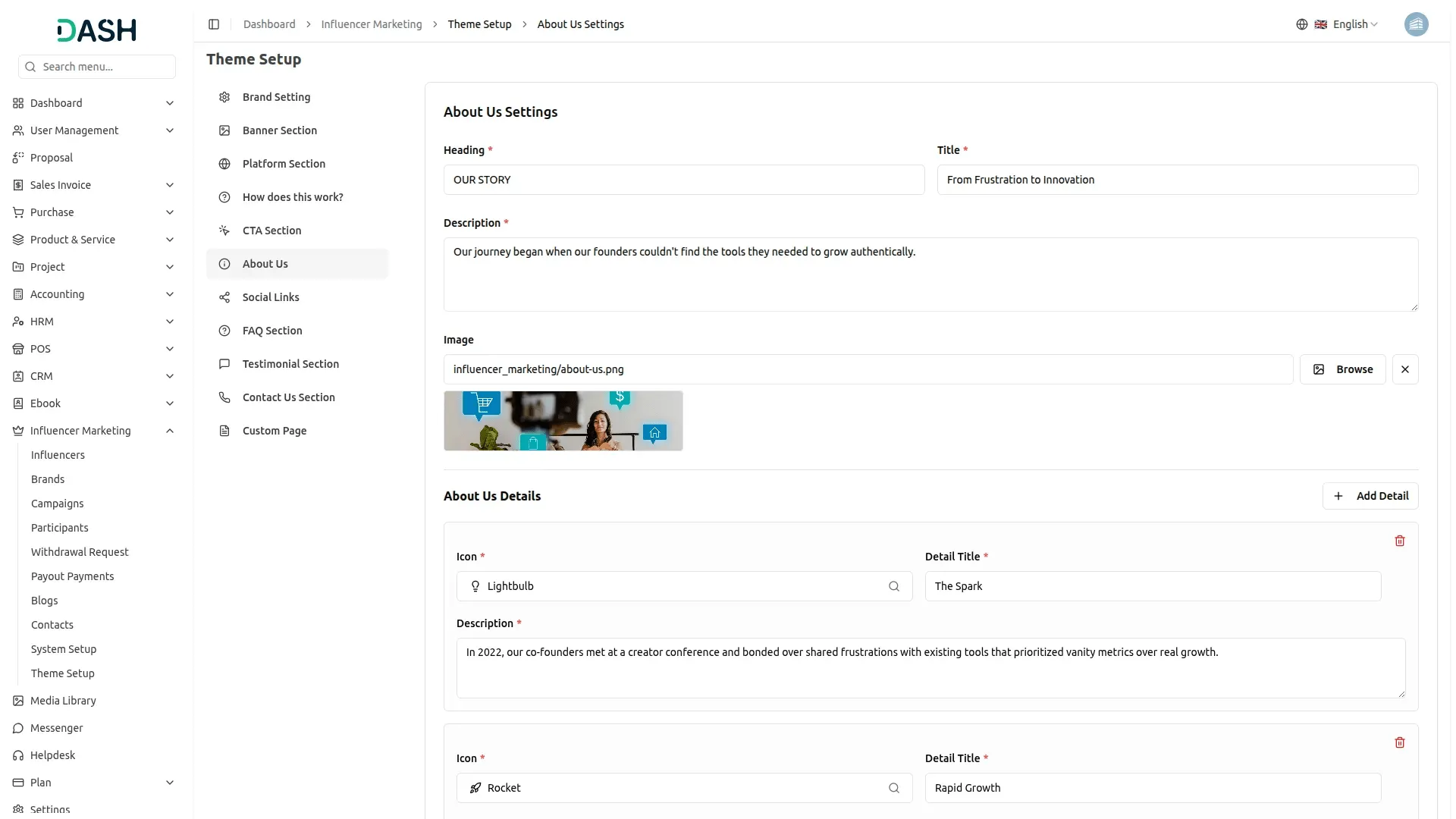
- In the About Us Settings, you will find fields for Heading, Title, Description, and an Image upload. You can also add About Us Details by entering an Icon, Detail Title, and Description for each point. Below that, the Key Milestone Settings include a Heading, Title, and Description, along with individual Milestones where you enter the Year, Title, and Description for each. Click Save Changes after completing each section.
- Once saved, the About Us Heading, Title, Description, and Image will appear in the story section of the About page, each About Us Detail will display as an icon-based bullet point beside the image, and the Key Milestones section will render as a vertical timeline below, showing visitors your company’s journey and growth year by year.
Social Links
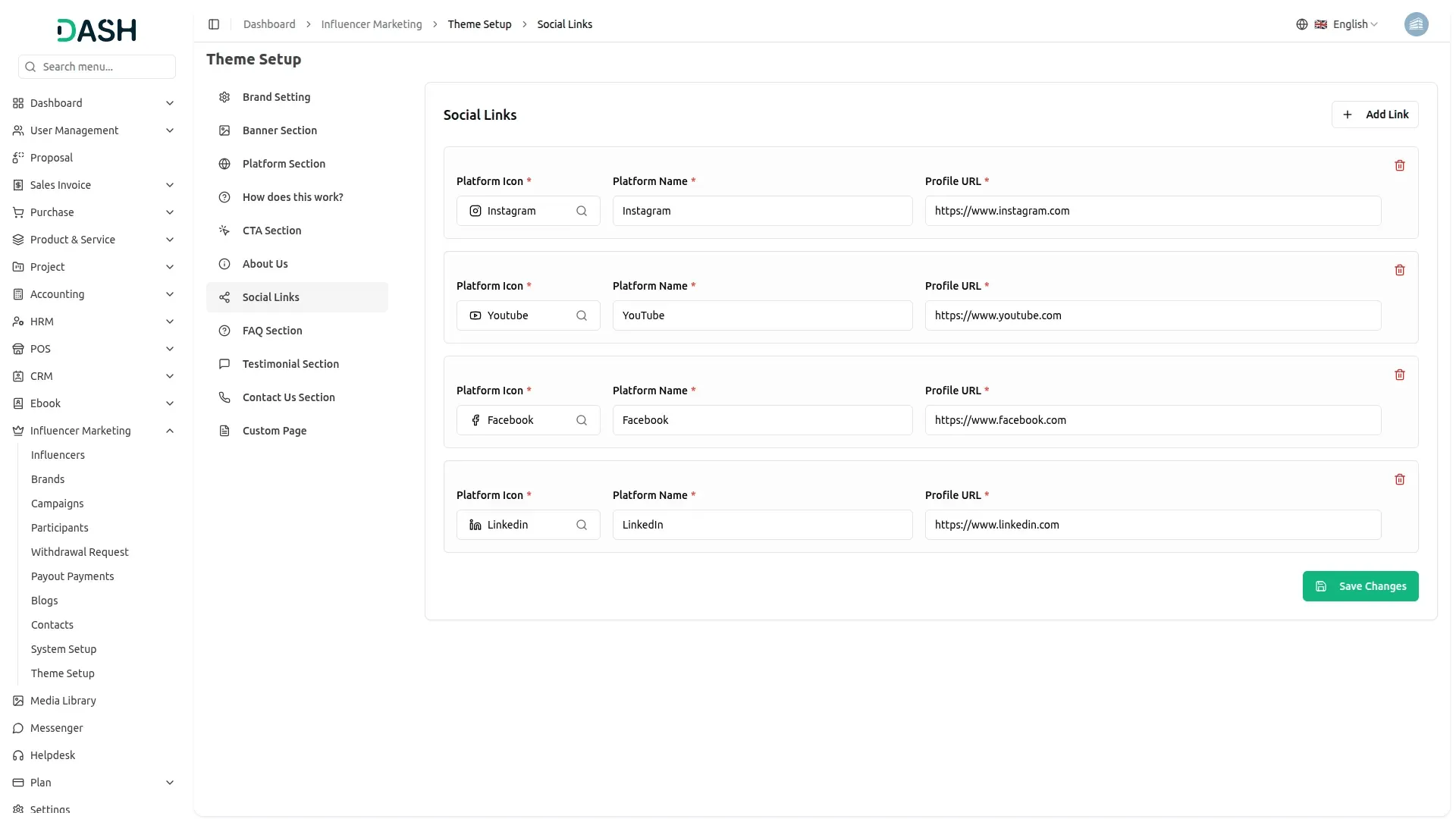
- In the Social Links section, you will find fields for Platform Icon, Platform Name, and Profile URL for each social channel. Select the platform icon, enter the platform name, and paste the full profile URL. Use the Add Link button to include additional platforms and click Save Changes when done.
- Once saved, each social platform you added will appear as a clickable icon in the website footer across all pages, allowing visitors to easily navigate to your official social media profiles directly from the website.
FAQ Section
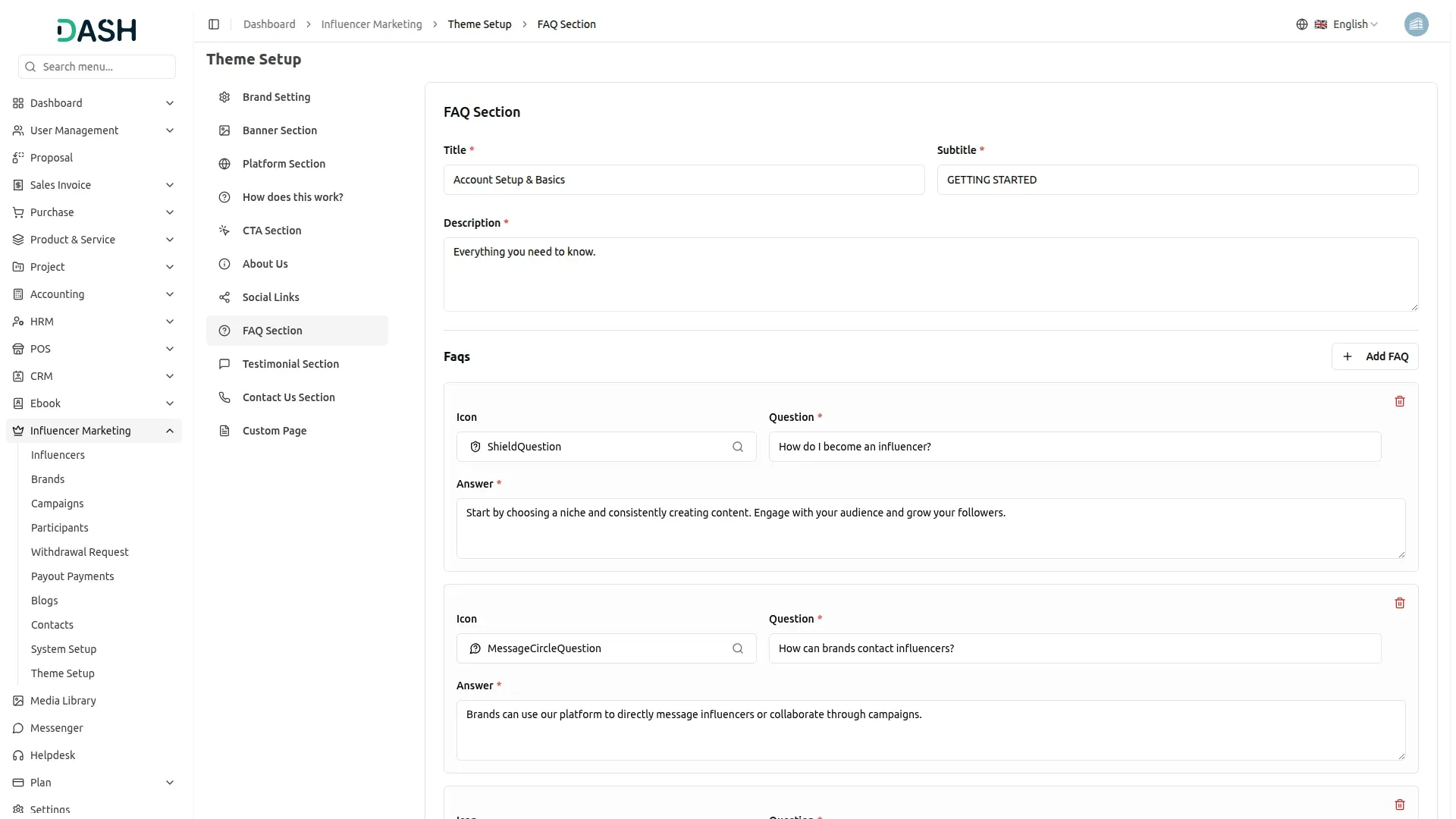
- In the FAQ Section, you will find fields for Title, Subtitle, and Description at the top. Below that, in the FAQs area, add each question by selecting an Icon, entering the Question, and writing the Answer. Use the Add FAQ button to include more questions and click Save Changes when done.
- Once saved, the Title, Subtitle, and Description will appear as the heading area of the FAQ page, and each question and answer pair will display as an expandable accordion item, allowing visitors to quickly find answers to common questions about the platform.
Testimonial Section
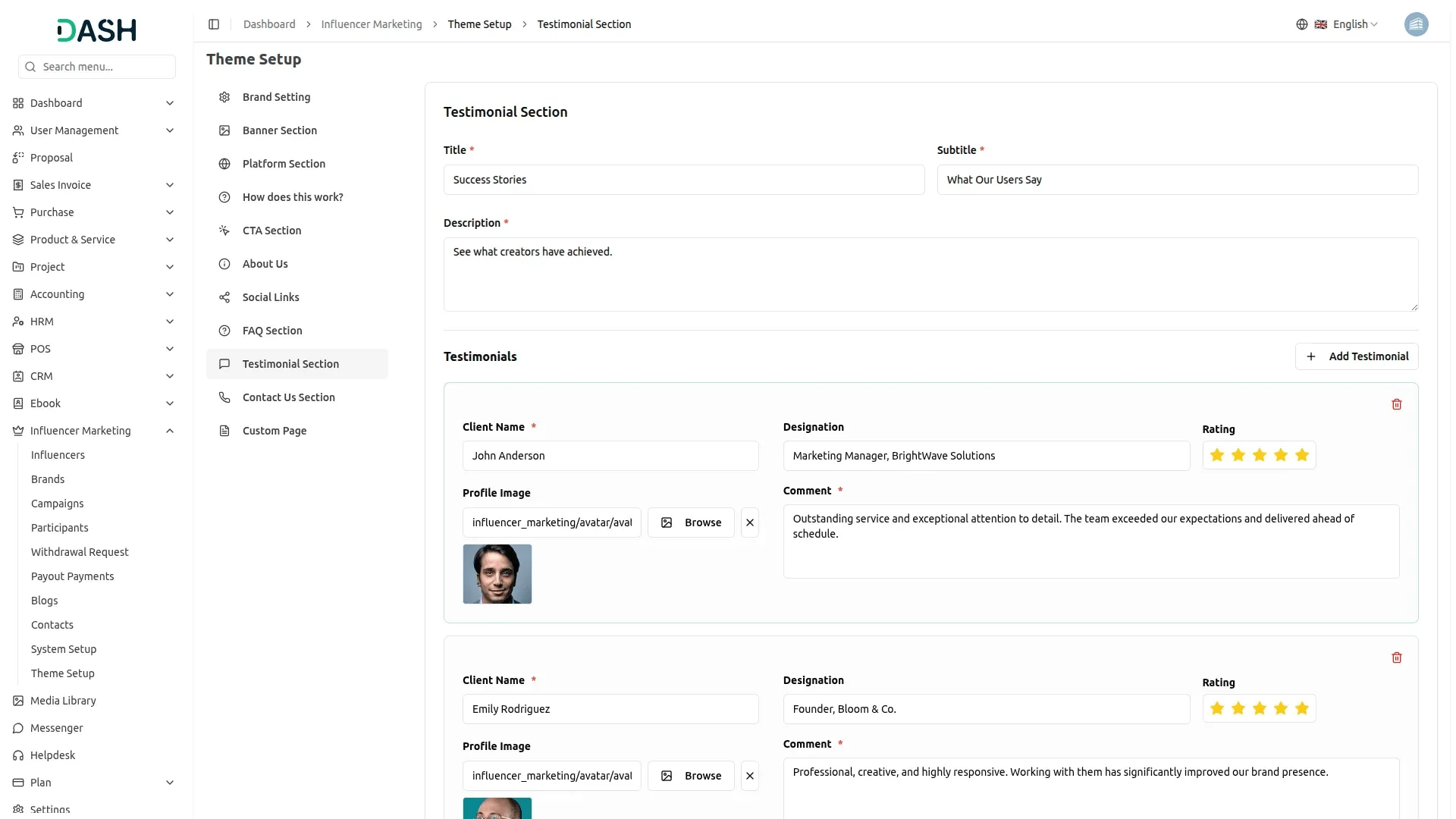
- In the Testimonial Section, you will find fields for Title, Subtitle, and Description at the top. In the Testimonials area, add each testimonial by entering the Client Name, Designation, selecting a Star Rating, uploading a Profile Image, and writing the Comment. Use the Add Testimonial button to include more entries and click Save Changes when done.
- Once saved, the Title, Subtitle, and Description will appear as the heading of the Success Stories section on the homepage, and each testimonial will display as a sliding card showing the client’s photo, name, designation, star rating, and comment, building trust and social proof for new visitors.
Contact Us Section
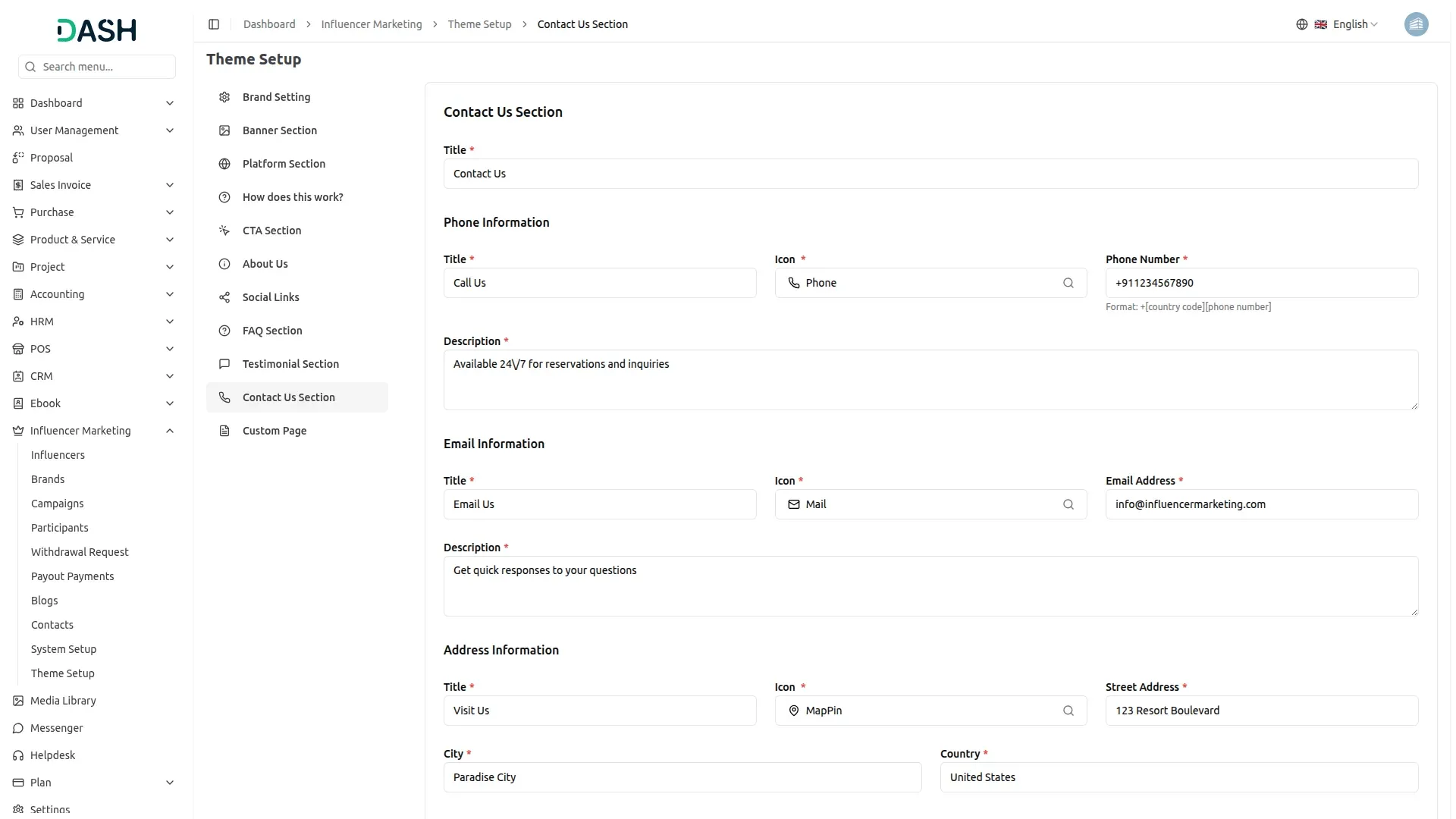
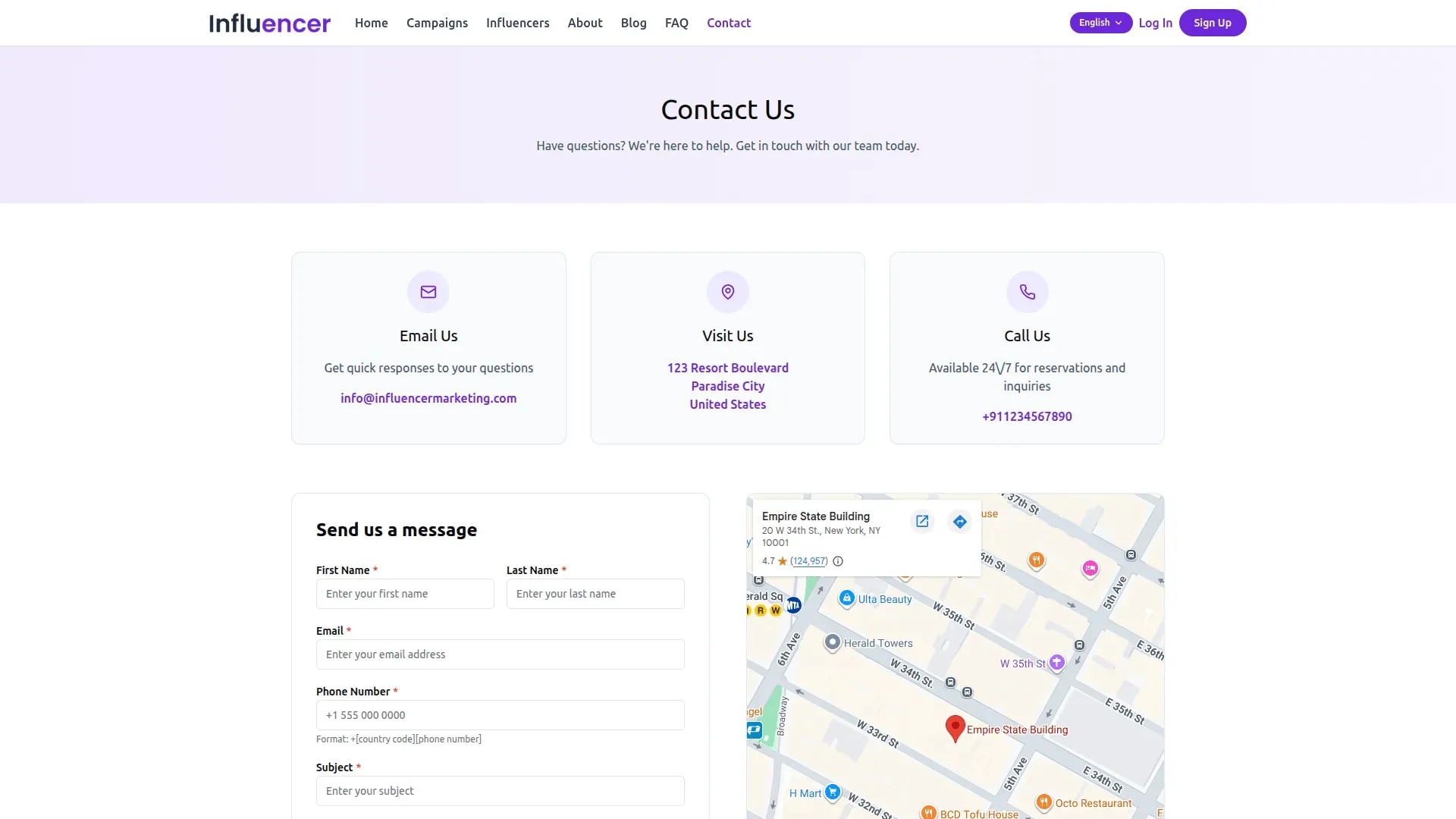
- In the Contact Us Section, you will find a Title field along with three information blocks. In Phone Information, enter the title, select a phone icon, enter the phone number, and add a description. In Email Information, enter the title, select a mail icon, enter the email address, and add a description. In Address Information, enter the title, select a map icon, fill in the street address, city, and country, and paste your Google Maps embed iframe code in the Map field. Click Save Changes when done.
- Once saved, the section title will appear as the page heading of the Contact page, and the phone, email, and address blocks will each display as individual contact cards. The Google Maps embed will render as an interactive map beside the contact form, giving visitors all the information they need to get in touch or find your location.
Custom Page
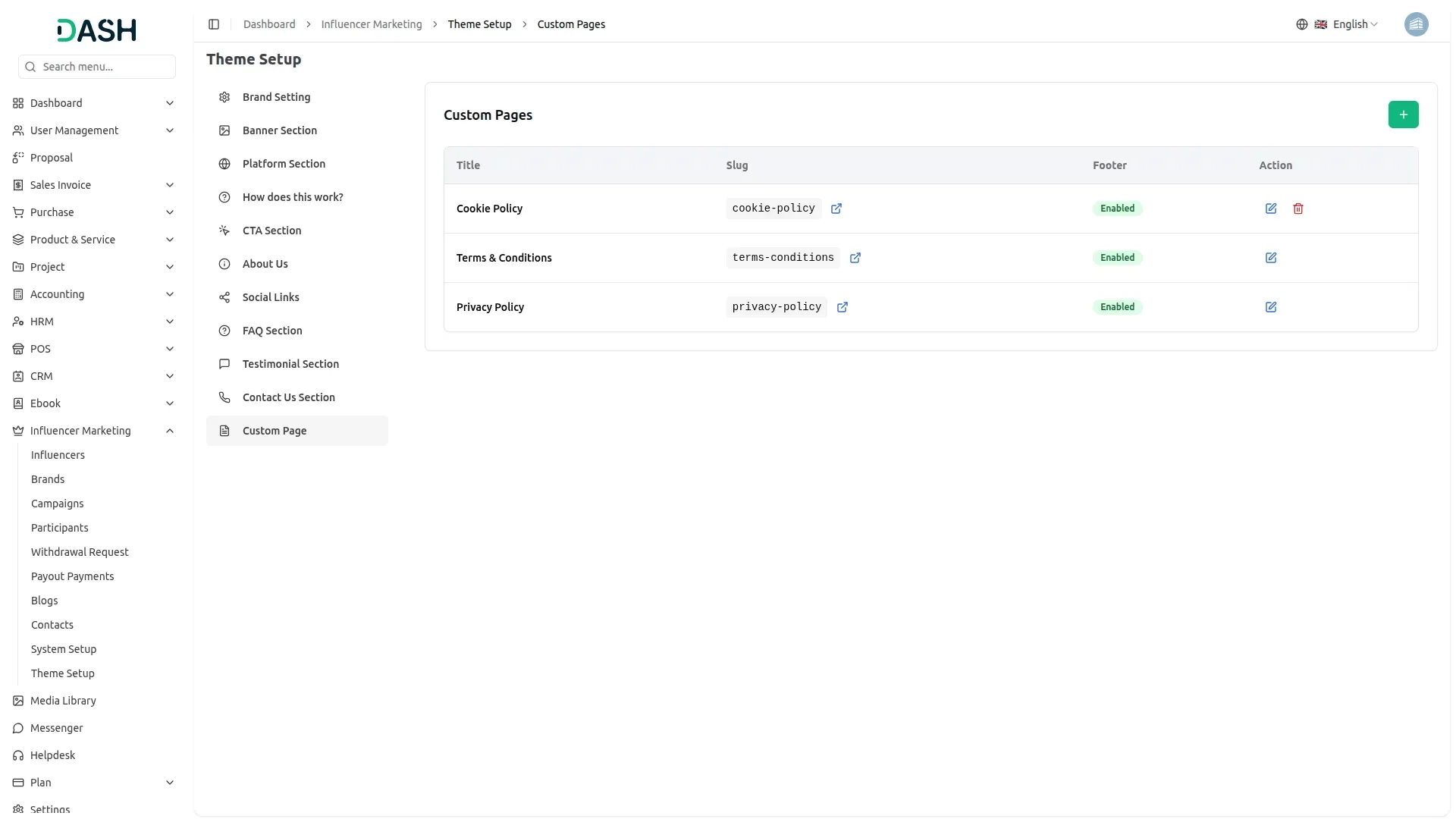
- To create a new custom page, click the “Create” button on the Custom Pages screen. Enter the page title, provide a URL-friendly slug using only lowercase letters and hyphens, add a short description, and write the full page content using the built-in rich text editor. Toggle the Enable Page Footer option on if you want this page to appear in the footer.
- In the list page, display the list of custom pages, including title, slug, footer, and action. In the action column, you can use the edit option to update the details or the delete option to remove them.
- Once a custom page is created, it will be accessible via its unique URL slug. If the footer option is enabled, it will automatically appear as a clickable link in the Support section of the website footer, allowing visitors to access important legal and policy pages such as Cookie Policy, Terms & Conditions, and Privacy Policy from anywhere on the website.
System Setup
- The System Setup section allows administrators to configure foundational data used across the platform. It currently includes Categories and Tags, both of which are referenced when creating and filtering influencer profiles and campaigns throughout the website
Categories
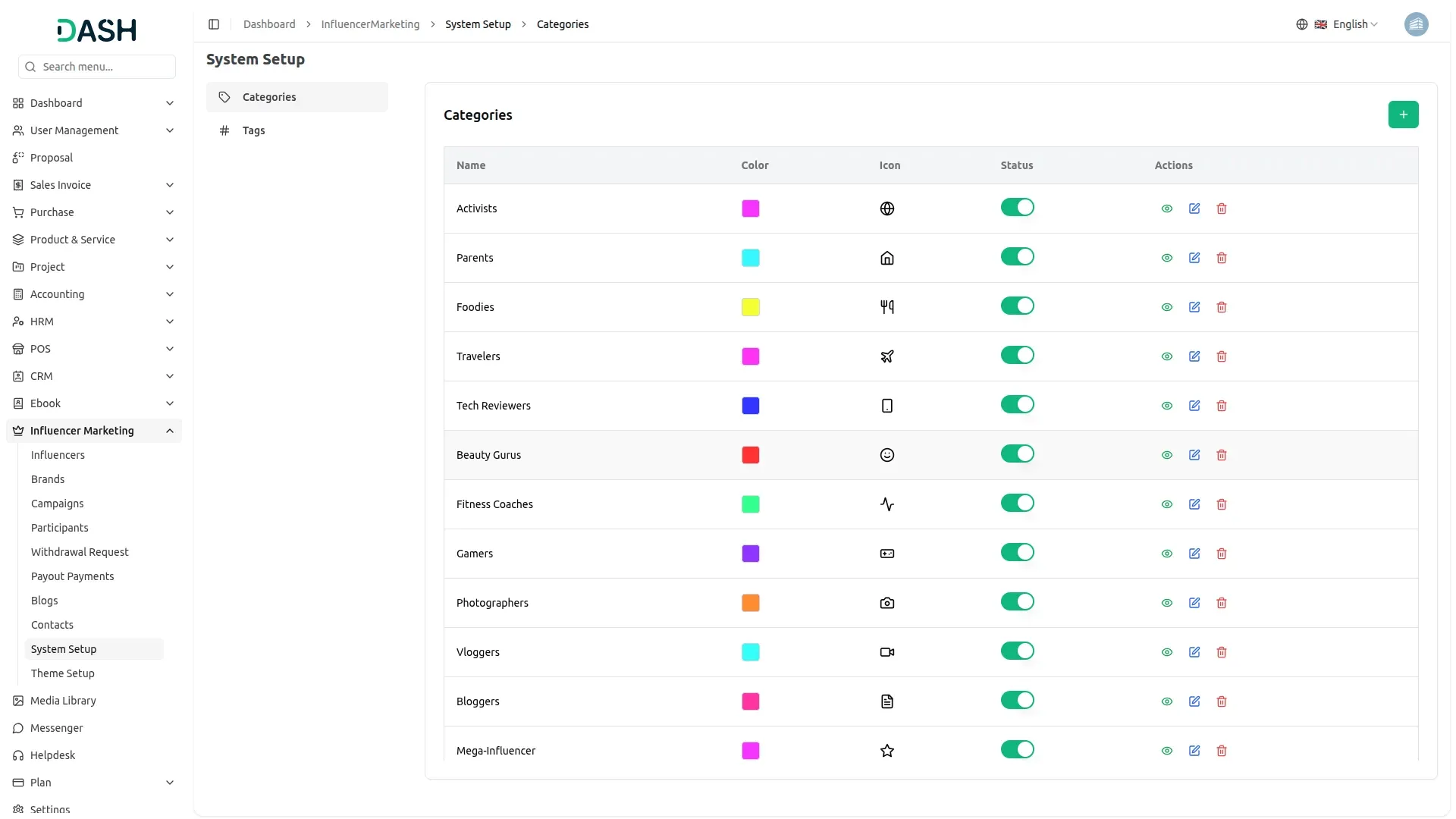
- To add a new category, click the “Create” button on the Categories page. In the form that opens, enter the Name of the category, select a Color to visually distinguish it, choose an Icon that represents the category type, and optionally add a Description to explain its purpose. Toggle the Status switch to enable or disable the category upon creation, then click Create to save it.
- The Categories list displays all configured categories in a table with columns for Name, Color, Icon, Status, and Actions. The Status toggle allows administrators to quickly activate or deactivate a category directly from the list without opening the edit form.
- Available Actions: use the Edit to update or modify existing data, and Delete to permanently remove the category from the system. Note that categories actively in use should be managed carefully, as changes may affect influencer profiles and campaigns that reference them.
- Once a category is active, it will appear as a selectable filter and a labeled badge across the Influencers page, Campaigns page, and the influencer category section on the homepage, helping visitors browse and discover content creators by niche.
Tags
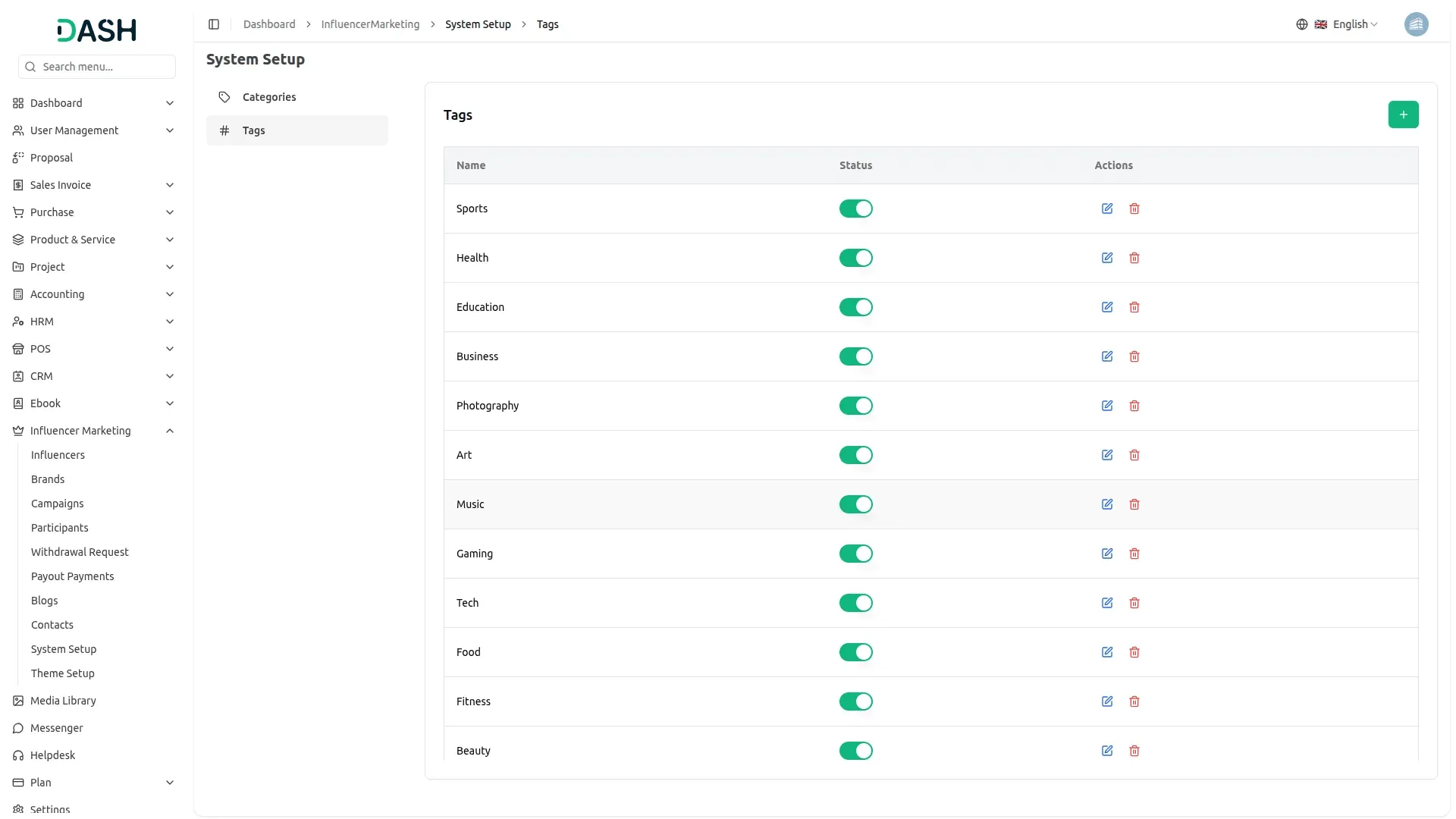
- To add a new tag, click the “Create” button on the Tags page. In the form that opens, enter the Name of the tag in the provided field. Toggle the Status switch to enable or disable the tag upon creation, then click Create to save it.
- The Tags list displays all configured tags in a table with columns for Name, Status, and Actions. The Status toggle allows administrators to quickly activate or deactivate a tag directly from the list without opening the edit form.
- Available Actions: use Edit to update or modify existing data, and Delete to permanently remove the tag from the system. Note that tags actively in use should be managed carefully, as changes may affect existing campaign and influencer records that reference them.
- Once a tag is active, it becomes available as a selectable option when creating or editing campaigns and influencer profiles, allowing brands and administrators to organize and filter content more effectively across the platform.
Manage Influencers
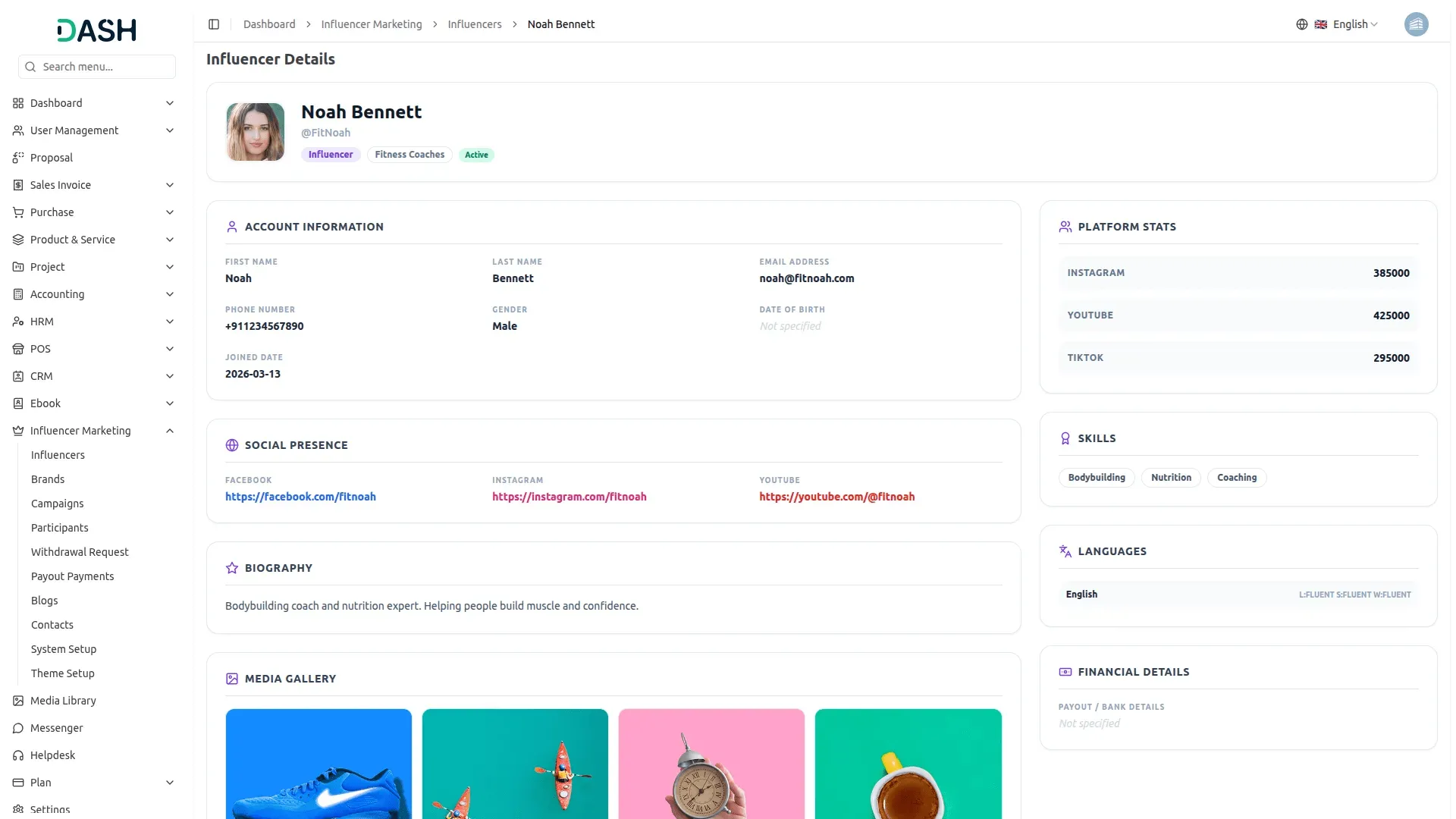
- Influencers register themselves by signing up through the frontend website. Once they complete their registration and set up their profile, their account automatically appears in the Manage Influencers list in the backend for the administrator to review and manage.
- The list displays a table with columns for Avatar, Name, Email, Phone, Category, Balance, Joined date, Status, and Actions. You can search for a specific influencer using the search bar and click Search to find results.
- Click the Filters button to filter by Category or Status from the respective dropdowns, then click Apply to filter the data or Clear to reset it. You can also switch between list and grid view using the view toggle buttons.
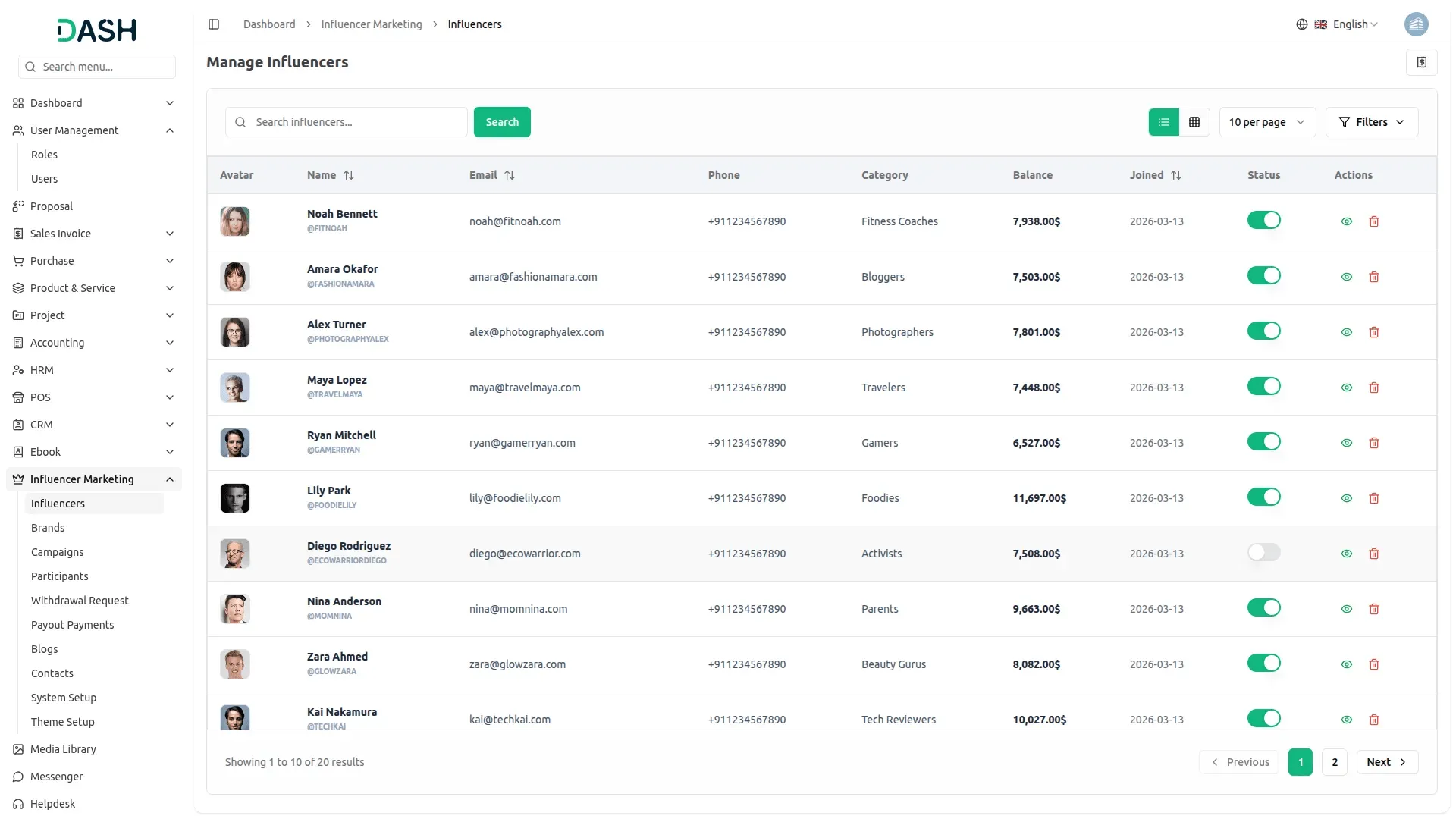
- In the Actions column, click the View to see the full influencer profile and details. Click Delete to permanently remove the influencer from the system. The Status toggle allows administrators to quickly activate or deactivate an influencer directly from the list without opening the edit form.
Influencer Transactions
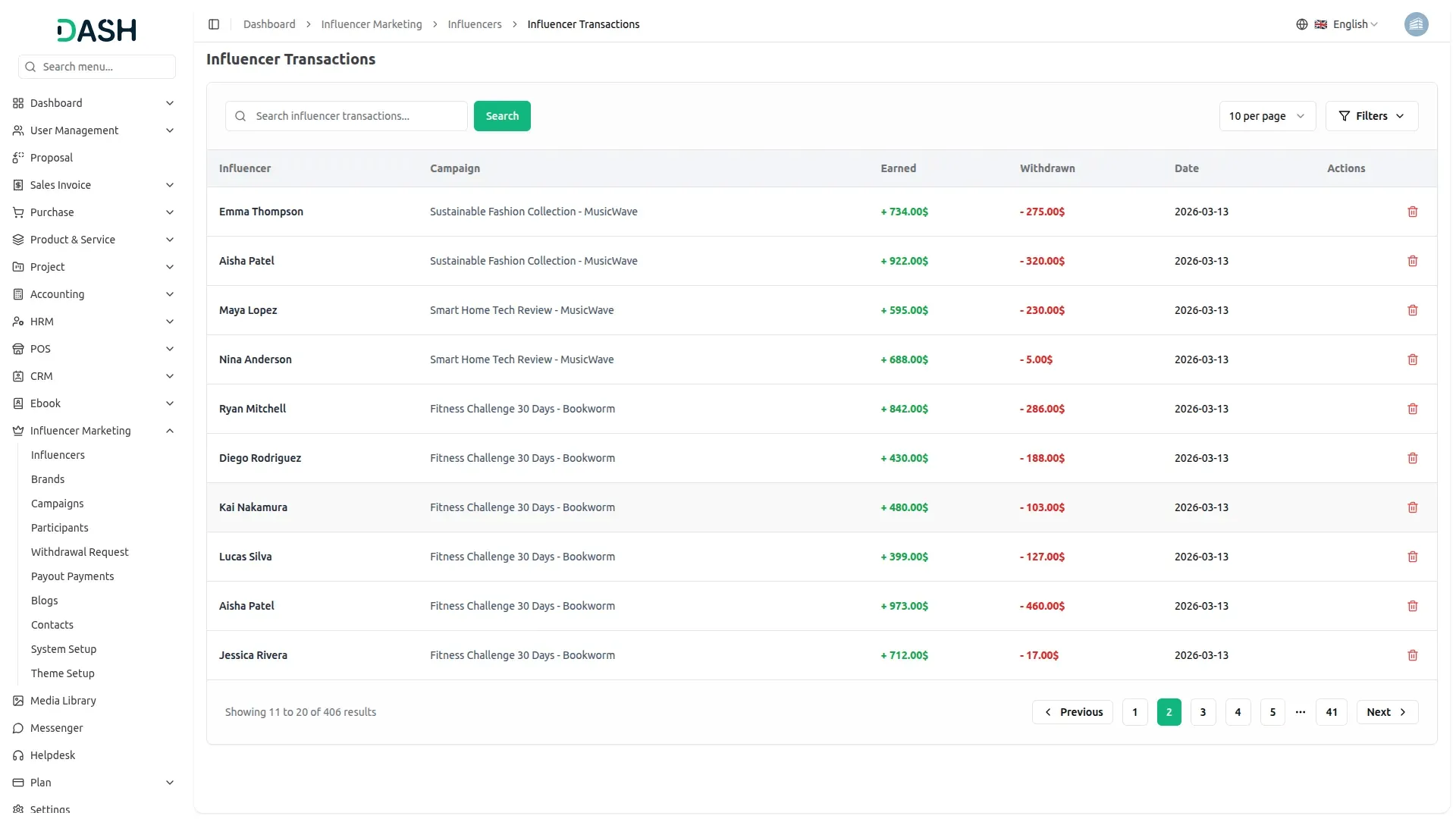
- The Influencer Transactions page provides administrators with a complete overview of all financial activity associated with influencers across the platform. The list displays a table with columns for Influencer, Campaign, Earned, Withdrawn, Status, Date, and Actions.
- You can search for a specific transaction using the search bar and click Search to find results. Click the Filters button to filter transactions by Influencer, Campaign, Type, or Date Range from the respective dropdowns and date picker, then click Apply to filter the data or Clear to reset it.
- In the Actions column, click Delete to permanently remove a transaction record from the system. Each transaction row clearly shows the amount earned in green and the amount withdrawn in red, giving administrators a quick visual summary of each influencer’s financial activity per campaign.
- Note: The Transactions page is accessible directly from the Manage Influencers screen via the Transactions button in the top right corner, allowing administrators to navigate between influencer management and their financial records seamlessly.
Manage Brands
- Brands register themselves by signing up through the frontend website. Once they complete their registration and set up their brand profile, their account automatically appears in the Manage Brands list in the backend for the administrator to review and manage.
- The list displays a table with columns for Brand Name, Contact Person, Email, Balance, Phone, Joined date, Status, and Actions. You can search for a specific brand using the search bar and click Search to find results.
- Click the Filters button to filter by Status from the dropdown, then click Apply to filter the data or Clear to reset it. You can also switch between list and grid view using the view toggle buttons.
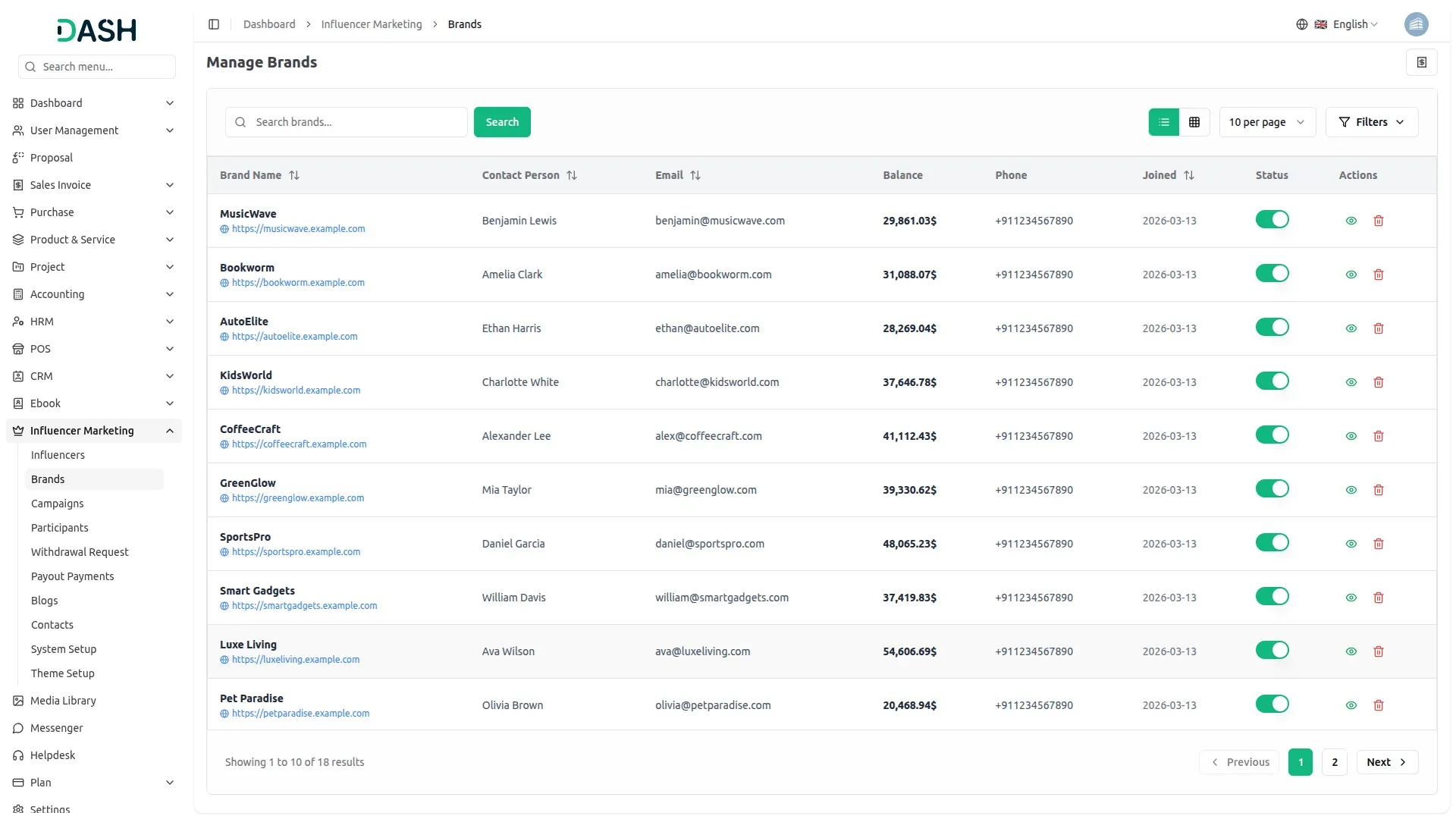
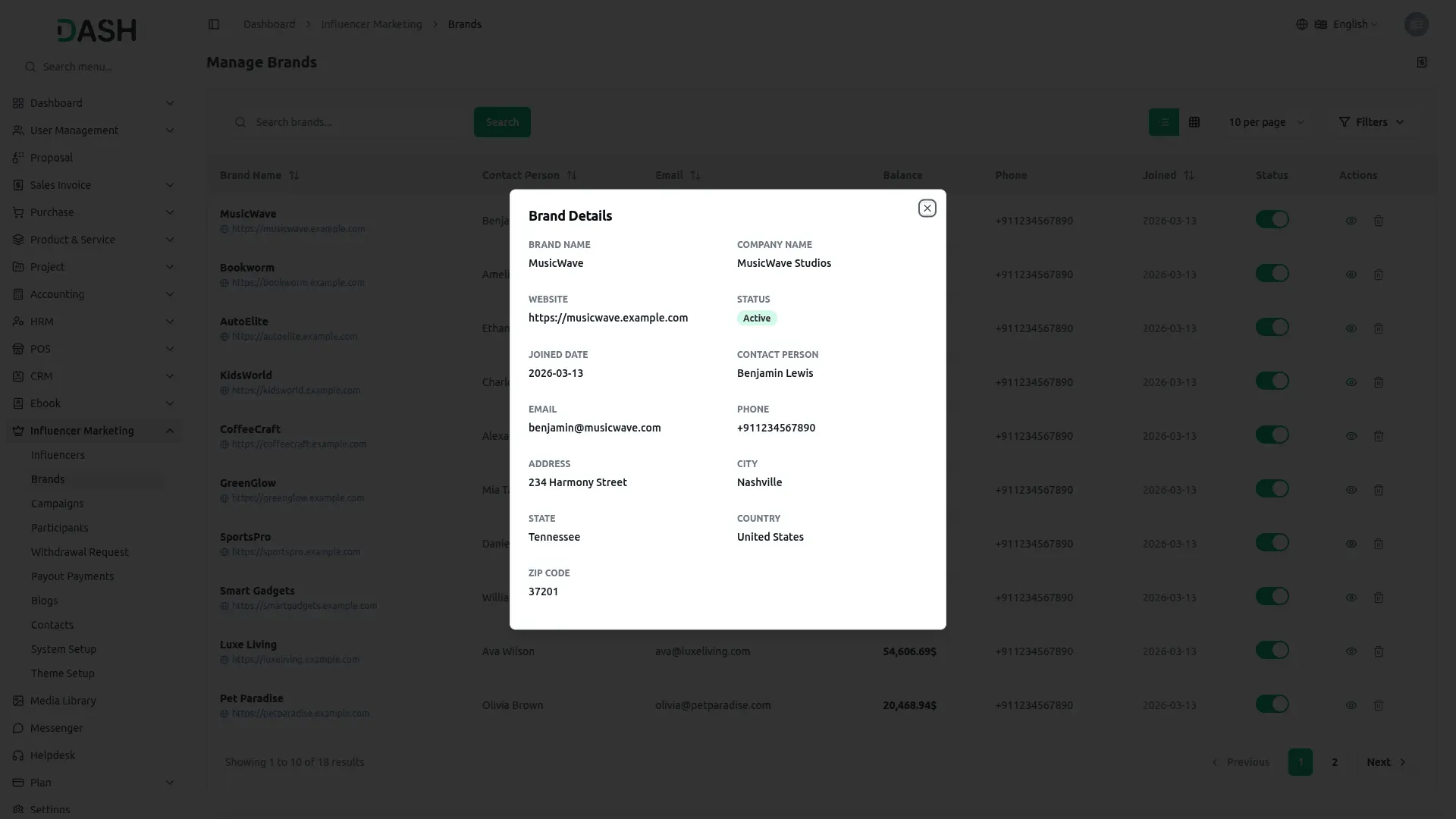
- In the Actions column, click the View to see the full brand profile and details. Click Delete to permanently remove the brand from the system. The Status toggle allows administrators to quickly activate or deactivate a brand account directly from the list without opening the edit form.
Brand Transactions
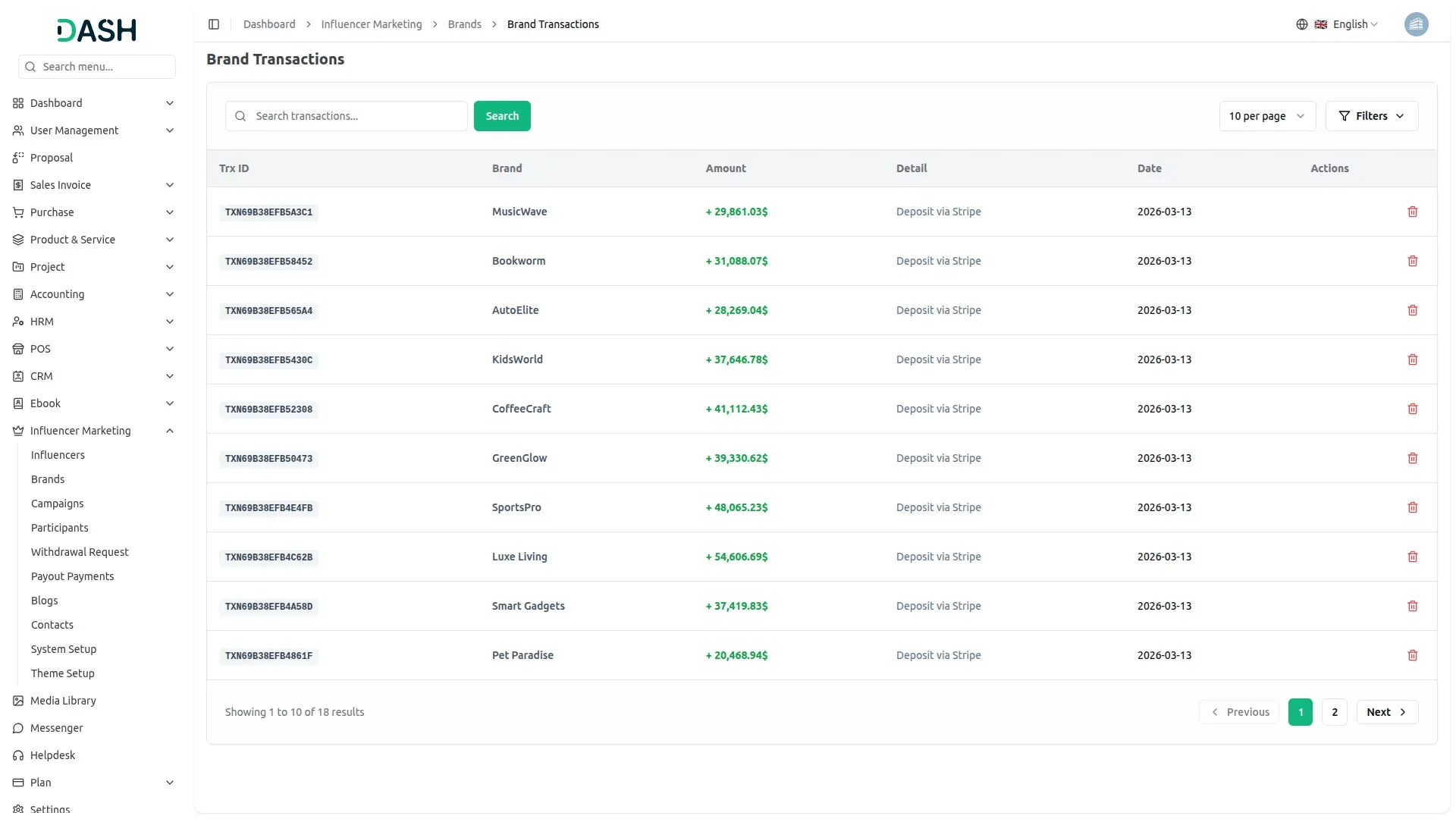
- The Brand Transactions page provides administrators with a complete overview of all financial activity associated with brands across the platform. The list displays a table with columns for Trx ID, Brand, Amount, Detail, Date, and Actions.
- You can search for a specific transaction using the search bar and click Search to find results. Click the Filters button to filter transactions by Brand, Type, or Date Range from the respective dropdowns and date picker, then click Apply to filter the data or Clear to reset it.
- Each transaction row displays a unique transaction ID, the associated brand name, the deposited amount shown in green, the payment method detail, such as Deposit via Stripe, and the transaction date, giving administrators a clear and organized record of all brand financial activity. In the Actions column, click Delete to permanently remove a transaction record from the system.
Manage Campaigns
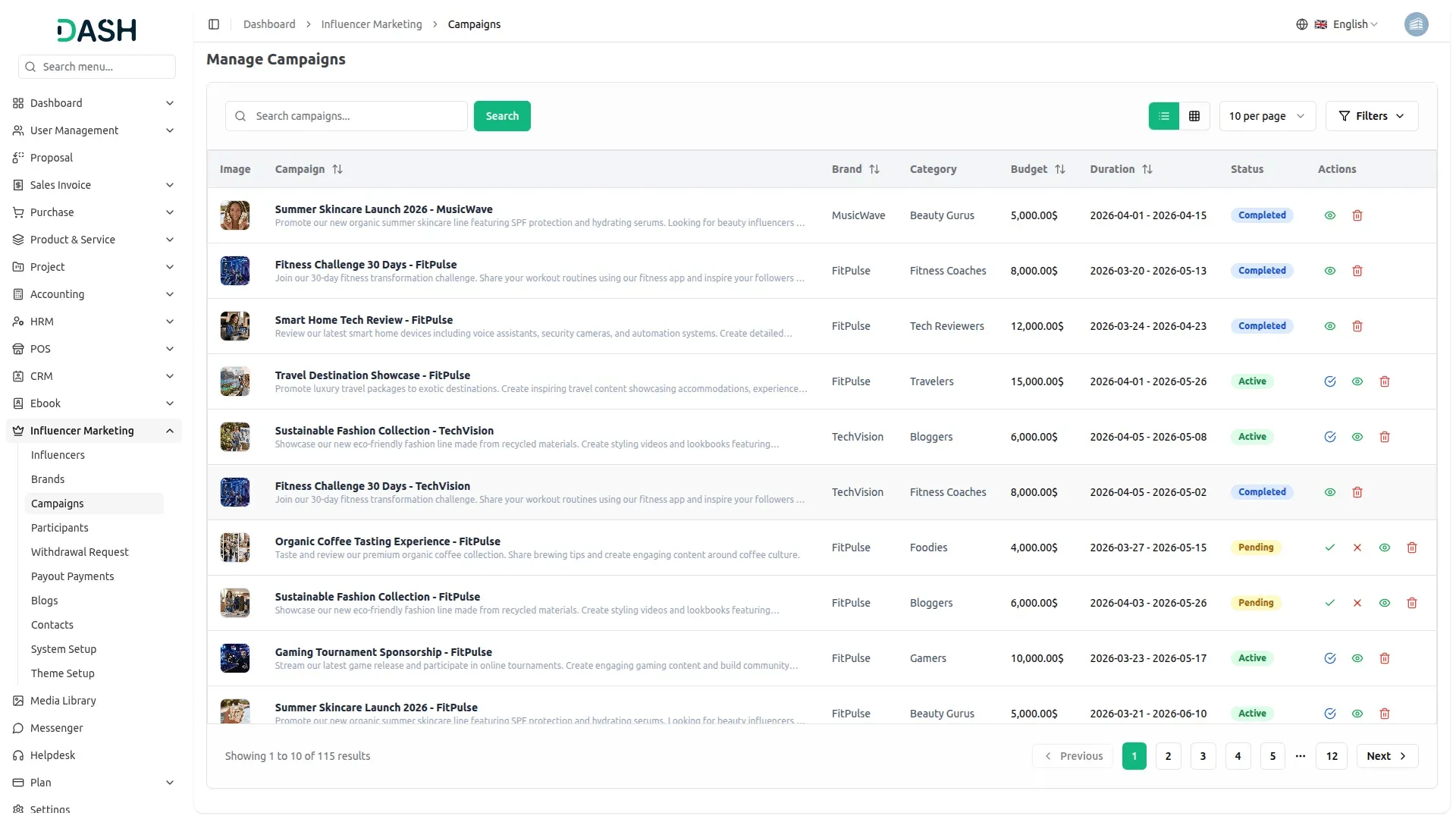
- The Manage Campaigns page gives administrators a complete overview of all campaigns created by brands across the platform. The list displays a table with columns for Image, Campaign, Brand, Category, Budget, Duration, Status, and Actions.
- You can search for a specific campaign using the search bar and click Search to find results. Click the Filters button to filter campaigns by Category, Status, or Payment Type from the respective dropdowns, then click Apply to filter the data or Clear to reset it. You can also switch between list and grid view using the view toggle buttons.
- Each campaign row displays the campaign thumbnail image, name, short description, associated brand, category, total budget, campaign duration dates, and current status. Campaigns can carry one of three statuses (Active, Pending, or Completed), giving administrators a clear picture of where each campaign currently stands.
- In the Actions column, for Pending campaigns, click the checkmark to accept the campaign and make it live, or click the reject to rejected. For Active campaigns, click the Complete icon to manually mark a campaign as completed once the collaboration period has ended.
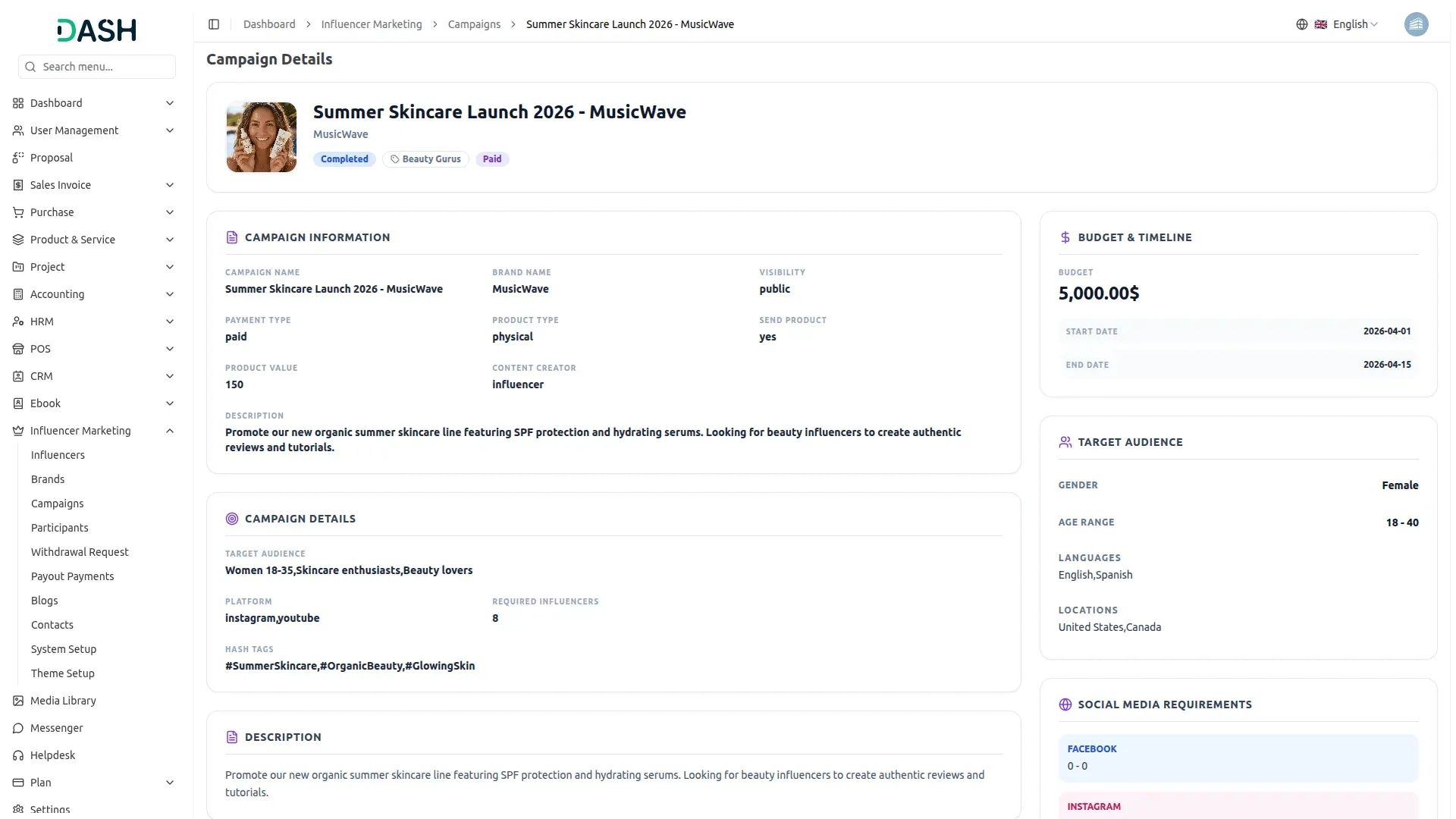
- Click the view to see the full campaign details. Click Delete to permanently remove the campaign from the system.
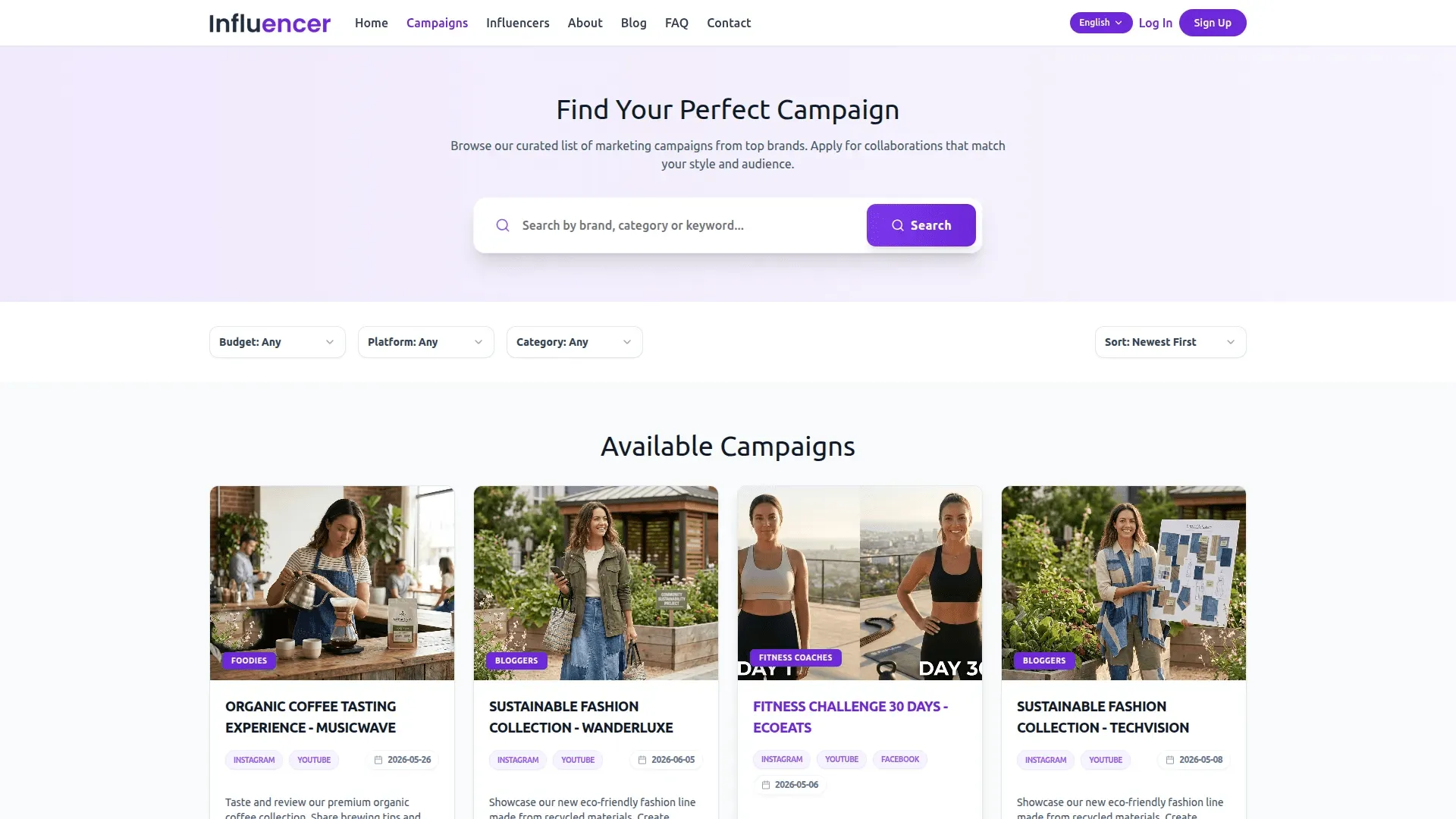
- Once a campaign is accepted and set to Active, it will appear publicly on the Campaigns page of the website, showing the campaign image, title, category badge, supported platforms, date, short description, and budget.
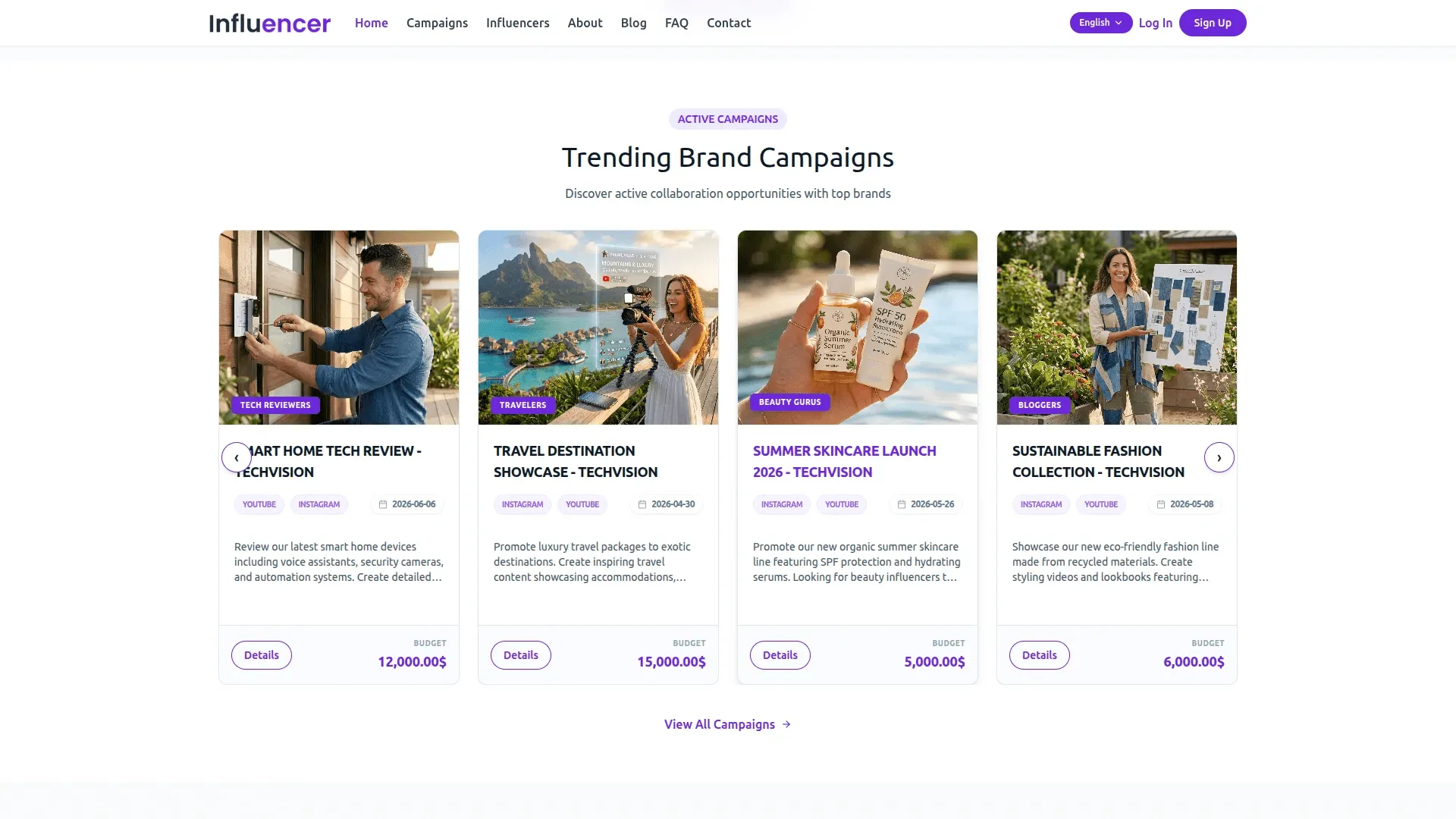
- Active campaigns are also featured in the Trending Brand Campaigns slider on the homepage, allowing influencers to browse, discover, and apply for collaboration opportunities directly from the website. Completed campaigns are removed from the active listings, ensuring visitors always see only currently available opportunities.
Manage Participants
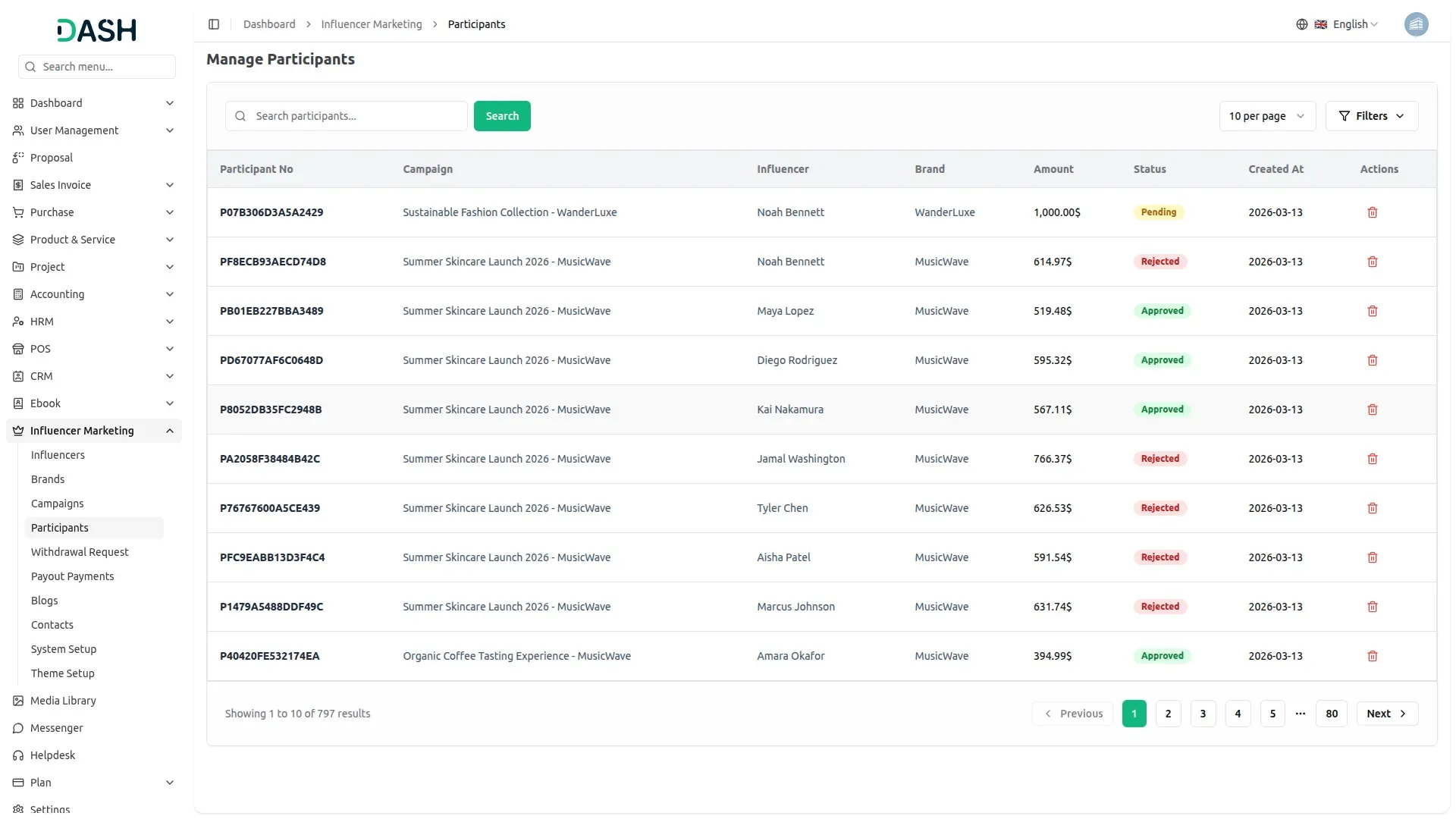
- The Manage Participants page gives administrators a complete overview of all influencer applications and participation records across every campaign on the platform. The list displays a table with columns for Participant No, Campaign, Influencer, Brand, Amount, Status, Created At, and Actions.
- You can search for a specific participant using the search bar and click Search to find results. Click the Filters button to filter participants by Status from the dropdown, then click Apply to filter the data or Clear to reset it.
- Each participant row displays a unique participant number, the campaign the influencer applied to, the influencer’s name, the associated brand, the participation amount, and the current approval status.
- Participants can carry one of two statuses, Approved, shown in green, or Rejected, shown in red, giving administrators a clear and immediate view of each application’s outcome.
- In the Actions column, click Delete to permanently remove a participant record from the system.
- Note: The approval and rejection of participants is managed at the brand level. The admin view provides full visibility across all campaigns and brands, making it easy to monitor participation activity, track amounts, and maintain oversight of the entire influencer-brand collaboration process from a single centralized page.
Payout Payments
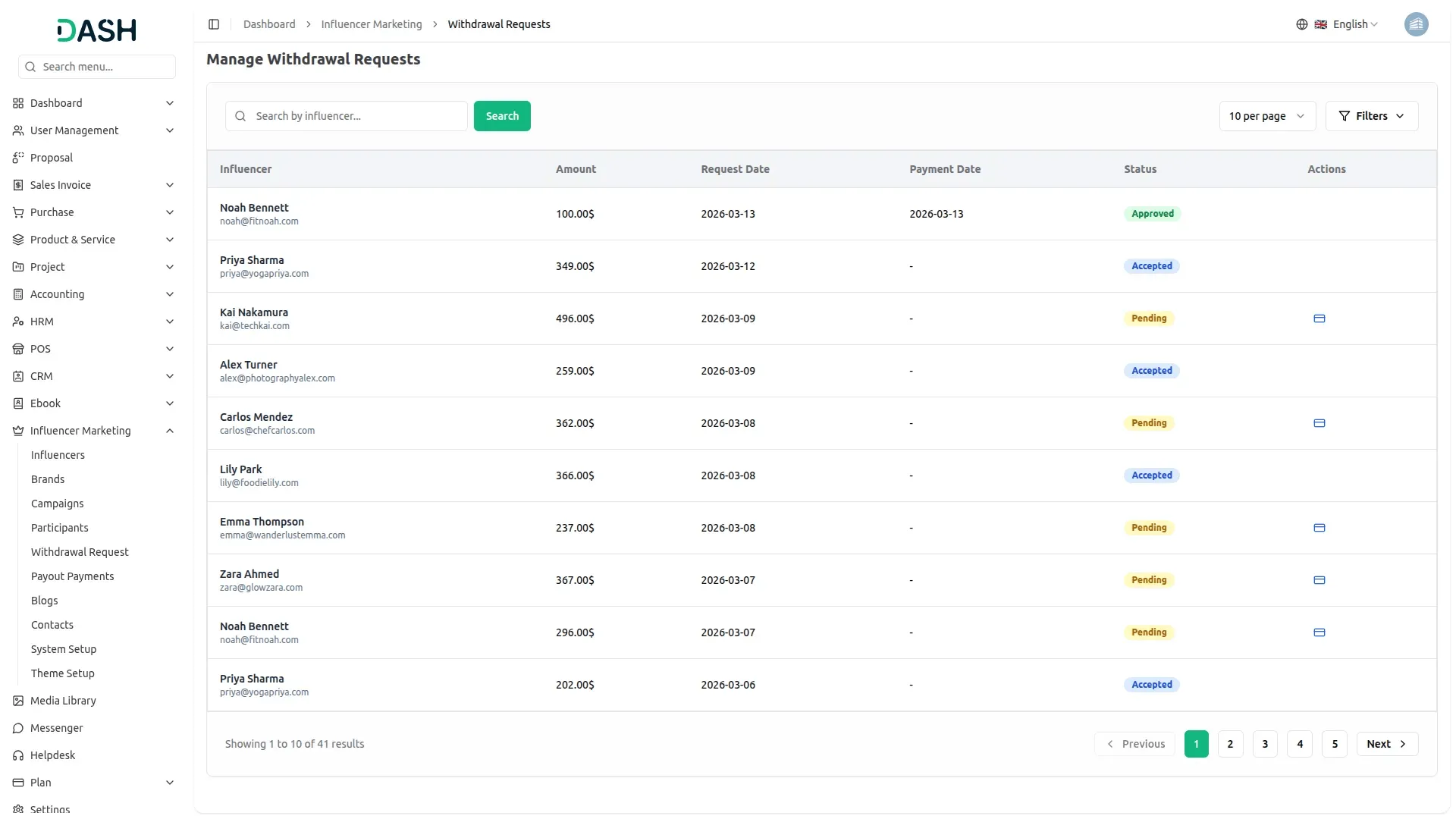
- The Manage Payout Payments page gives administrators a centralized view of all processed payout payments issued to influencers across the platform. The list displays a table with columns for Influencer, Payment Amount, Notes, and Actions.
- You can search for a specific payout record using the search bar and click Search to find results. Each row displays the influencer’s name and email, the payment amount that was processed, and a notes field referencing the corresponding withdrawal request number, making it easy to trace each payout back to its original withdrawal request.
- In the Actions column, click the Mark Paid to confirm that the payment has been successfully sent to the influencer, updating the payout record accordingly. Click Delete to permanently remove a payout record from the system.
- Note: The Manage Payout Payments page works in direct connection with the Manage Withdrawal Requests page. Once an administrator processes a payment from a withdrawal request, it appears here as a payout record, allowing the team to track the full payment lifecycle, from the influencer’s initial withdrawal request through to the final confirmed payout.
Manage Blogs
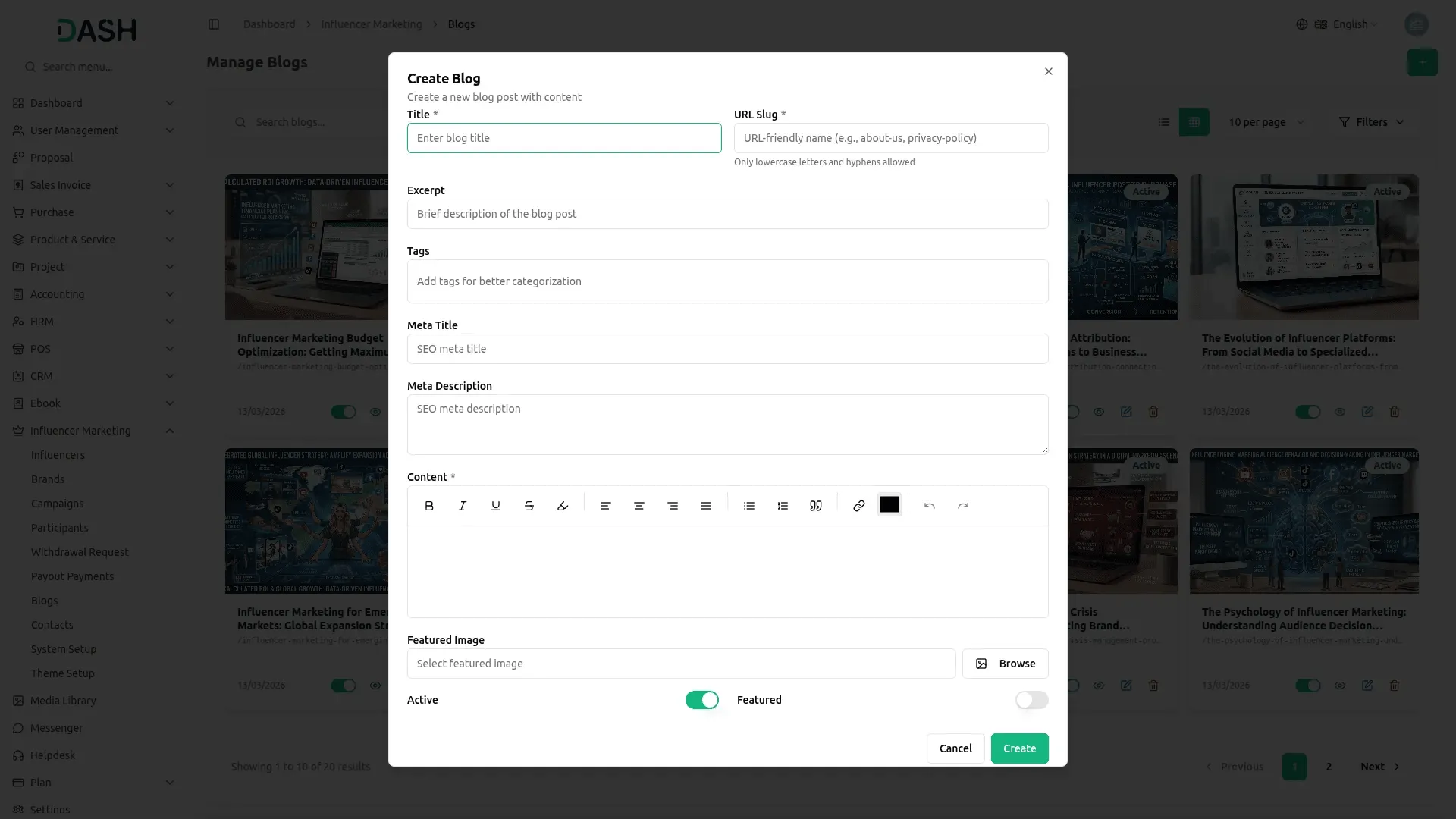
- To create a new blog post, click the “Create” button on the Manage Blogs page. In the form that opens, start by entering the Title of the blog post and a URL Slug using only lowercase letters and hyphens, which becomes the blog post’s unique web address.
- Add an Excerpt as a brief description of the blog post that appears as a preview summary. Enter relevant Tags to help categorize the post for better discoverability. Fill in the SEO fields by entering the Meta Title and Meta Description to improve search engine visibility.
- Write the full blog post content in the Content field using the built-in rich text editor, which supports formatting options such as bold, italic, alignment, lists, blockquotes, and links.
- Upload a Featured Image for the blog post using the Browse button. Toggle Active on to publish the blog post immediately after creation, and toggle Featured on to mark the post as featured, which highlights it with a star icon in the list and gives it priority visibility on the website.
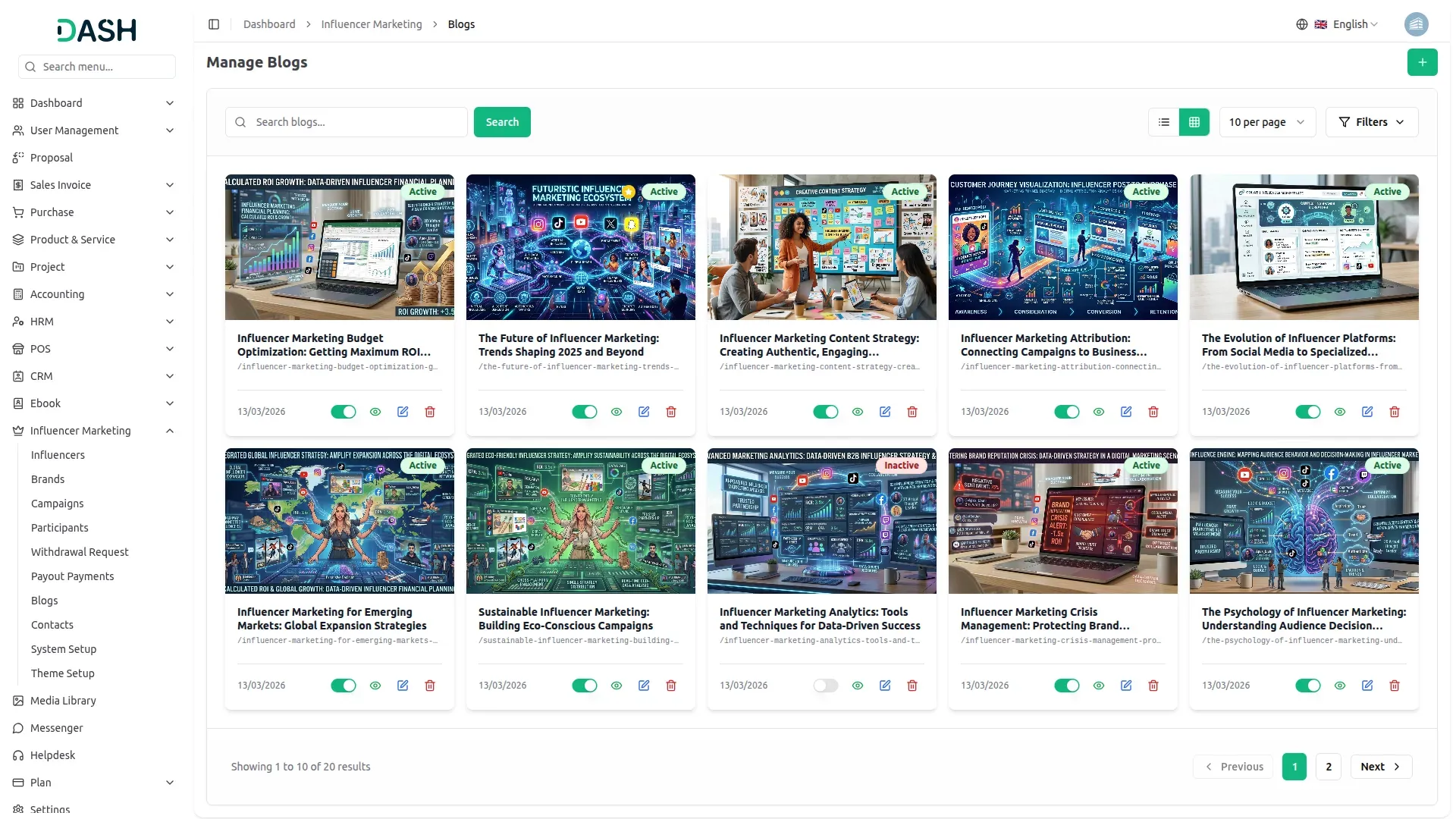
- The list page displays all blog posts in a table with columns for Image, Title, Slug, Status, and Actions. Featured blog posts are marked with a star icon next to the title, making them easy to identify at a glance.
- Use the Search bar to find specific blog posts. Click Apply to activate filters or Clear to remove them. Toggle between list and grid view using the view buttons.
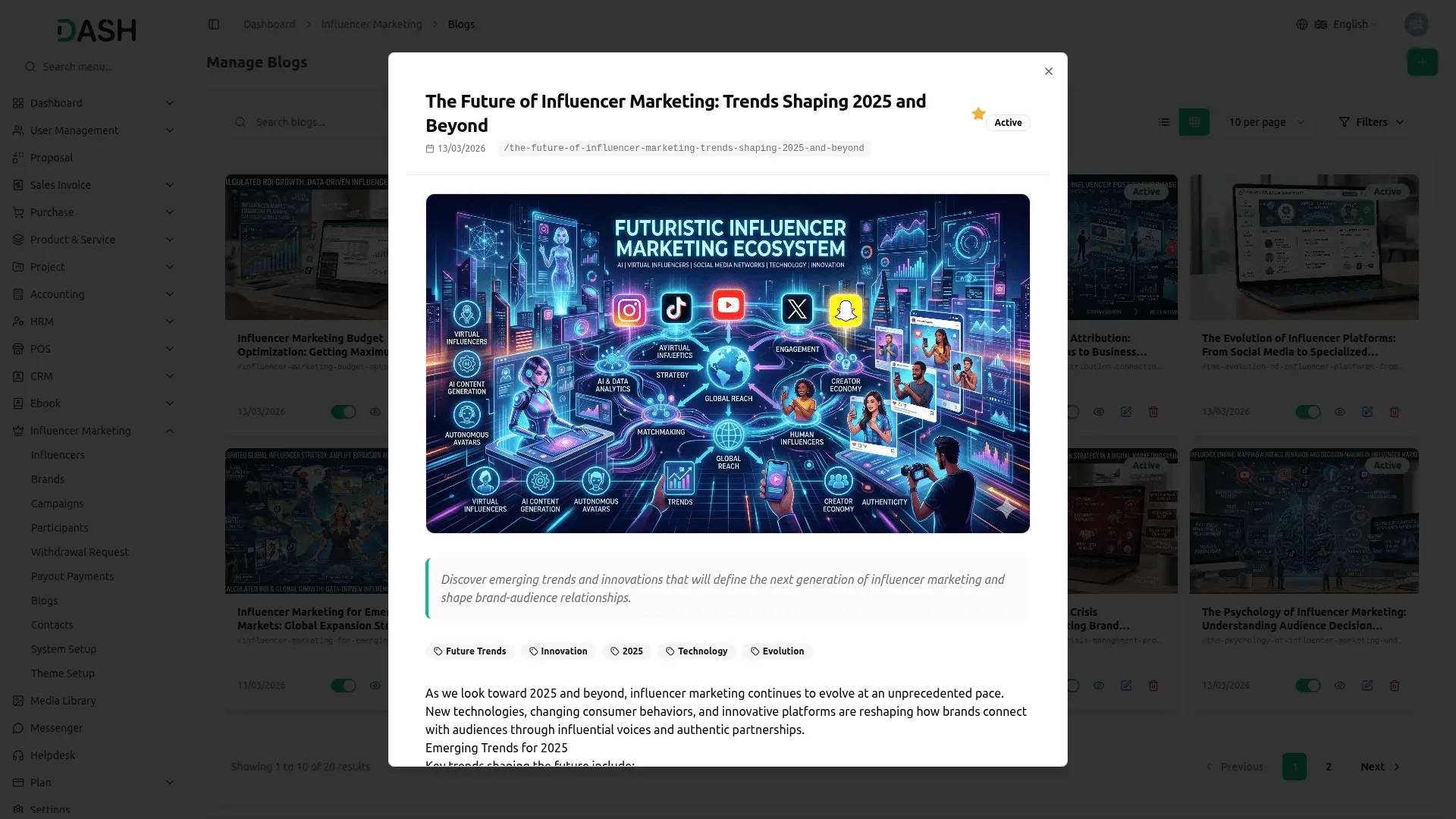
- In the Actions column, click View to preview the full blog post, Edit to modify the blog’s content or settings, and Delete to permanently remove the blog post from the system. The Status toggle allows administrators to quickly publish or unpublish a blog post directly from the list without opening the edit form.
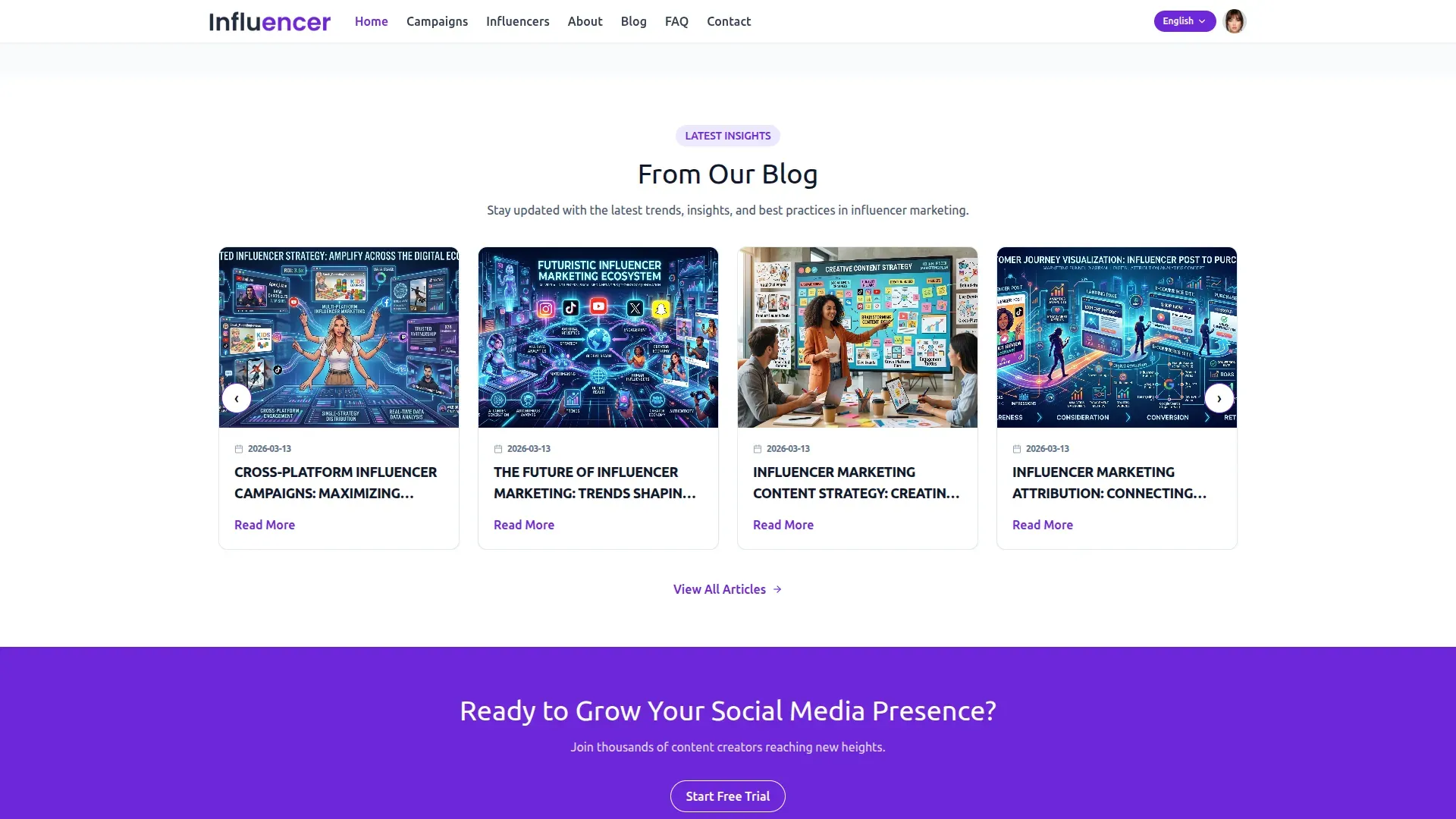
- Once a blog post is published and its status is active, it will appear on the public Blog page of the website, displaying the post thumbnail, publication date, and title with a Read More link. Featured blog posts are also highlighted in the From Our Blog section on the homepage as a scrollable slider, keeping visitors informed with the latest trends, insights, and best practices in influencer marketing.
Manage Contacts
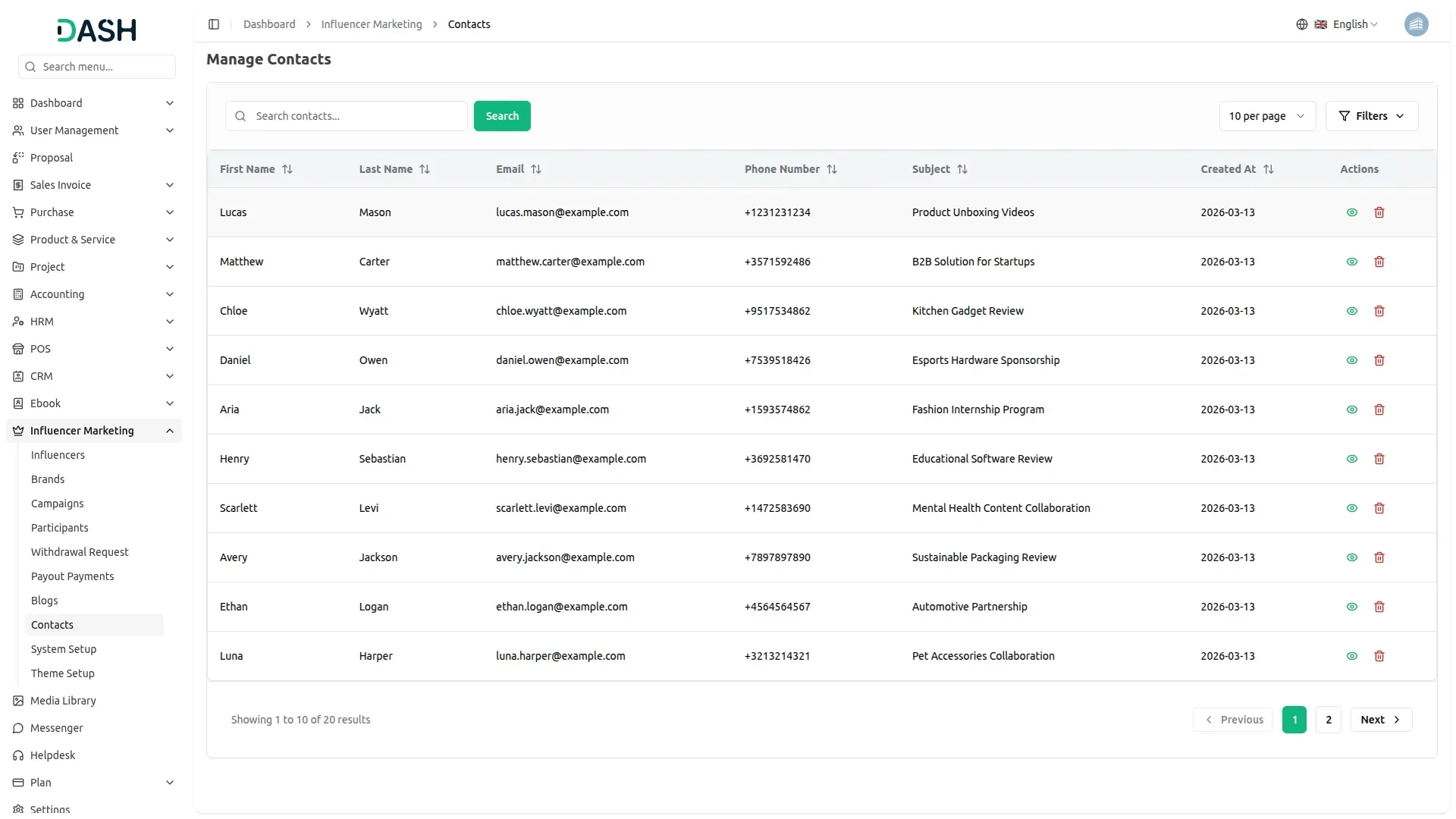
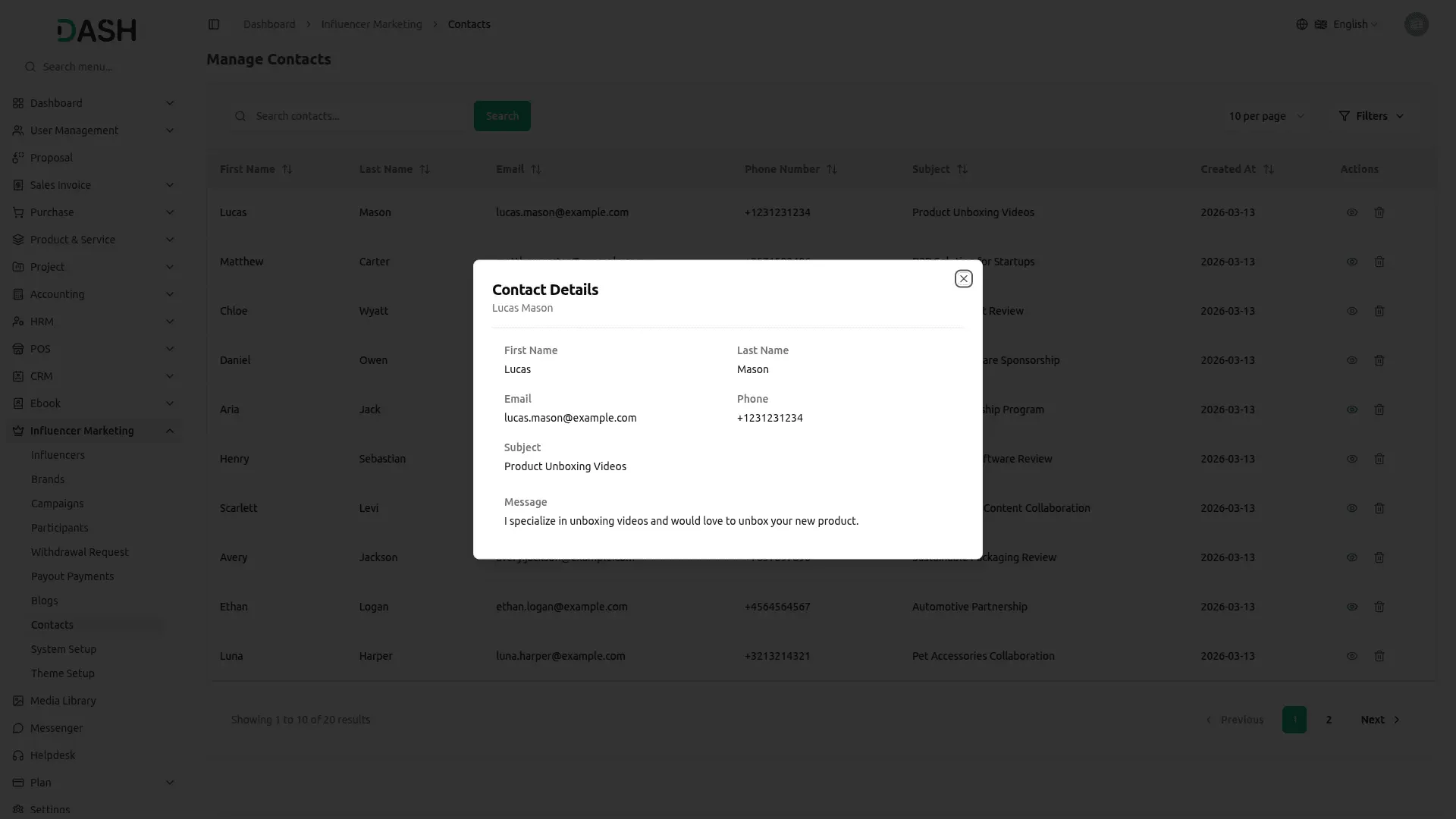
- The Manage Contacts page gives administrators a complete record of all enquiries and messages submitted through the Contact Us form on the website. The list displays a table with columns for First Name, Last Name, Email, Phone Number, Subject, Created At, and Actions.
- You can search for a specific contact using the search bar and click Search to find results. Click the Filters button to filter contacts by date range using the Start Date and End Date pickers, then click Apply to filter the data or Clear to reset it.
- Each row displays the sender’s first name, last name, email address, phone number, the subject of their message, and the date the enquiry was submitted, giving administrators a clear and organized view of all incoming contact requests.
- In the Actions column, click the eye icon to view the full message details submitted by the contact. Click Delete to permanently remove a contact record from the system
- Every time a visitor fills in the Contact Us form on the website, entering their first name, last name, email, phone number, subject, and message, and clicks Send Message, their submission is automatically captured and recorded here in the Manage Contacts list, allowing the team to review, respond to, and manage all incoming enquiries from a single centralized location.
Login & Sign Up
Sign In
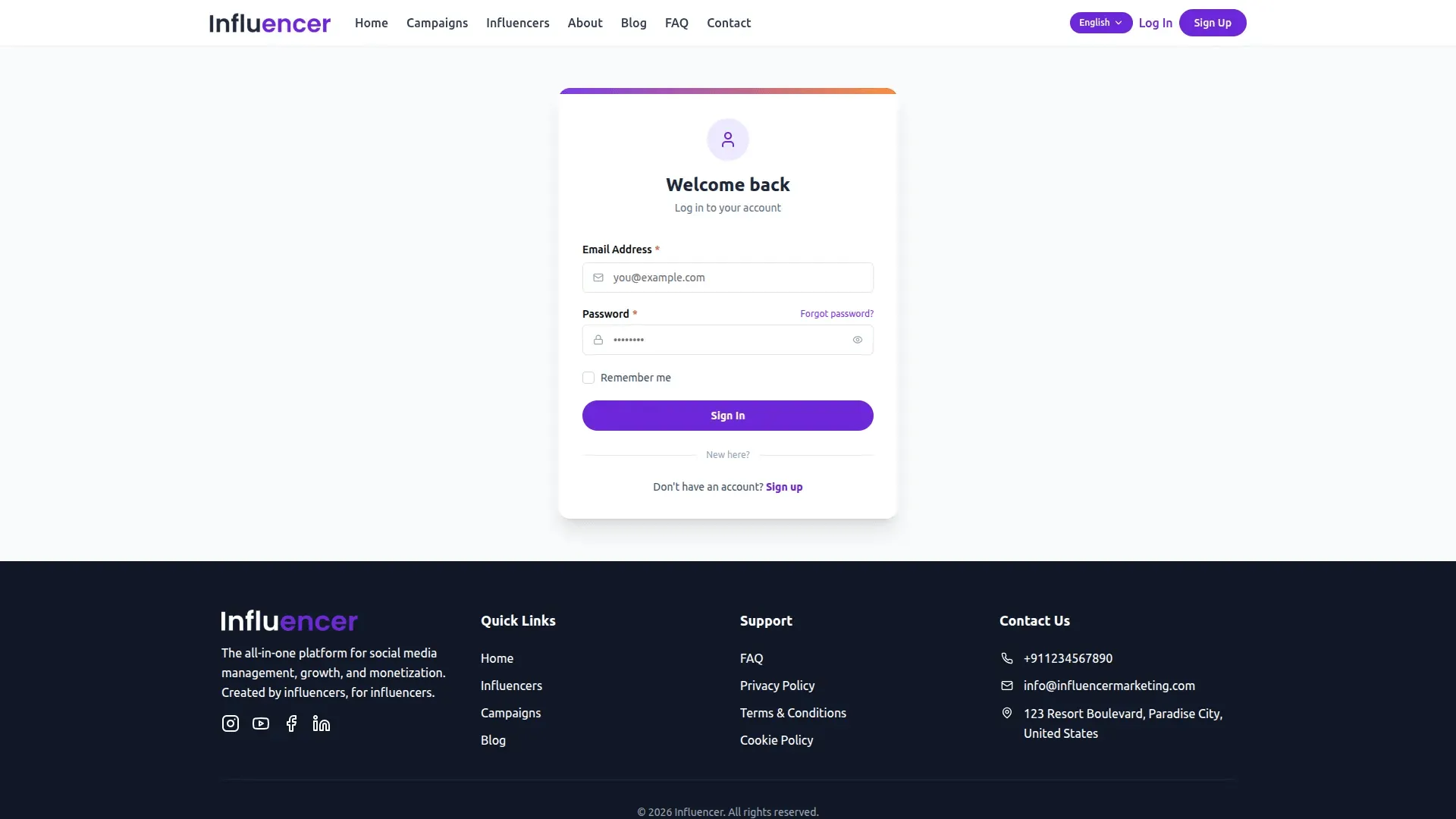
- To log in to the platform, navigate to the Sign In page and enter your registered Email Address and Password. Click the Sign In button to access your account.
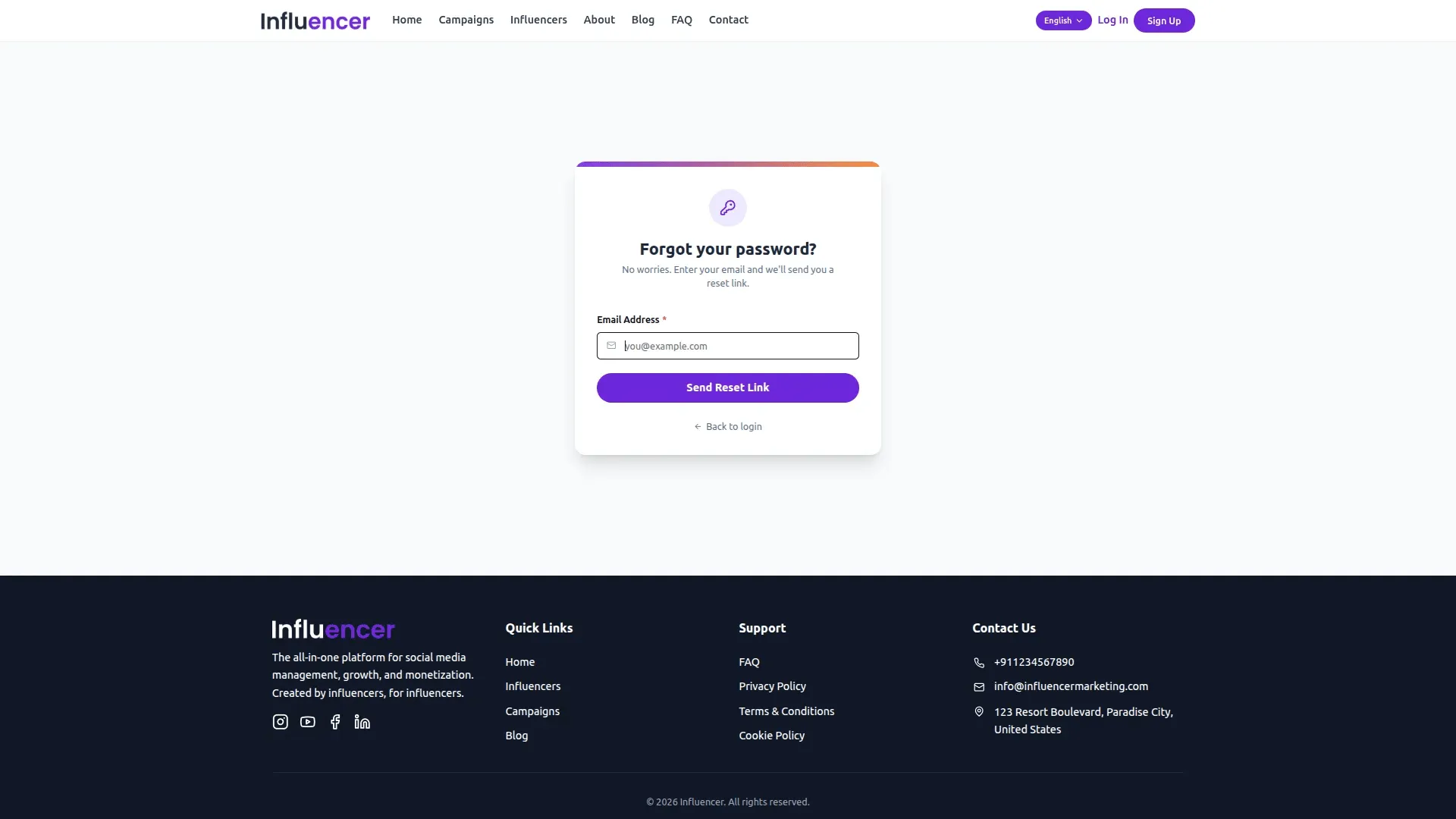
- If you have forgotten your password, click the Forgot Password? link to reset it. If you do not have an account yet, click the Sign Up link at the bottom to create a new one.
Sign Up
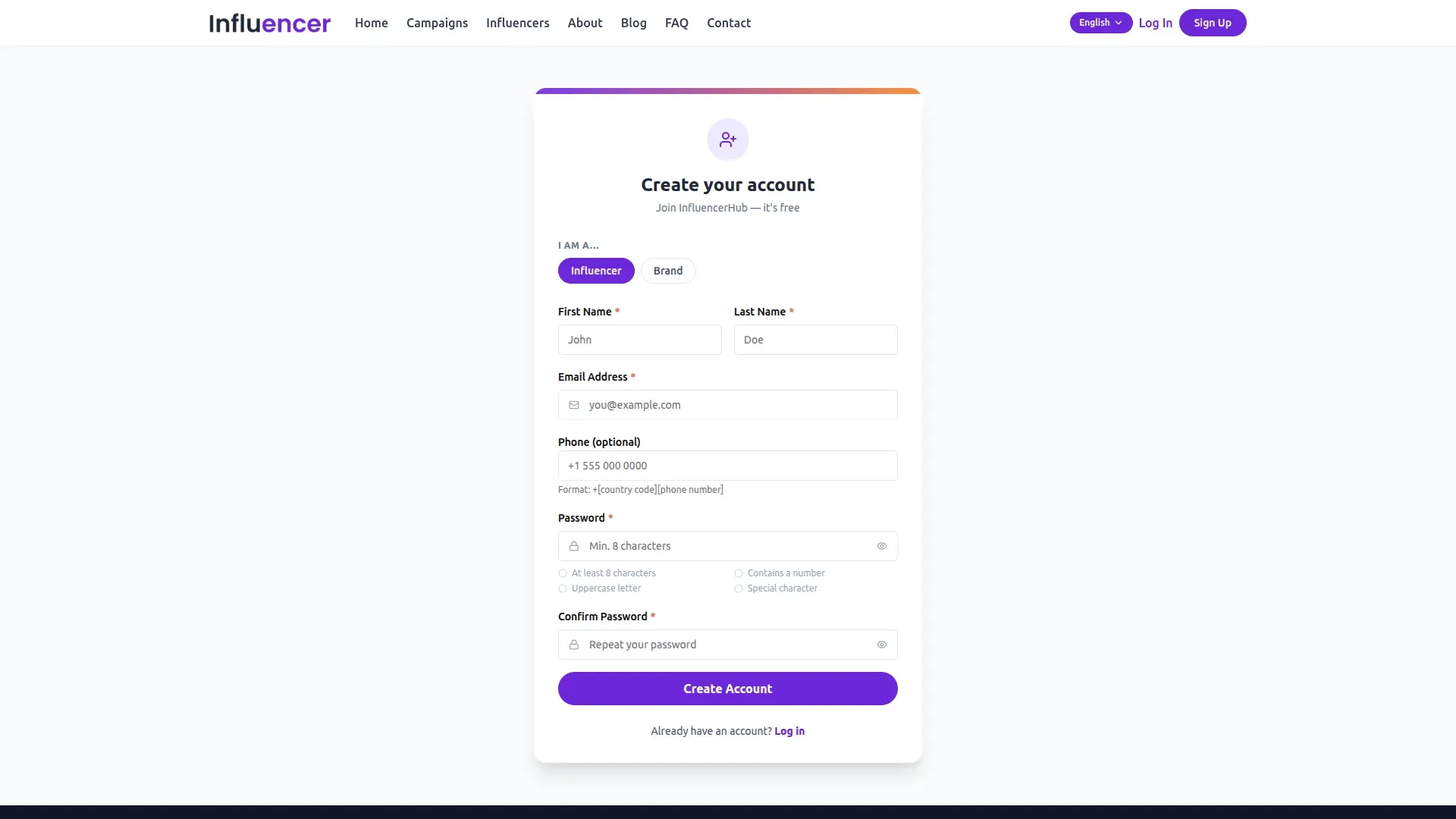
- To create a new account, navigate to the Sign Up page and first select your account type by choosing either Influencer or Brand under the “I Am A…” section. Your selection determines the type of profile and dashboard you will have access to after logging in.
- Enter your First Name, Last Name, Email Address, and optionally your Phone number. Create a strong Password of at least 8 characters. The password must include an uppercase letter, a number, and a special character. Re-enter your password in the Confirm Password field to verify it, then click Create Account to complete your registration.
- Once registered, you will be directed to your profile dashboard based on your selected account type. Influencers will see their influencer panel, and brands will see their brand panel.
Profile Management
- After logging in, each user is taken to their own personalized profile panel based on their account type. The profile header displays the user’s name, account type badge, email address, and a settings icon to manage profile details.
What an Influencer Sees After Login
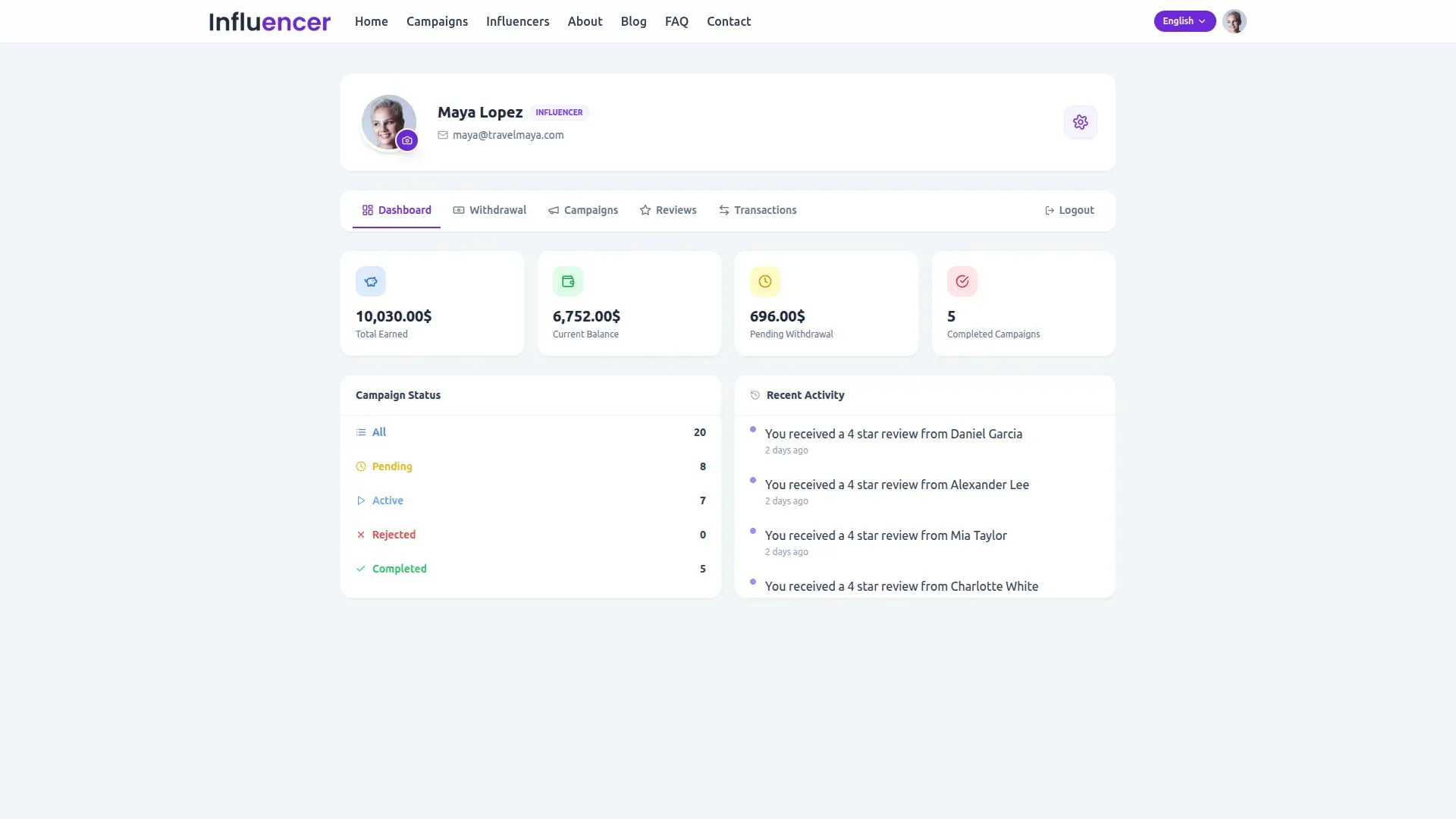
- When an influencer logs in, they can manage their account through five tabs: Dashboard, Withdrawal, Campaigns, Reviews, and Transactions.
Dashboard
- The influencer dashboard provides a complete overview of their account performance. The top summary cards display Total Earned, Current Balance, Pending Withdrawal, and Completed Campaigns.
- The Campaign Status panel shows a breakdown of all campaigns by status: All, Pending, Active, Rejected, and Completed, with counts for each. The Recent Activity panel on the right displays the latest notifications, such as new reviews received from brands.
Withdrawal
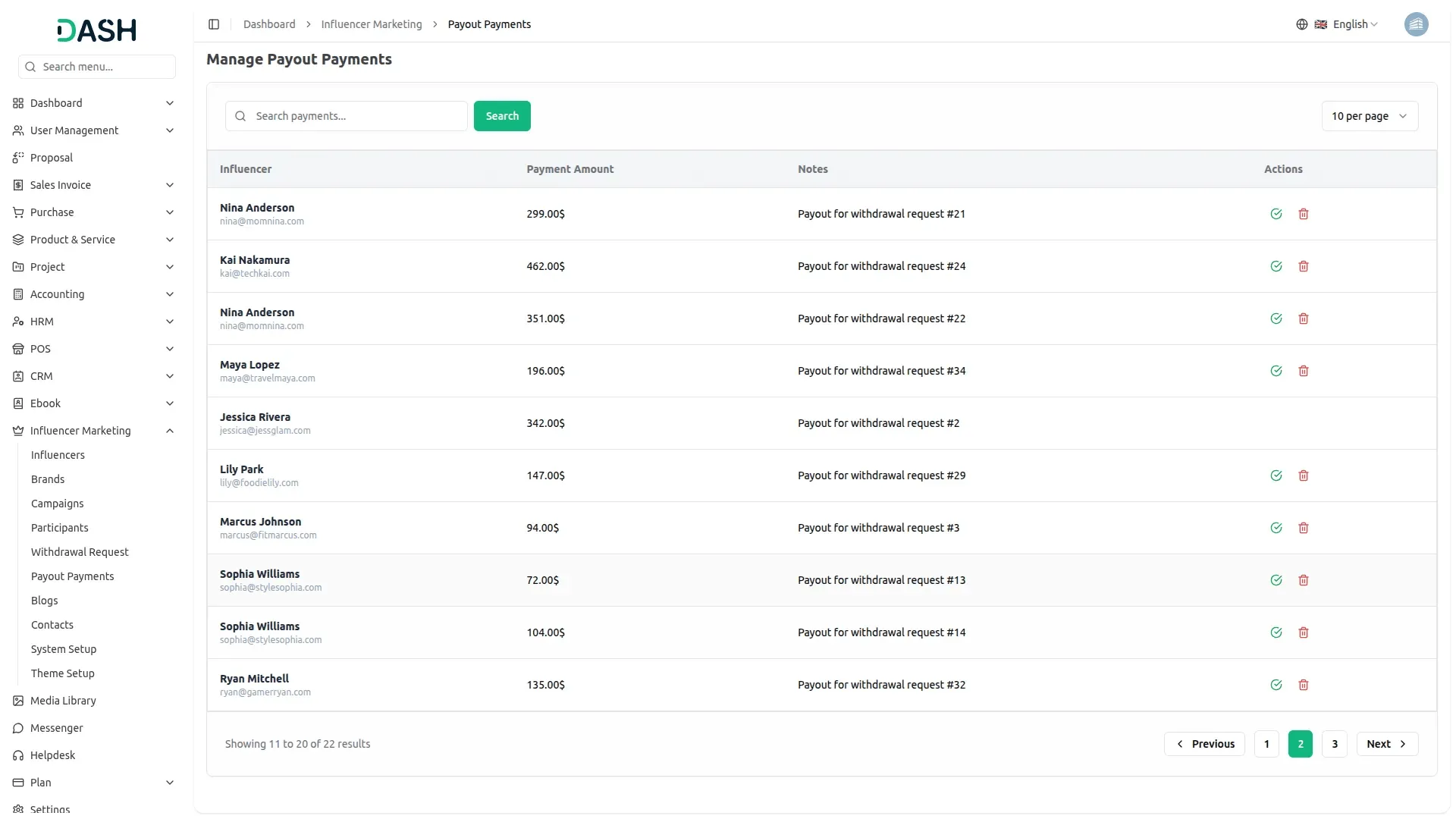
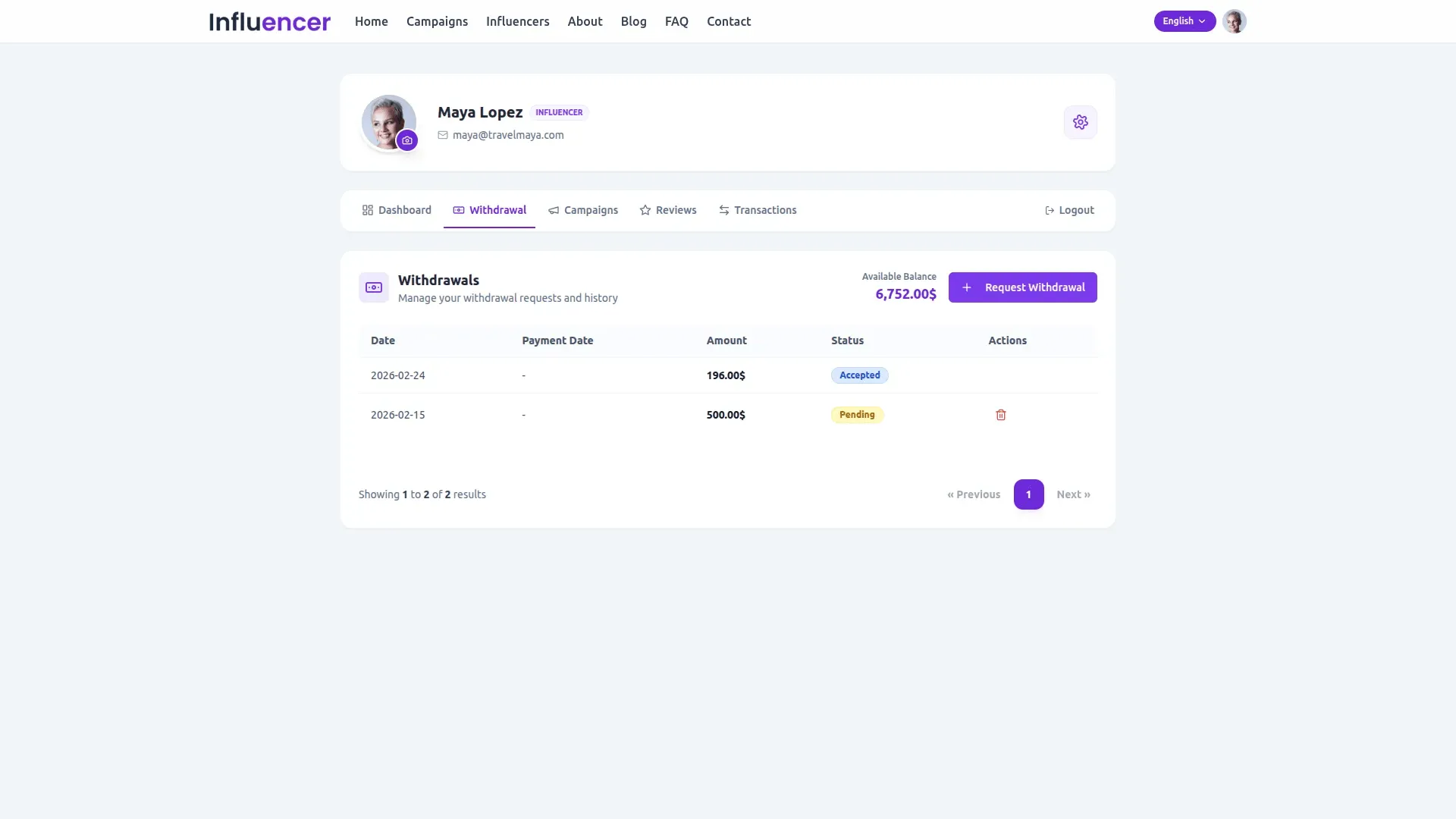
- The Withdrawal tab allows influencers to manage their payout requests and view their withdrawal history. The page displays the influencer’s Available Balance at the top, along with a table showing all previous withdrawal requests with columns for Date, Payment Date, Amount, Status, and Actions.
- Withdrawal statuses appear as Accepted in blue or Pending in yellow. For pending requests, the influencer can click the Delete icon to cancel the request.
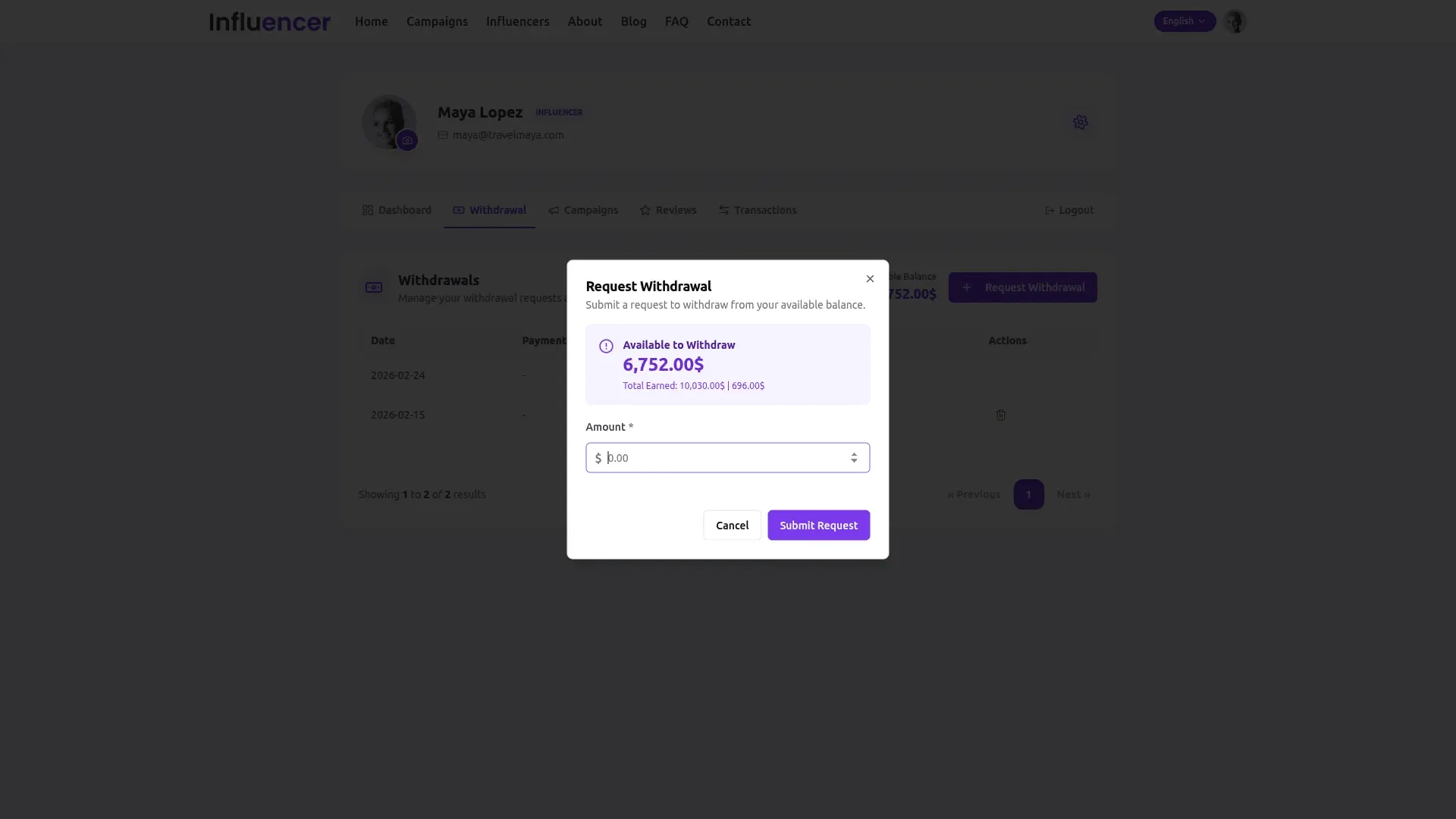
- To submit a new withdrawal request, click the Request Withdrawal button. A pop-up will appear showing the available balance, total earned, and pending withdrawal amounts. Enter the desired Amount and click Submit Request to send the request to the administrator for processing.
Campaigns
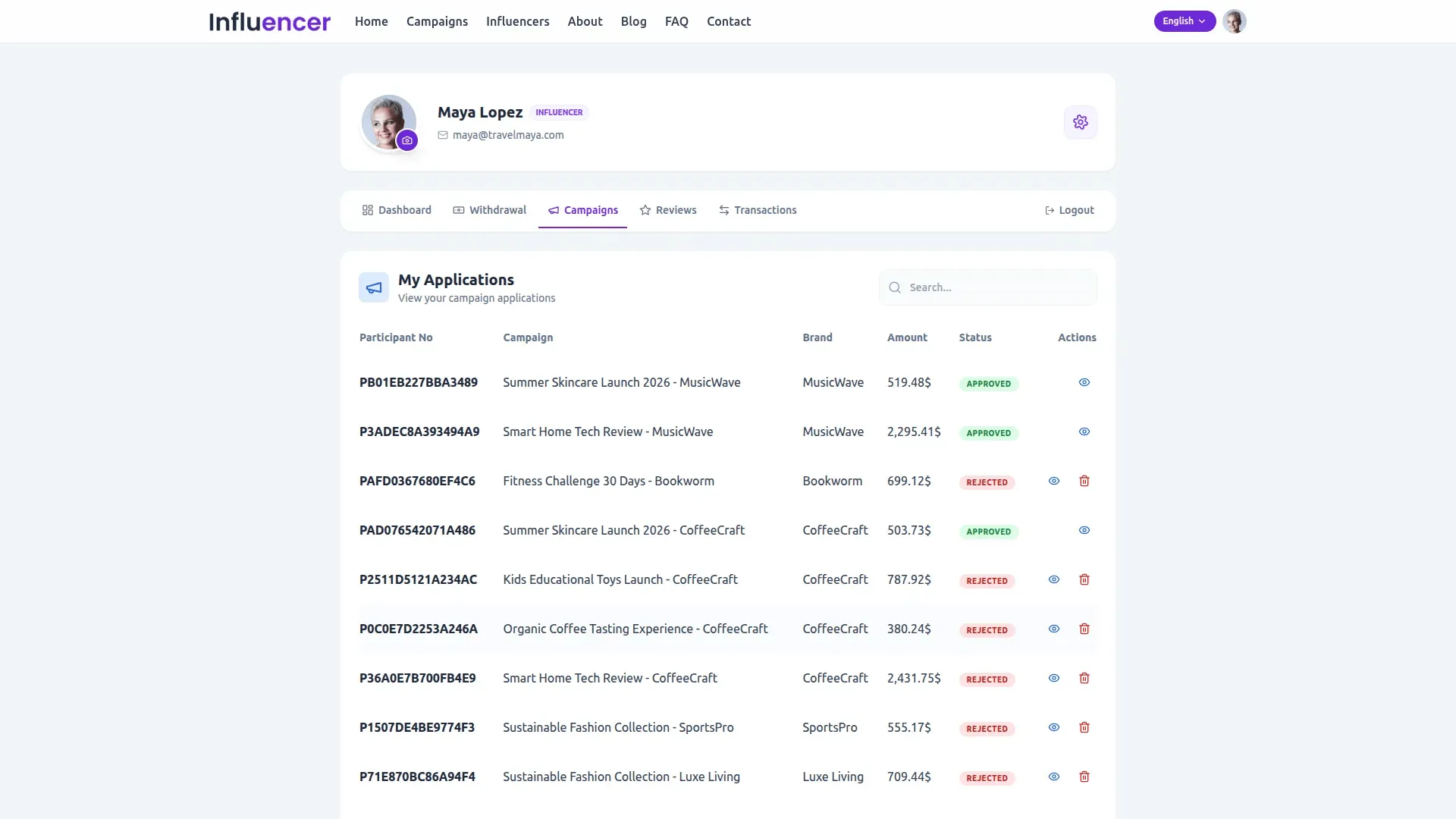
- The Campaigns tab shows all of the influencer’s campaign applications under My Applications. The list displays columns for Participant No, Campaign, Brand, Amount, Status, and Actions. Each application shows its approval status as Approved in green or Rejected in red.
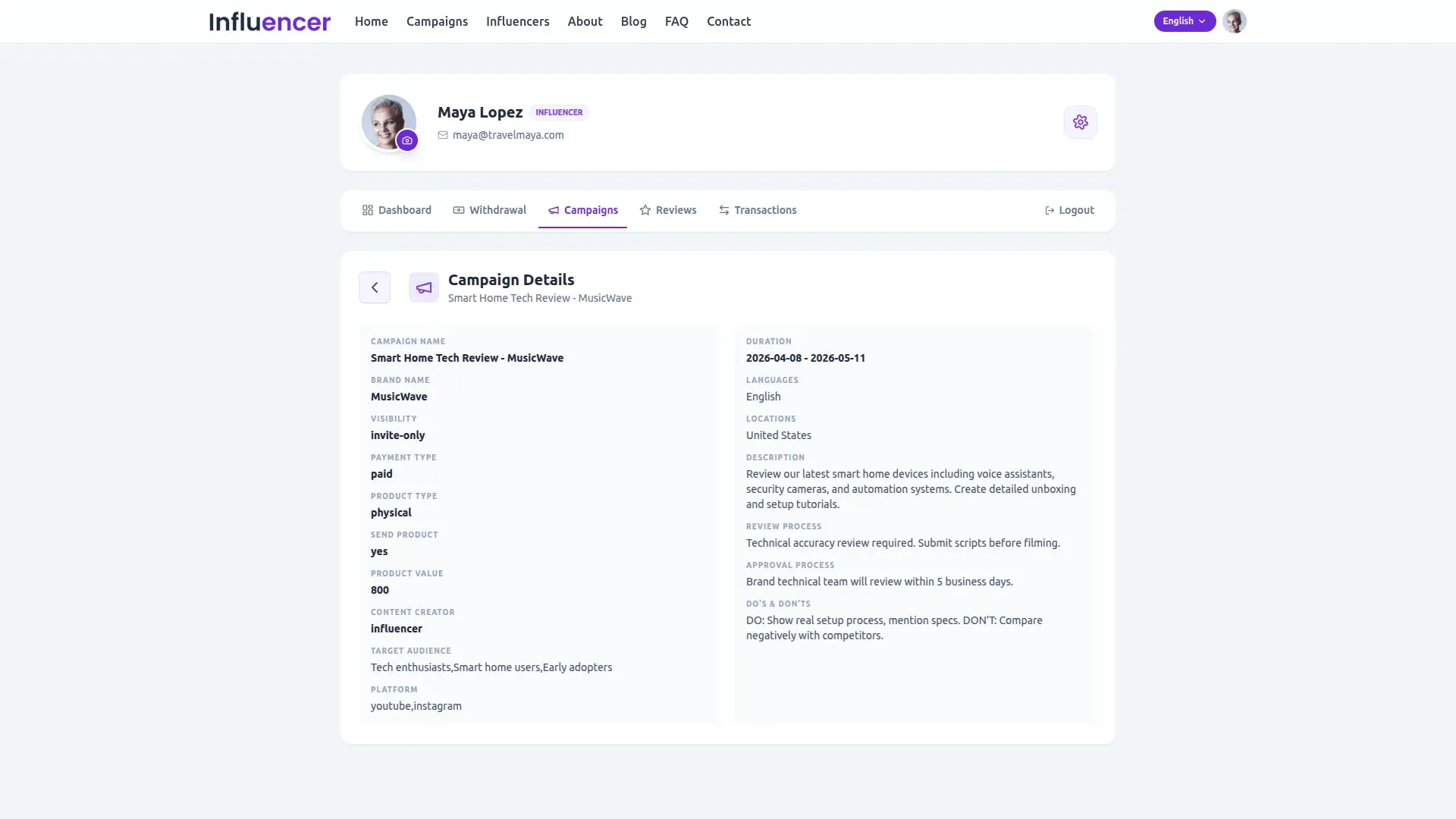
- In the Actions column, click the eye icon to view the full Campaign Details, including the campaign name, brand name, visibility, payment type, product type, duration, languages, location, description, review process, approval process, and Do’s & Don’ts. For rejected applications, the influencer can also click Delete to remove the record.
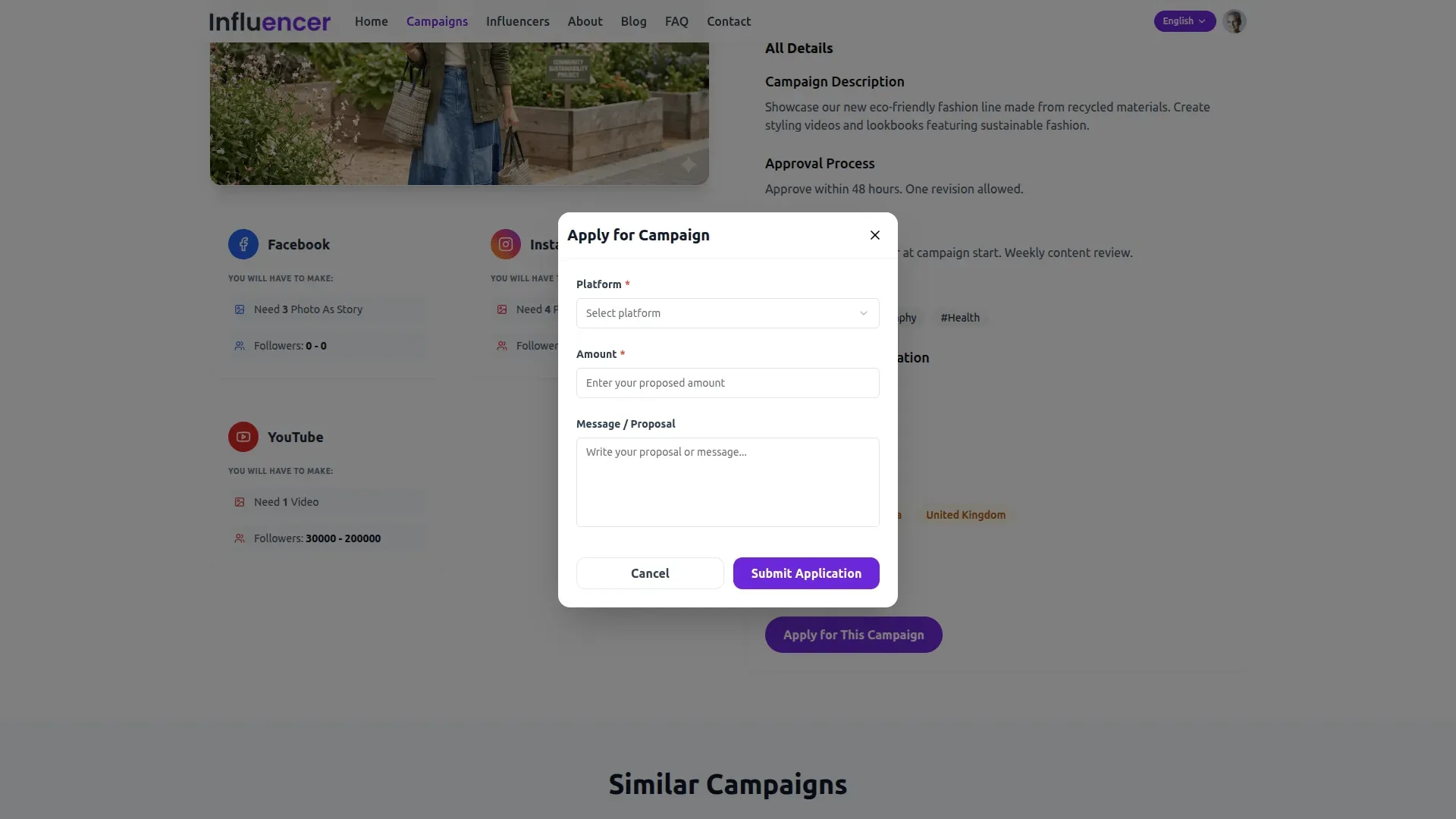
- To apply for a new campaign, browse the public Campaigns page, open a campaign, and click Apply for This Campaign. A pop-up will appear where the influencer selects the Platform, enters their proposed Amount, and writes a Message / Proposal. Click Submit Application to send the application to the brand for review.
Reviews
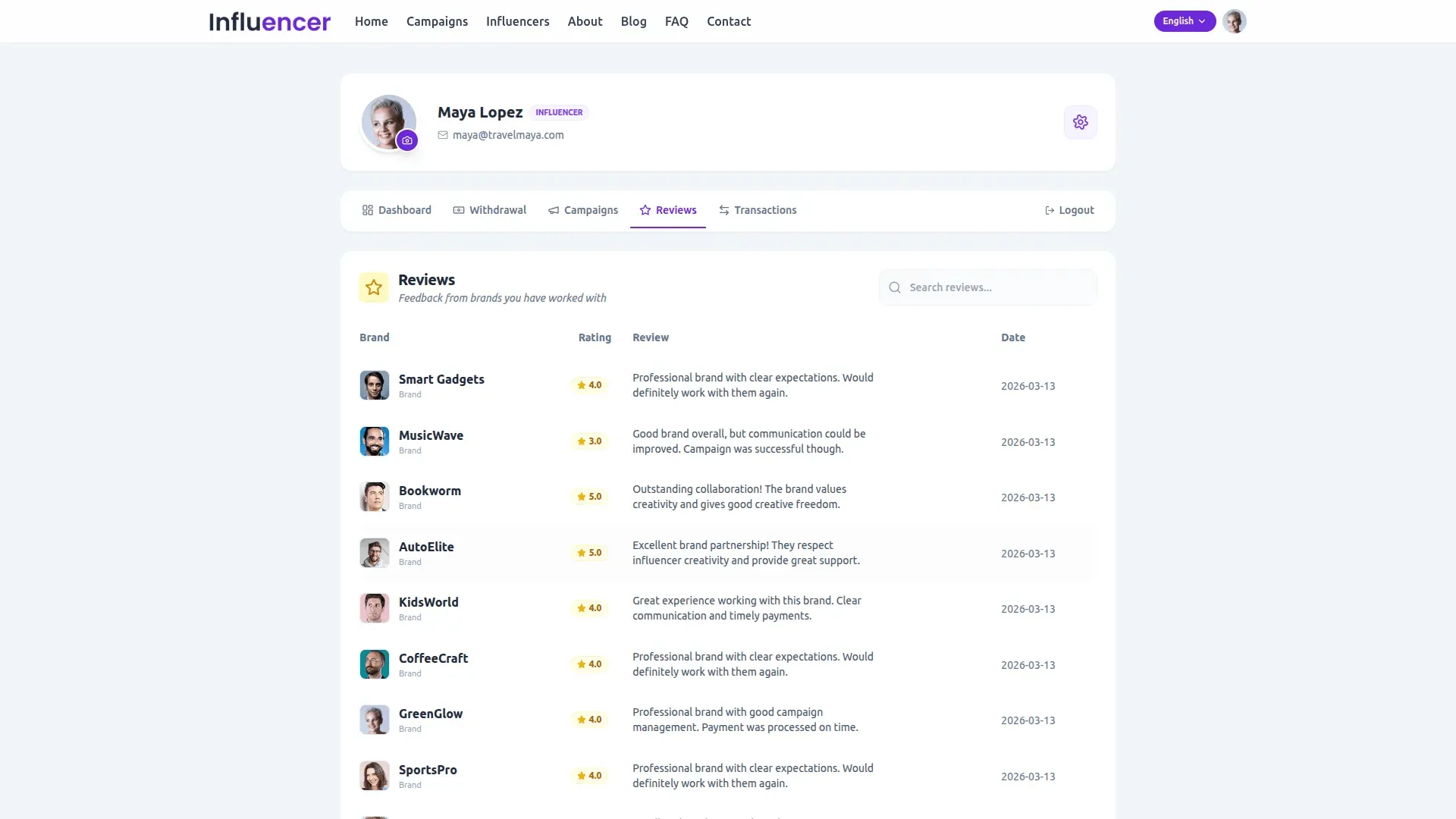
- The Reviews tab displays all feedback received from brands the influencer has collaborated with. Each entry shows the brand’s avatar, name, star Rating, written Review comment, and submission Date, helping influencers track their reputation and understand how brands perceive their work.
Transactions
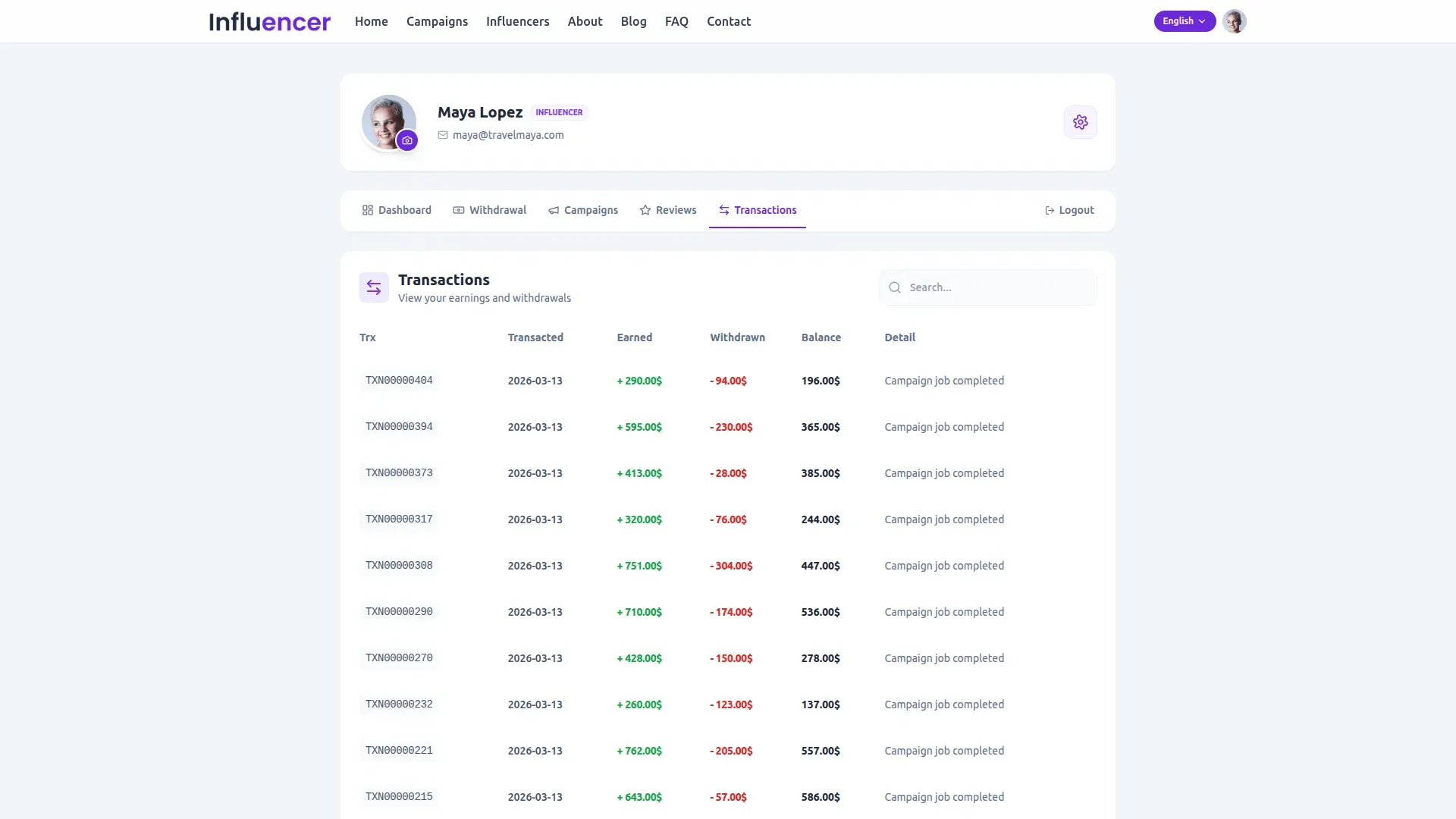
- The Transactions tab gives influencers a full record of all their earnings and withdrawals. The list displays columns for Trx, Transacted date, Earned, Withdrawn, Balance, and Detail.
- Each row shows the transaction ID, date, amount earned in green, amount withdrawn in red, resulting balance, and a detail note such as “Campaign job completed.”
What a Brand Sees After Login
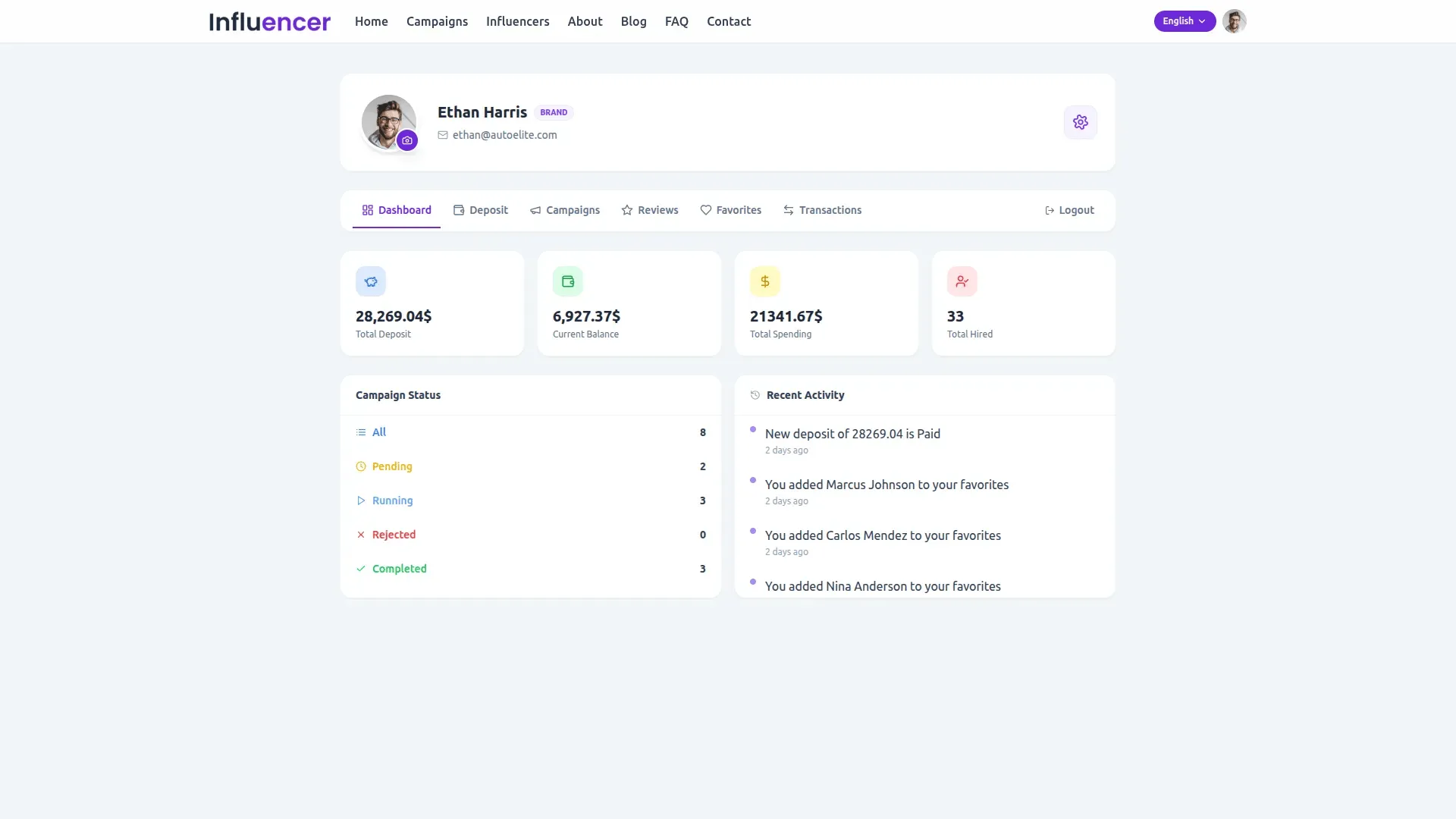
- When a brand logs in, they can manage their account through six tabs: Dashboard, Deposit, Campaigns, Reviews, Favorites, and Transactions.
Dashboard
- The brand dashboard provides a complete overview of their marketing activity. The top summary cards display Total Deposit, Current Balance, Total Spending, and Total Hired. The Campaign Status panel shows a breakdown of all campaigns by status (All, Pending, Running, Rejected, and Completed). The Recent Activity panel displays the latest notifications, such as confirmed deposits and influencers added to favorites.
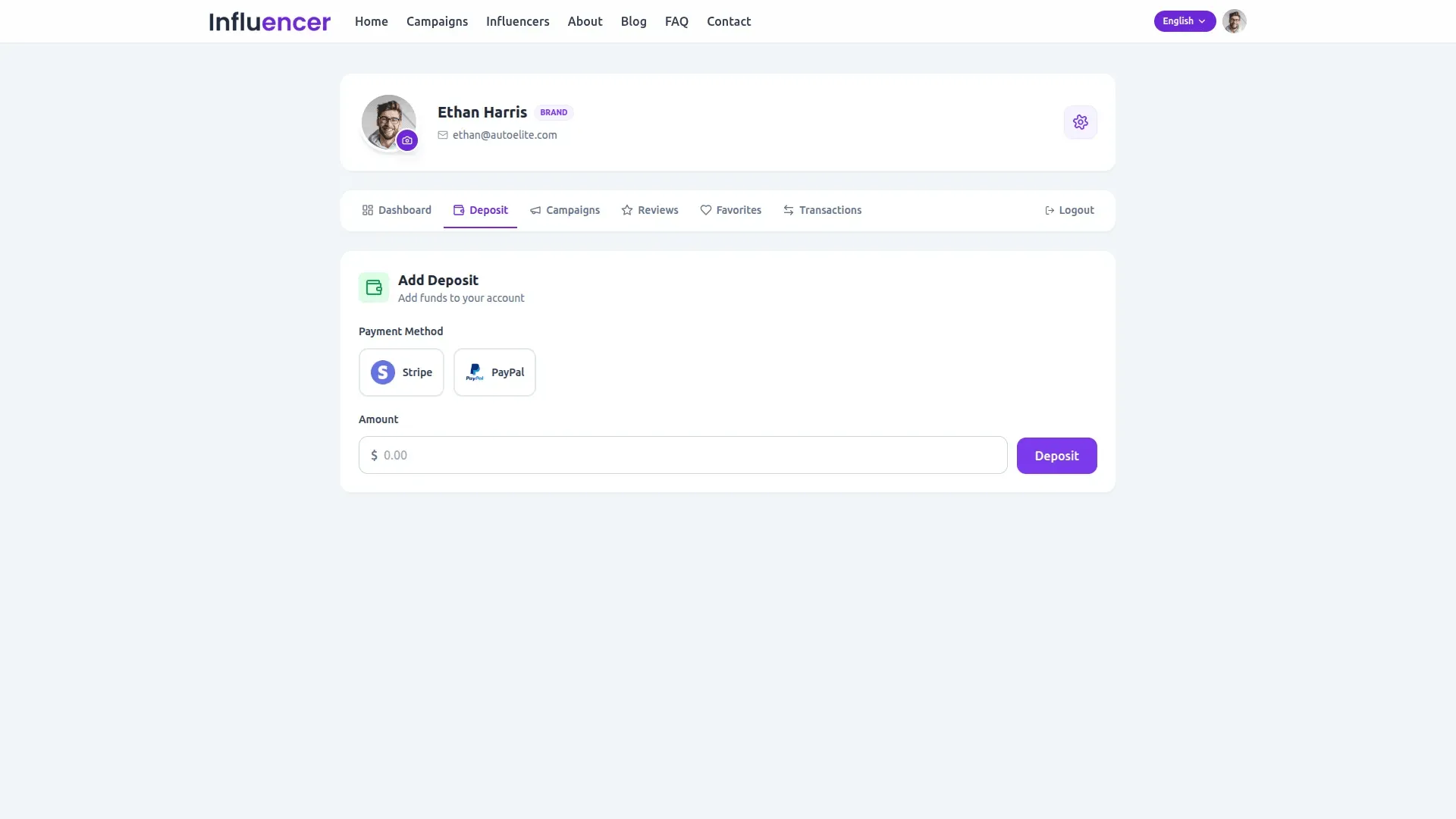
Deposit
- The Deposit tab allows brands to add funds to their account to finance campaigns. Select a Payment Method, either Stripe or PayPal, enter the desired Amount, and click Deposit to complete the transaction. The deposited amount will be reflected in the brand’s current balance.
Campaigns
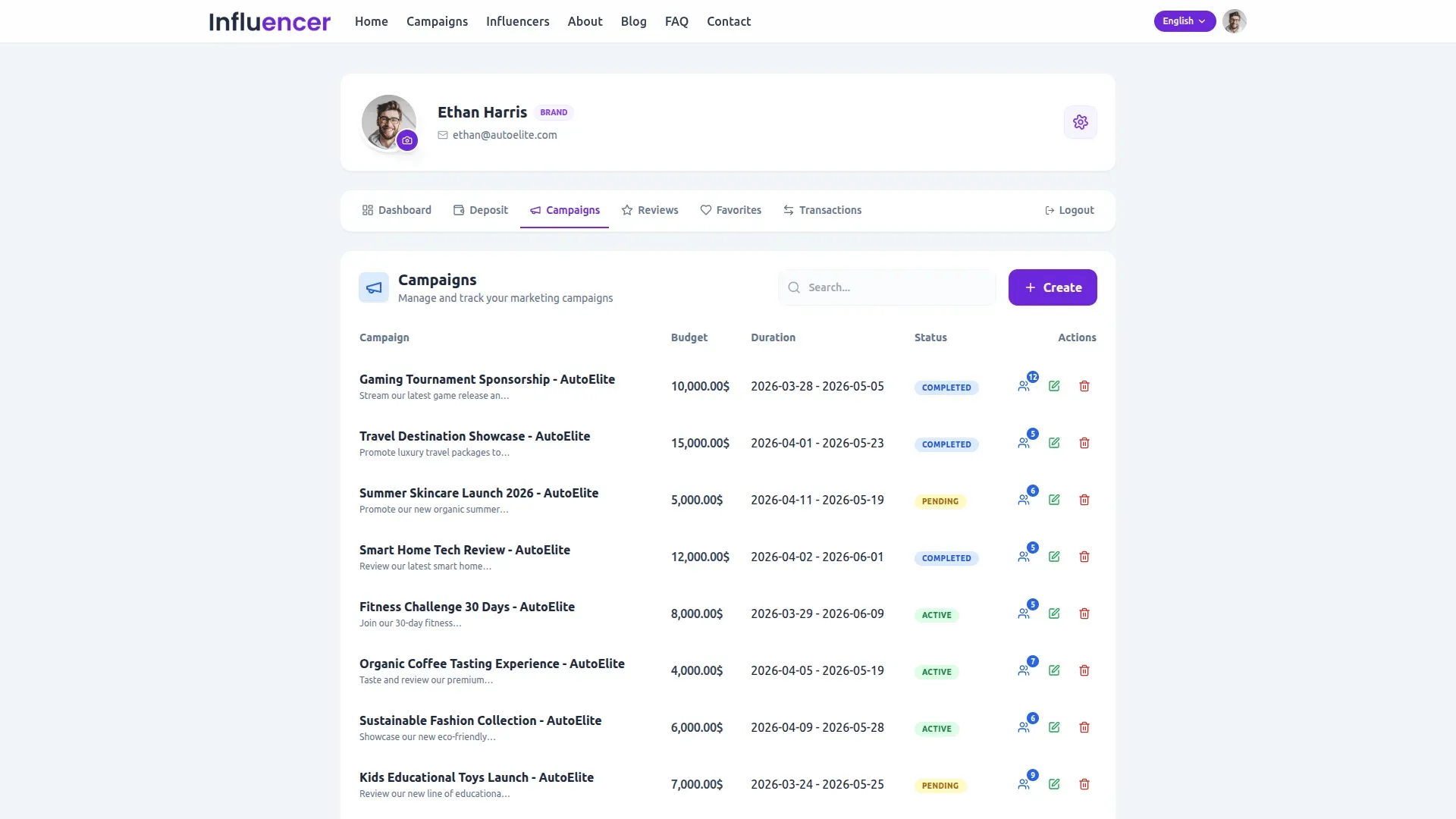
- The Campaigns tab shows all campaigns created by the brand, displaying the campaign name, short description, budget, duration dates, current status, and action options. Campaigns carry statuses of Active, Pending, or Completed.
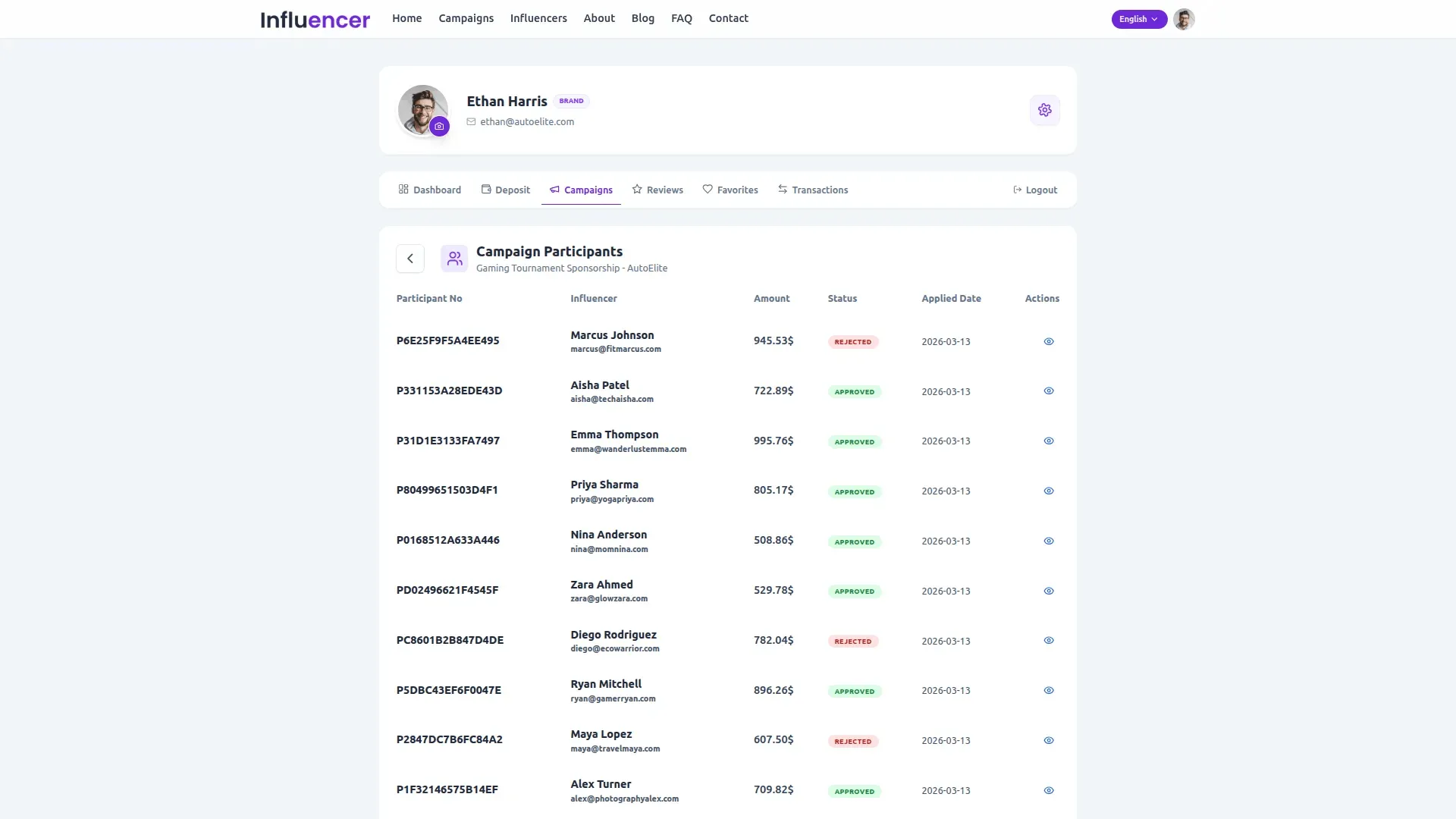
- In the Actions column, click the participants icon with a count badge to view all influencer applications for that campaign. Click Edit to modify campaign details. Click Delete to permanently remove the campaign.
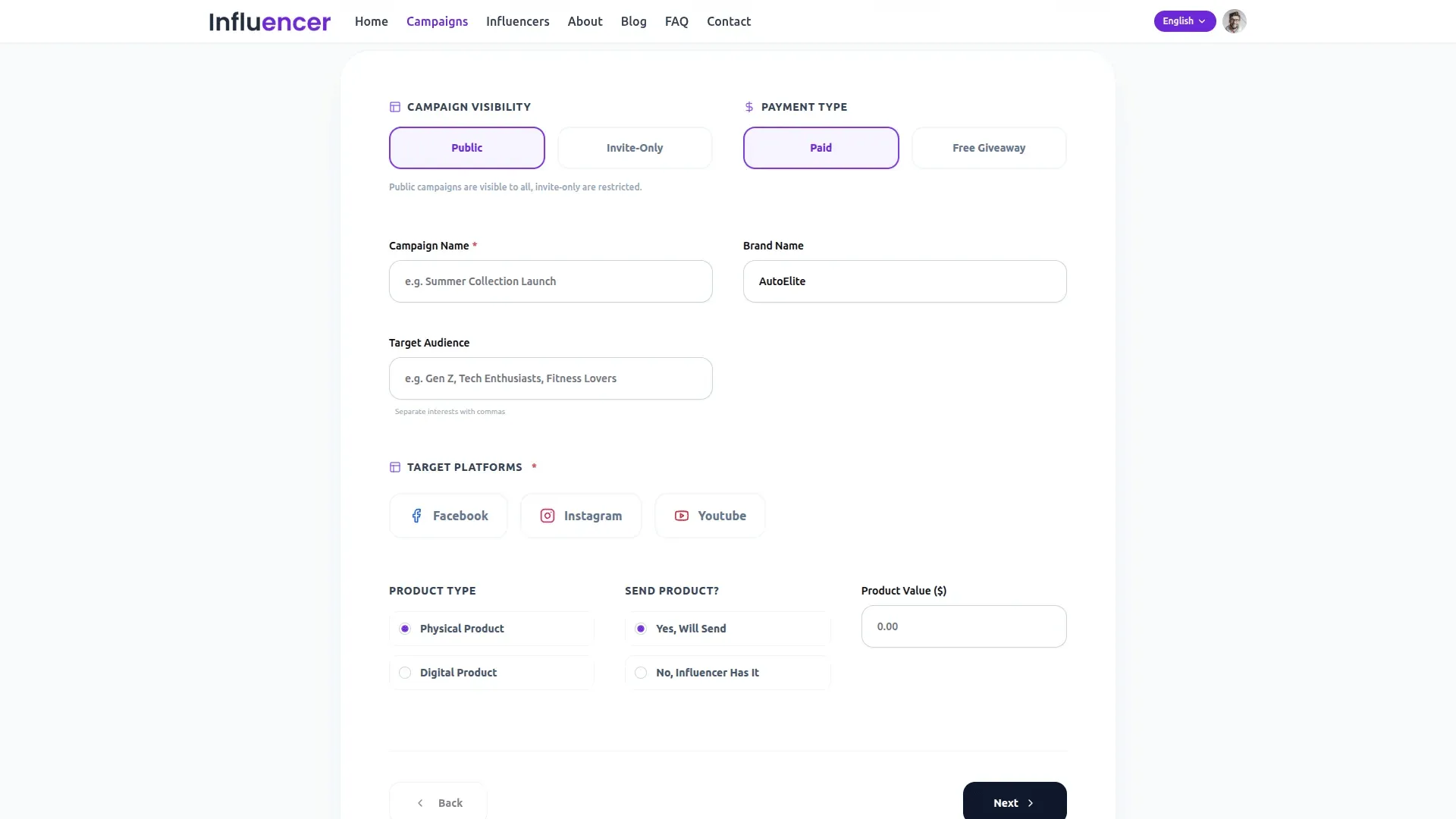
- To create a new campaign, click the “Create” button. The process is divided into five steps:
- Step 1 — Basic: Select Campaign Visibility as Public or Invite-Only and Payment Type as Paid or Free Giveaway. Enter the Campaign Name, Target Audience, select Target Platforms, choose Product Type, whether you will Send Product, and enter the Product Value.
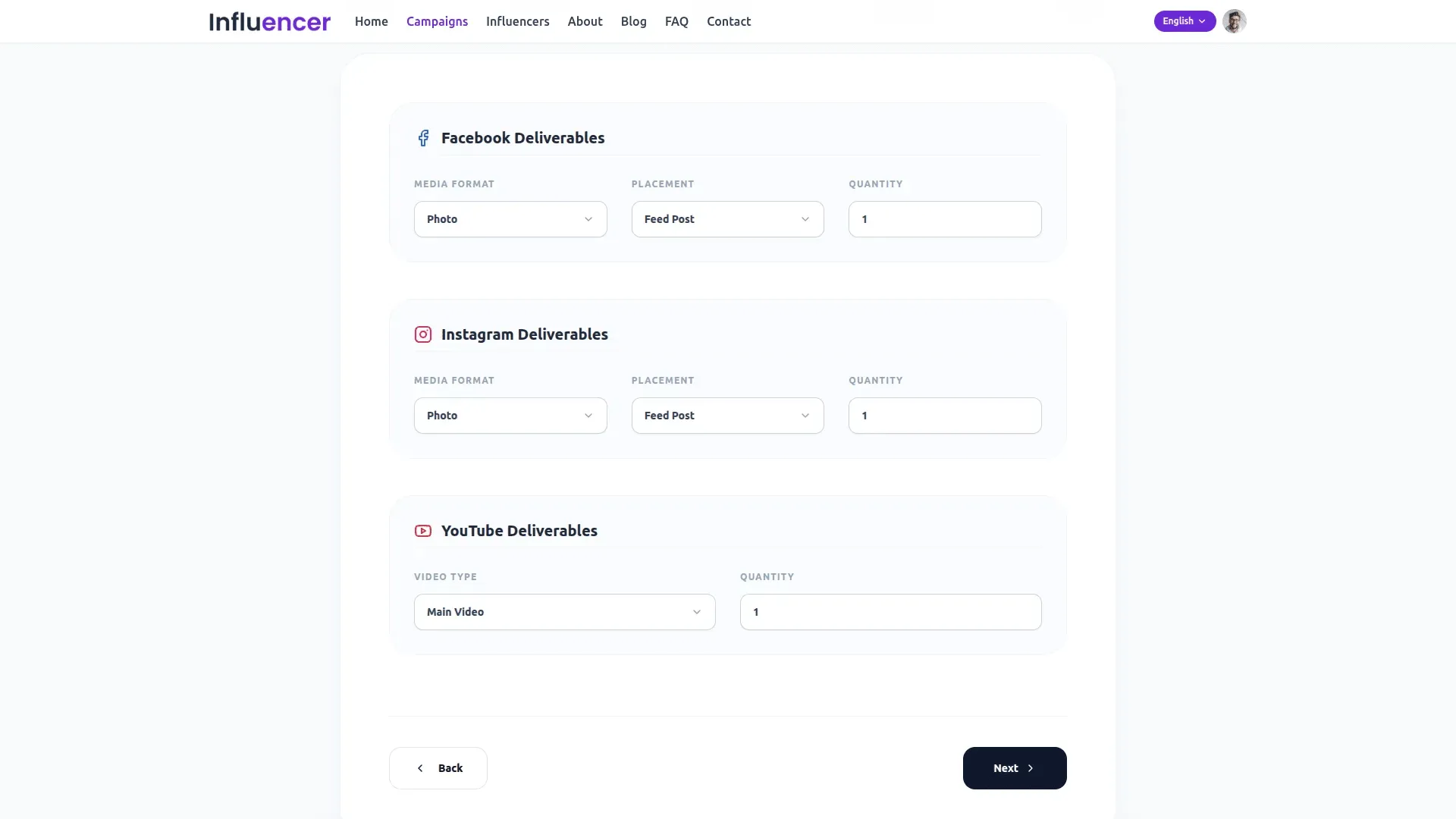
- Step 2 — Content: Define deliverables for each selected platform. For Facebook and Instagram, select the Media Format, Placement, and Quantity. For YouTube, select the Video Type and Quantity. Click Next to proceed.
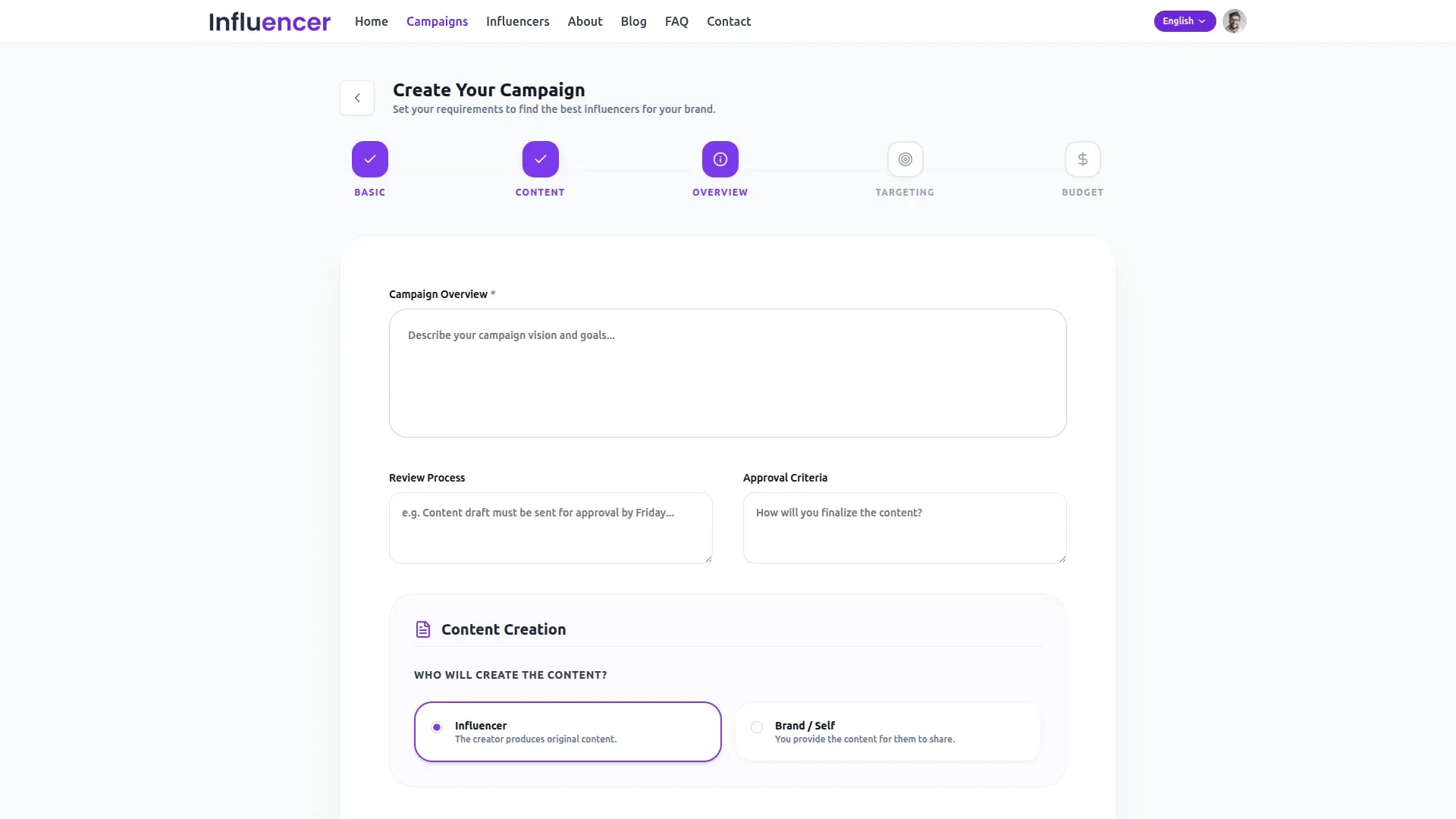
- Step 3 — Overview: Write a Campaign Overview describing the vision and goals. Fill in the Review Process and Approval Criteria. Select whether the Influencer or Brand / Self will create the content. Add Do’s & Don’ts guidelines, paste Reference Links, select Deliverable Tags, and upload a Campaign Thumbnail. Click Next to proceed.
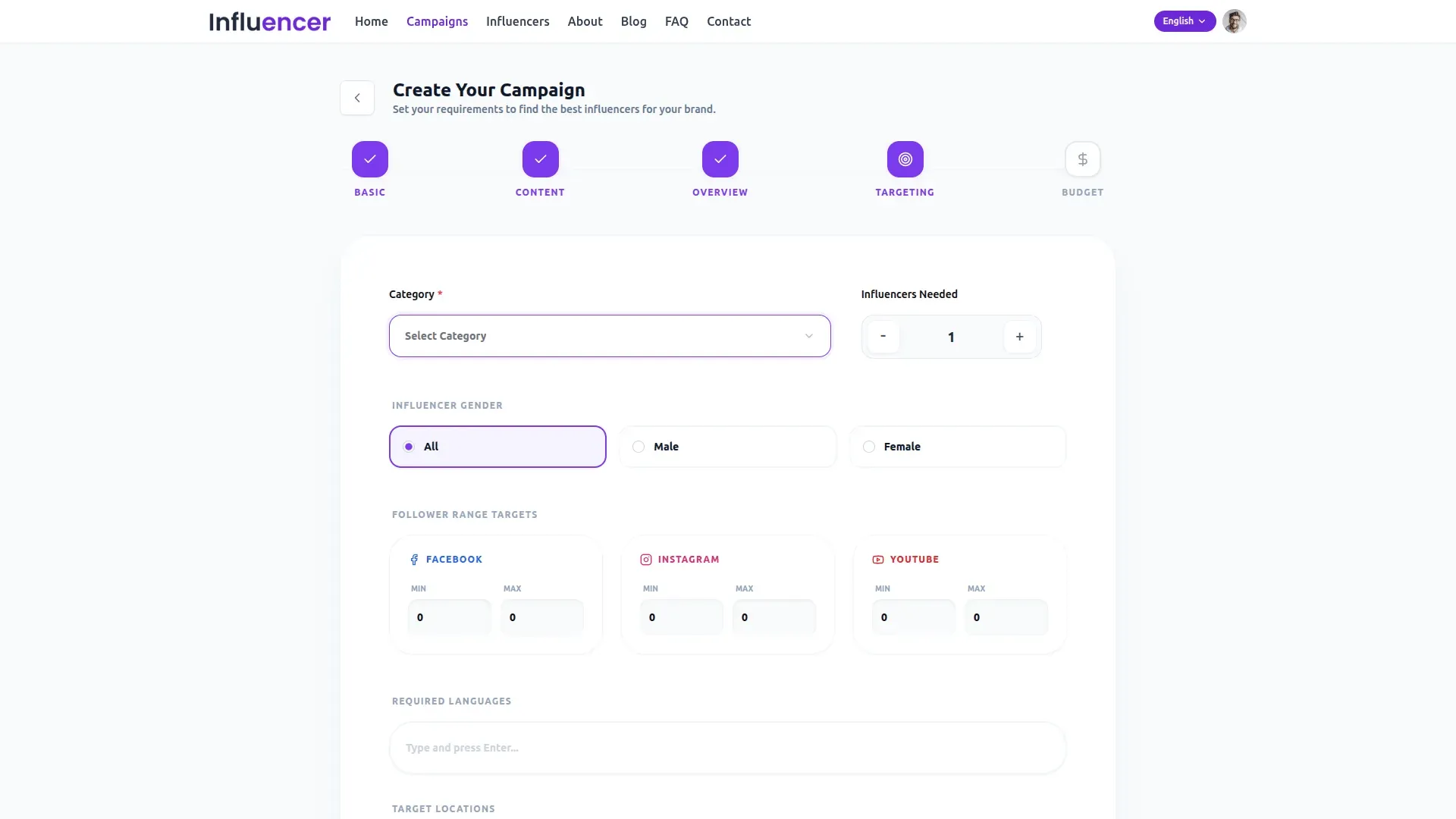
- Step 4 — Targeting: Select the Category, set the number of Influencers Needed, choose Influencer Gender preference, define Follower Range Targets per platform, add Required Languages, Target Locations, and describe the Preferred Content Type / Experience. Click Next to proceed
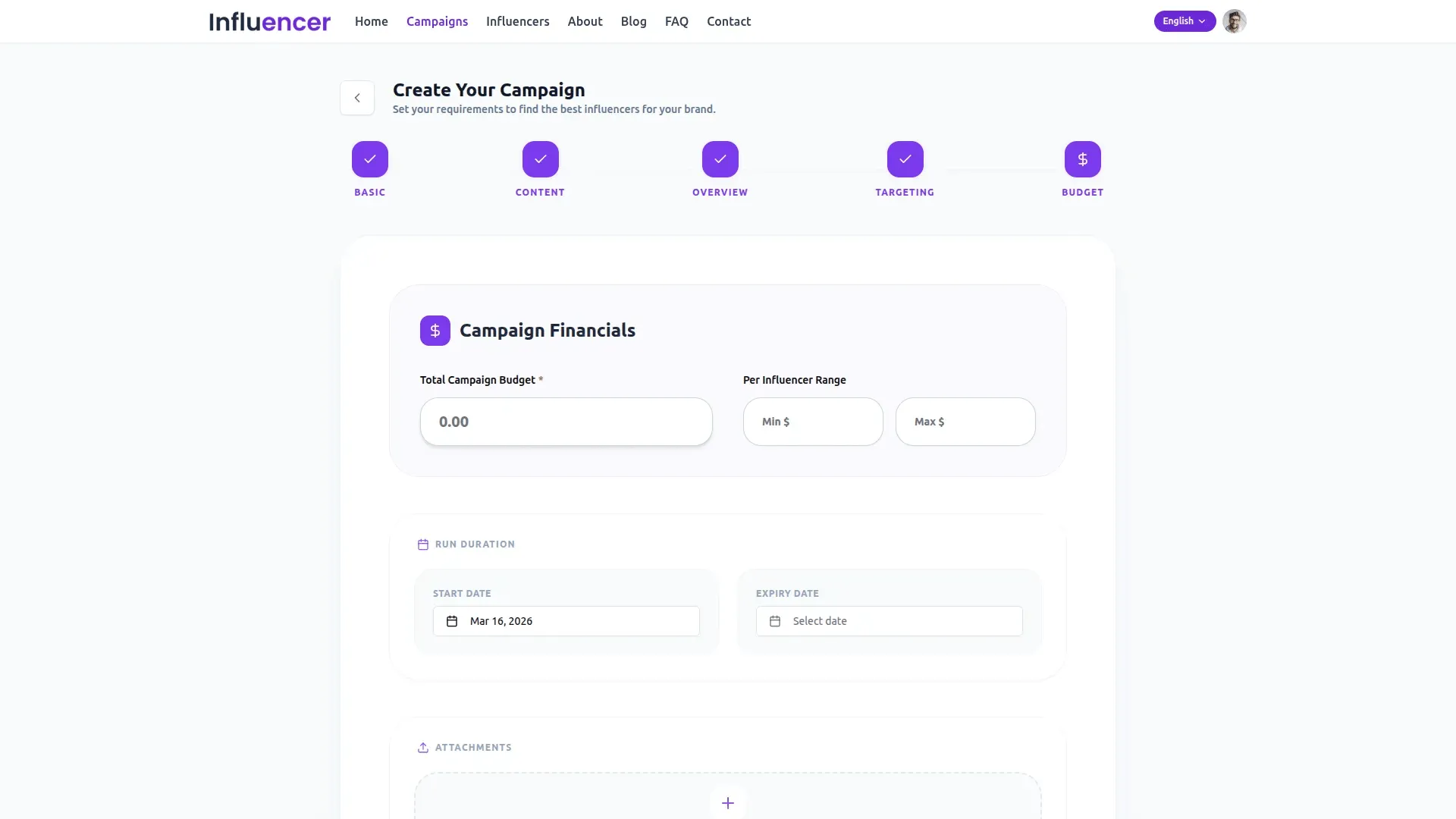
- Step 5 — Budget: Enter the Total Campaign Budget and set the Per Influencer Range with minimum and maximum amounts. Set the Start Date and Expiry Date. Optionally upload Attachments such as briefs or extra assets. Click Create to submit the campaign for admin review and approval.
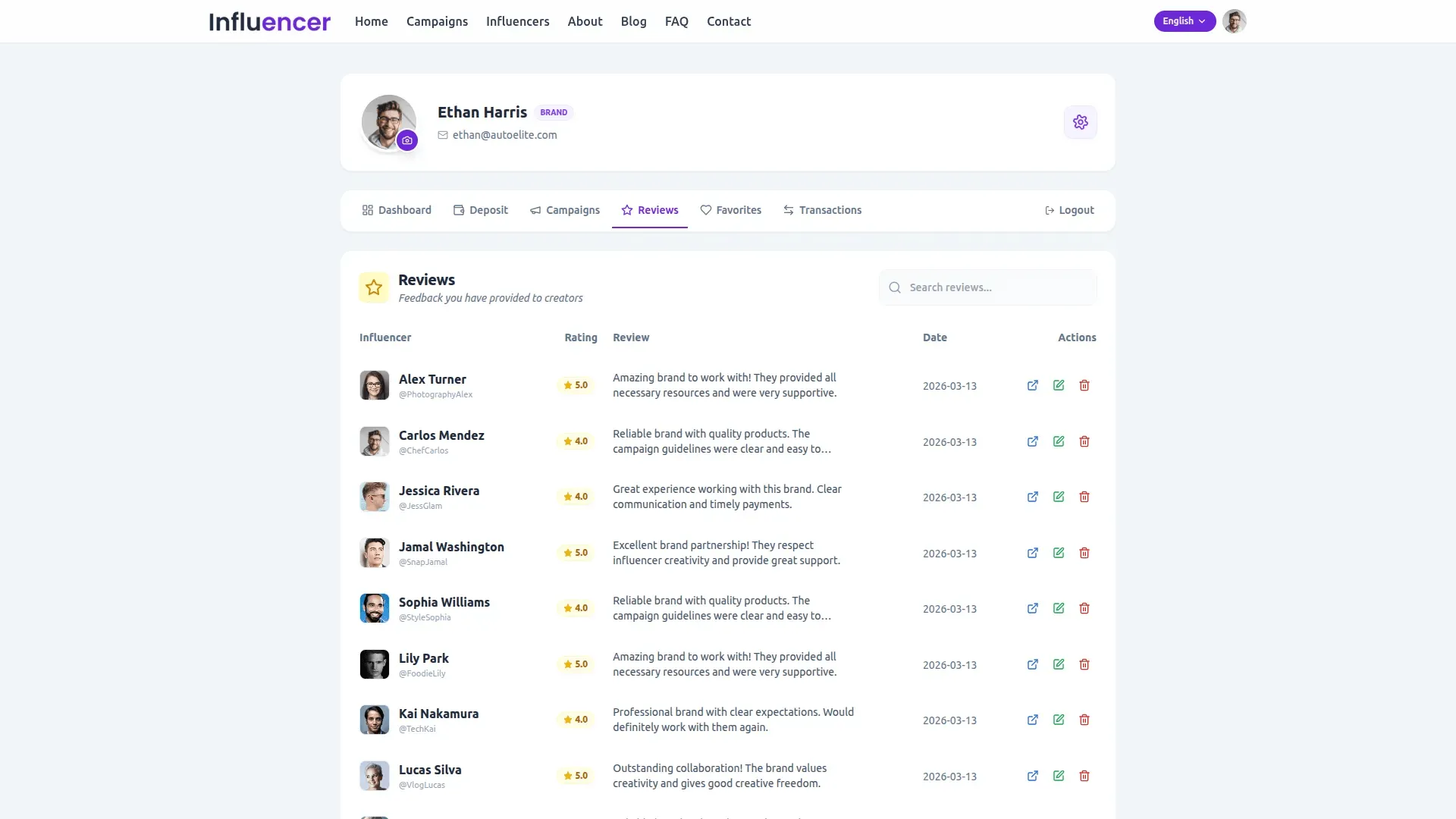
Reviews
- The Reviews tab allows brands to view all feedback they have given to influencers they have collaborated with, providing a record of past ratings and comments organized by influencer name, rating, and date.
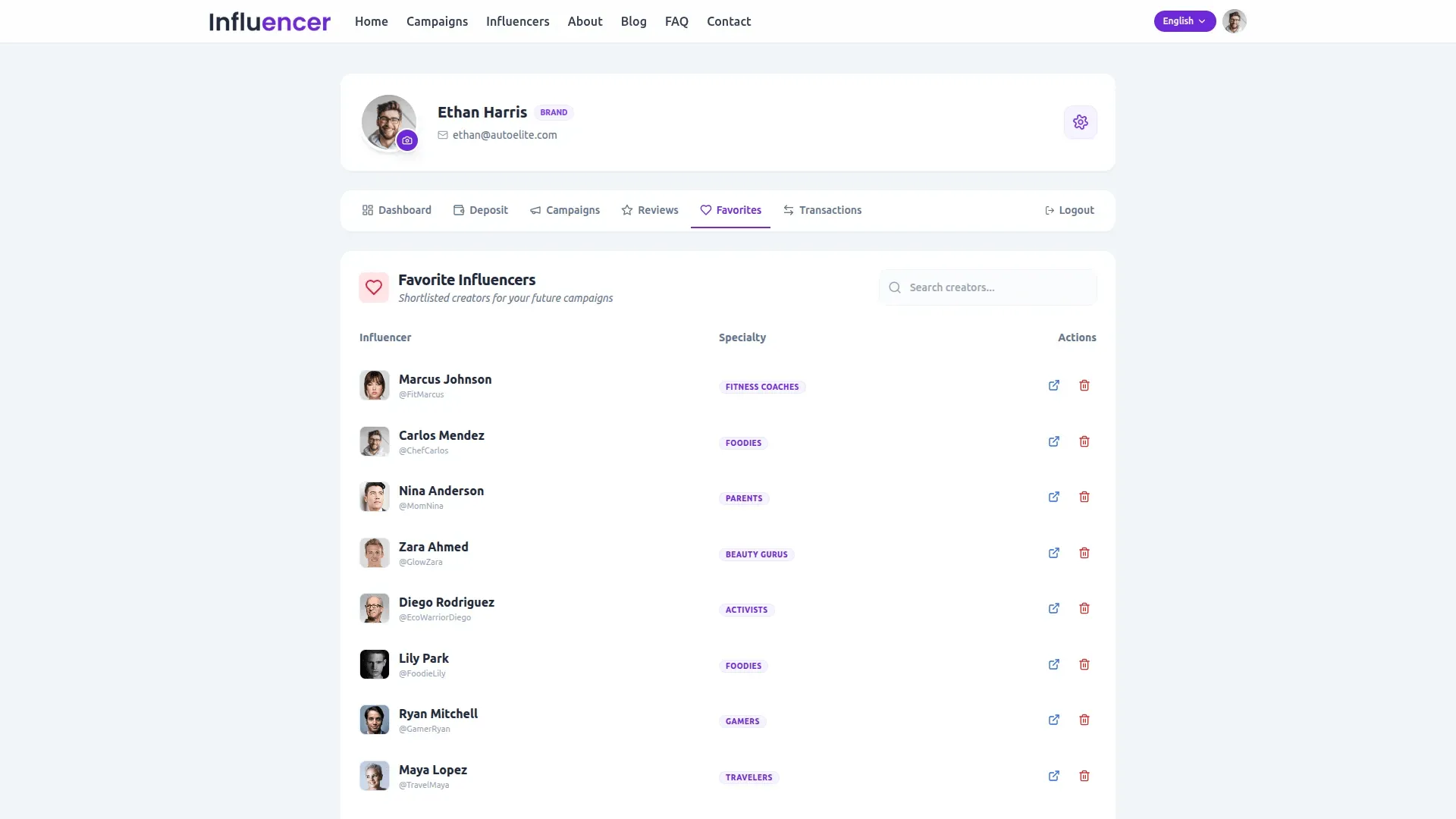
Favorites
- The Favorites tab allows brands to save and manage a list of preferred influencers they have bookmarked for future campaigns, making it easy to quickly identify and reach out to top creators they wish to collaborate with.
Transactions
- The Transactions tab gives brands a full record of all their financial activity on the platform, including deposit history, campaign spending, and balance changes, allowing the brand to track how their budget is being allocated across all influencer collaborations.
Categories
Related articles
- SWOT Analysis Model Integration in Dash SaaS
- Shopping Cart Integration in BookingGo SaaS
- User Manual – Advocate SaaS
- Flutter App Setup Handbook: A Step-by-Step Installation Guide
- Google Slides Detailed Documentation
- Product CSV – eCommerceGo Addon
- PayNow Payment Gateway Integration in Dash SaaS
- Discount Integration in BookingGo SaaS
- File Sharing Integration in Dash SaaS
- PEST Analysis Integration in Dash SaaS
- Portfolio Integration in Dash SaaS
- Wizzchat – eCommerceGo Addon
Reach Out to Us
Have questions or need assistance? We're here to help! Reach out to our team for support, inquiries, or feedback. Your needs are important to us, and we’re ready to assist you!

Need more help?
If you’re still uncertain or need professional guidance, don’t hesitate to contact us. You can contact us via email or submit a ticket with a description of your issue. Our team of experts is always available to help you with any questions. Rest assured that we’ll respond to your inquiry promptly.
Love what you see?
Do you like the quality of our products, themes, and applications, or perhaps the design of our website caught your eye? You can have similarly outstanding designs for your website or apps. Contact us, and we’ll bring your ideas to life.