
Solar Hub Detailed Documentation
Solar Hub Management is a comprehensive software solution designed to streamline and manage all aspects of your solar business operations.
Introduction
The Solar Hub Add-On is a comprehensive solar business management solution that streamlines your operations from a single platform. It covers the full order lifecycle, from product and inventory management through to order processing, payment collection, maintenance, and inspections. With a real-time dashboard and flexible system setup options, the Solar Hub Add-On gives you complete visibility and control over your solar business operations.
How To Install The Add-On?
To Set Up the Solar Hub Add-On, you can follow this link: Setup Add-On.
How To Use The Solar Hub Add-On?
Solar Hub Dashboard
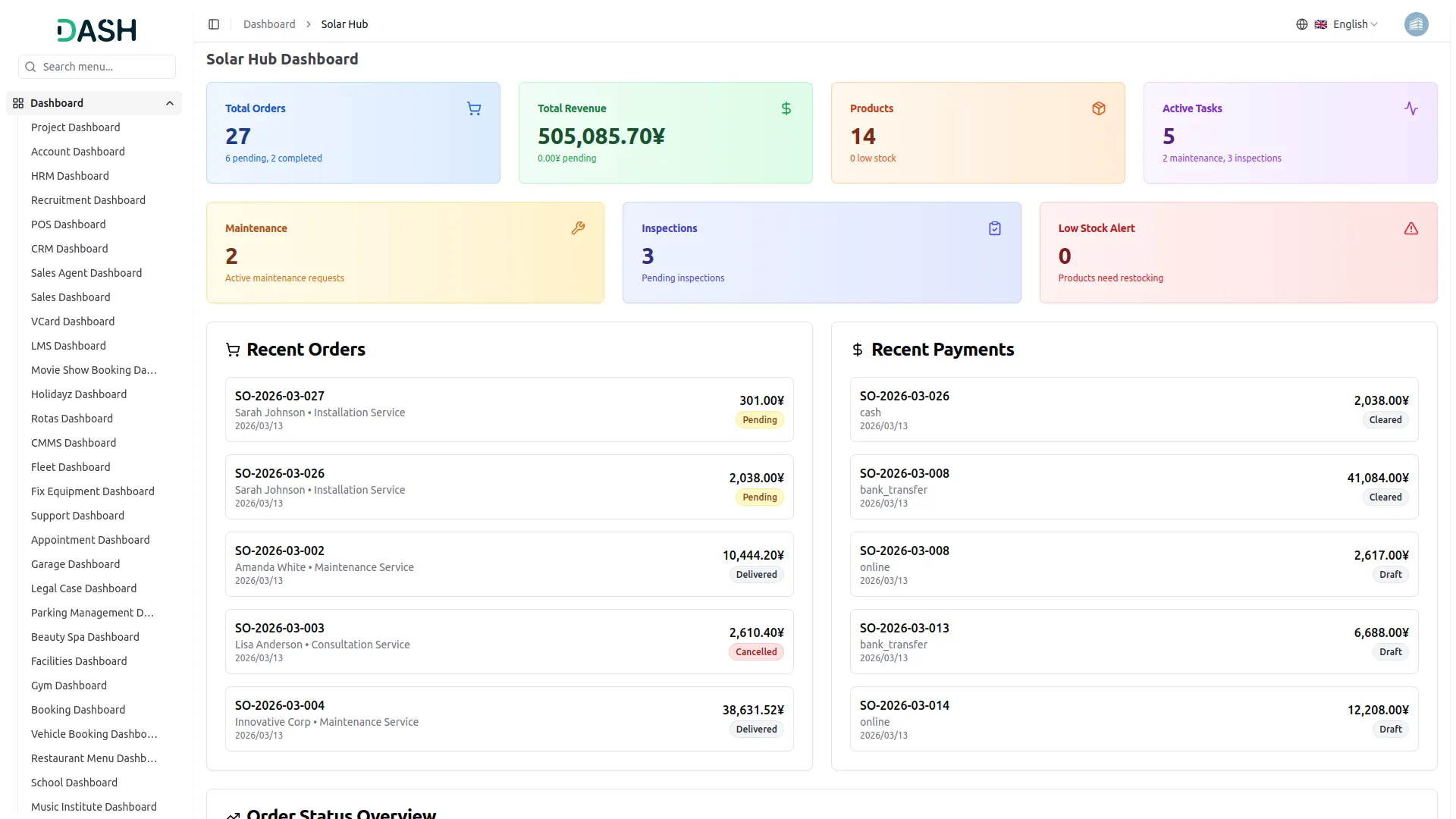
- The Solar Hub Dashboard provides a complete overview of your solar business operations at a glance. The dashboard displays key performance metrics through various widgets and panels.
- At the top of the dashboard, you’ll find seven important summary cards showing Total Orders, Total Revenue, Products, Active Tasks, Maintenance, Inspections, and Low Stock Alert.
- The Recent Orders panel lists the latest orders along with the order number, customer name, service type, date, and current status. This allows you to quickly review recent order activity and stay on top of incoming and ongoing orders across your customer base.
- The Recent Payments panel displays the latest payment transactions along with the order number, payment method, date, amount, and payment status. This helps you monitor incoming payments and identify any outstanding Draft transactions that are yet to be cleared.
- The Order Status Overview section provides a visual breakdown of all orders distributed across different statuses, including Assigned, Cancelled, On Hold, Completed, Delivered, Maintenance Due, In Progress, Approved, Rejected, and Pending.
- Each status card displays the count and its percentage of total orders, giving you an at-a-glance understanding of where your orders currently stand across the entire workflow.
- At the bottom of the dashboard, a summary bar displays five key order totals: Total Orders, Completed Orders, Pending Orders, Cancelled Orders, and In Progress Orders, giving you a quick consolidated view of your overall order pipeline at all times.
System Setup
Product Types
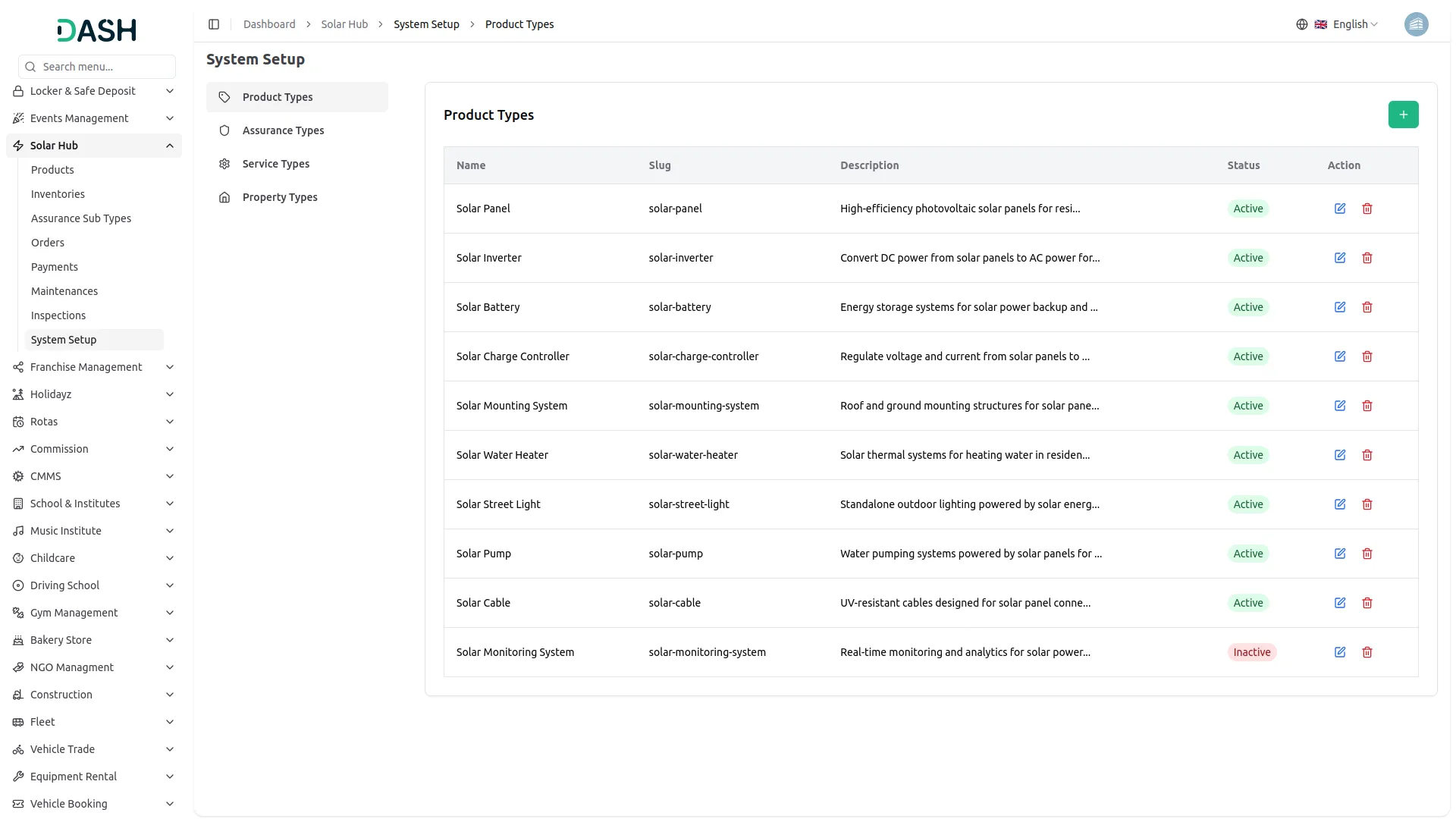
- To create a new Product Type, click the “Create” button on the Product Types page. Enter the Product Type name in the Name field. Optionally, enter a description in the Description field. Toggle the Status to set it as Active or Inactive, then click Create to save the record.
- The list page displays all product types in a table with columns for Name, Slug, Description, Status, and Actions. Status will show as either Active or Inactive, reflecting the current availability of that product type within the system.
- In the Actions column, use the Edit to update any product type information. Use the Delete to permanently remove the product type from the system.
Assurance Types
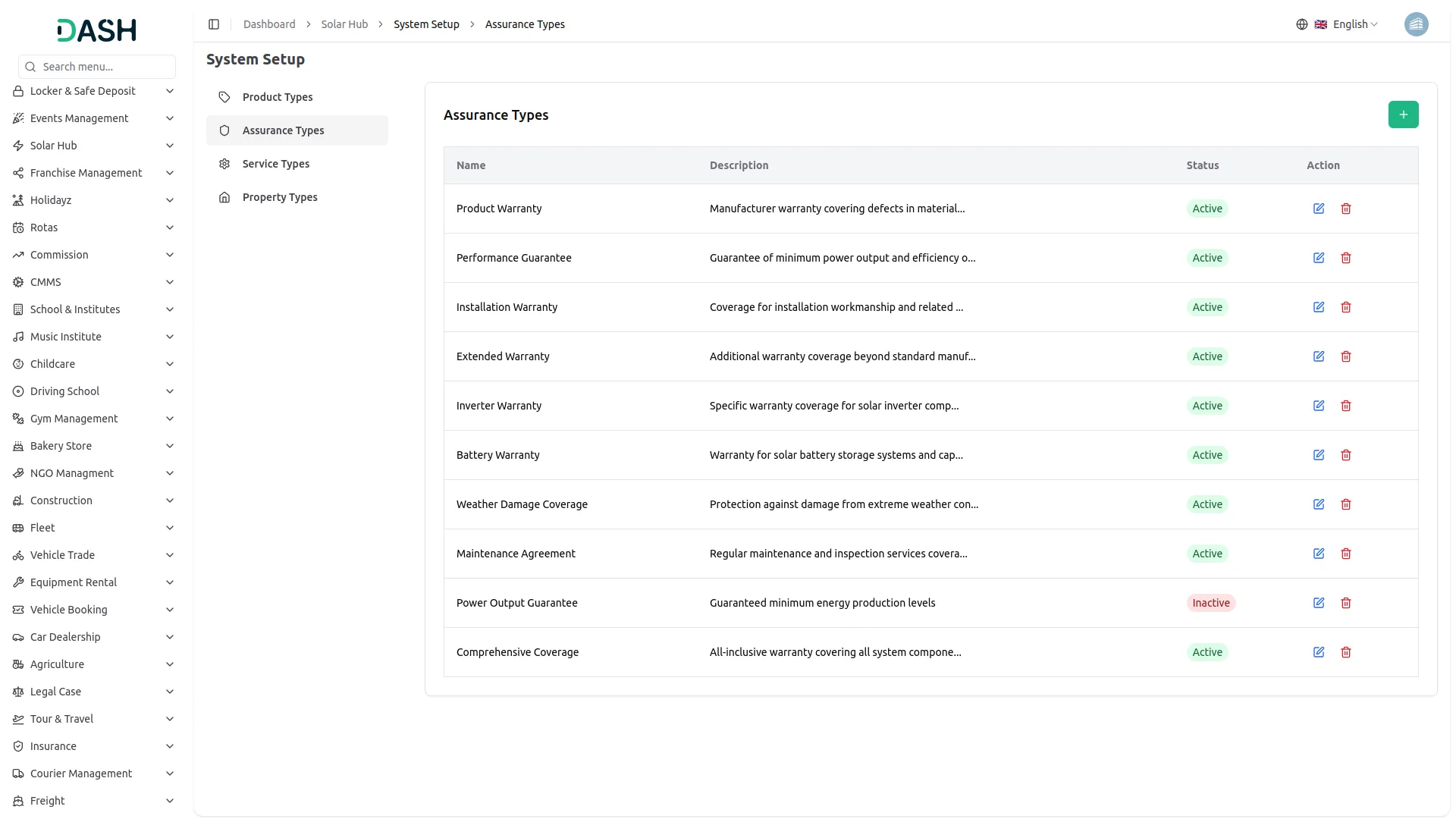
- To create a new Assurance Type, click the “Create” button on the Assurance Types page. Enter the Assurance Type name in the Name field. Optionally, enter a description in the Description field. Toggle the Status to set it as Active or Inactive, then click Create to save the record.
- The list page displays all assurance types in a table with columns for Name, Description, Status, and Actions. Status will show as either Active or Inactive, reflecting the current availability of that assurance type within the system.
- In the Actions column, use the Edit to update any assurance type information. Use the Delete to permanently remove the assurance type from the system.
Service Types
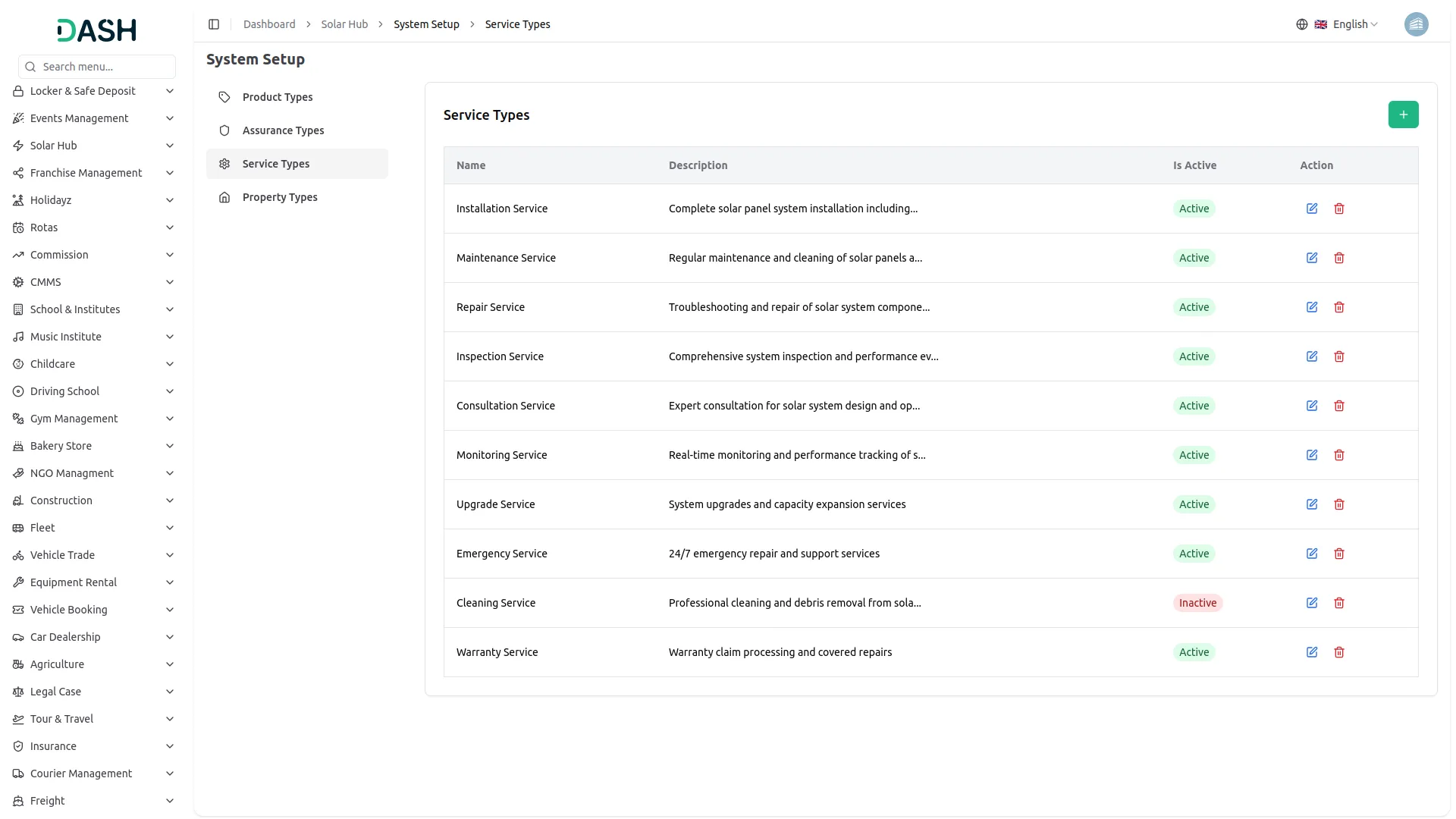
- To create a new Service Type, click the “Create” button on the Service Types page. Enter the Service Type name in the Name field. Optionally, enter a description in the Description field. Toggle the Status to set it as Active or Inactive, then click Create to save the record.
- The list page displays all service types in a table with columns for Name, Description, Is Active, and Actions. Is Active will show as either Active or Inactive, reflecting whether that service type is currently available within the system.
- In the Actions column, use the Edit to update any service type information. Use the Delete to permanently remove the service type from the system.
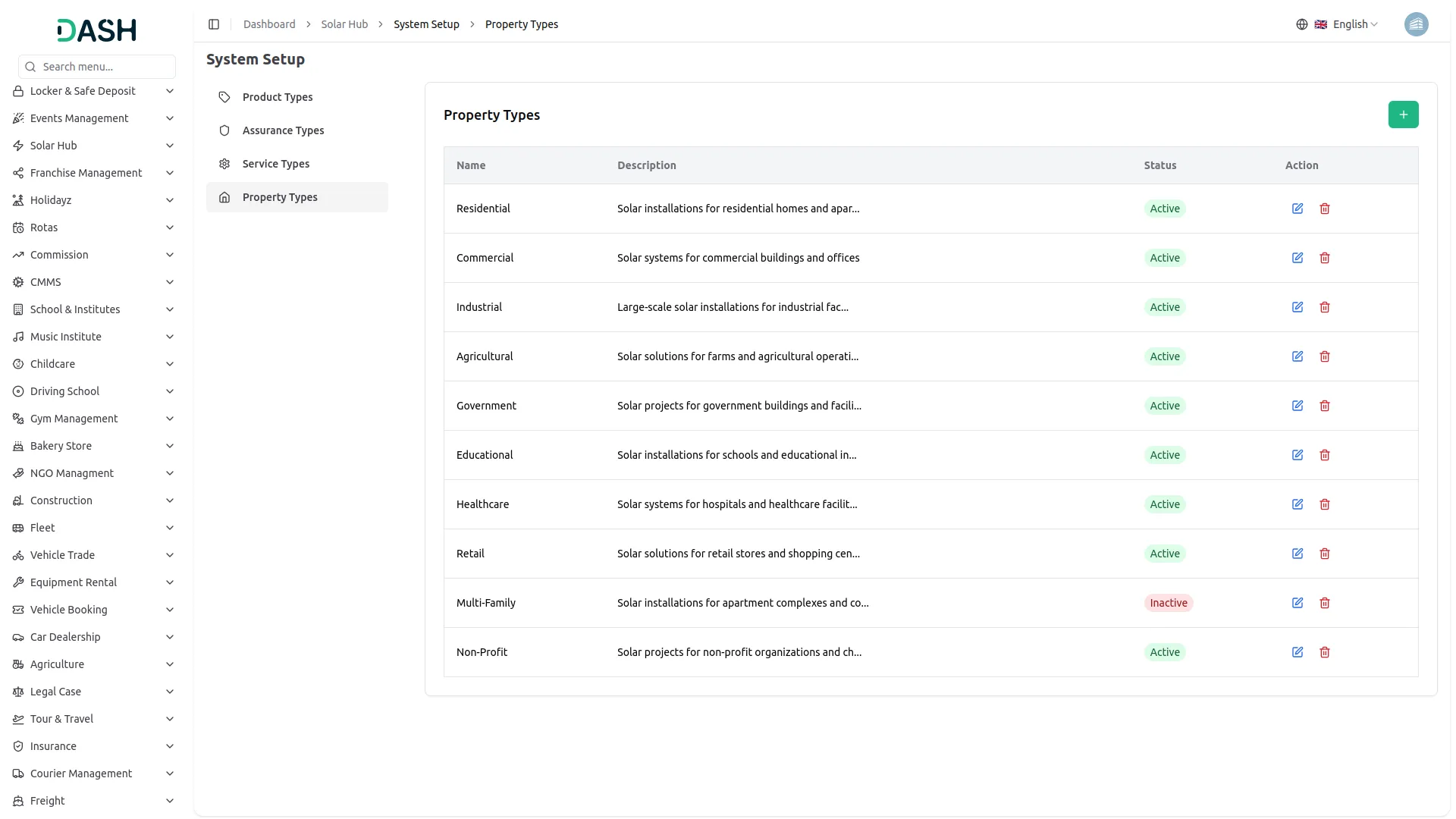
Property Types
- To create a new Property Type, click the “Create” button on the Property Types page. Enter the Property Type name in the Name field. Optionally, enter a description in the Description field. Toggle the Status to set it as Active or Inactive, then click Create to save the record.
- The list page displays all property types in a table with columns for Name, Description, Status, and Actions. Status will show as either Active or Inactive, reflecting the current availability of that property type within the system.
- In the Actions column, use the Edit to update any property type information. Use the Delete to permanently remove the property type from the system.
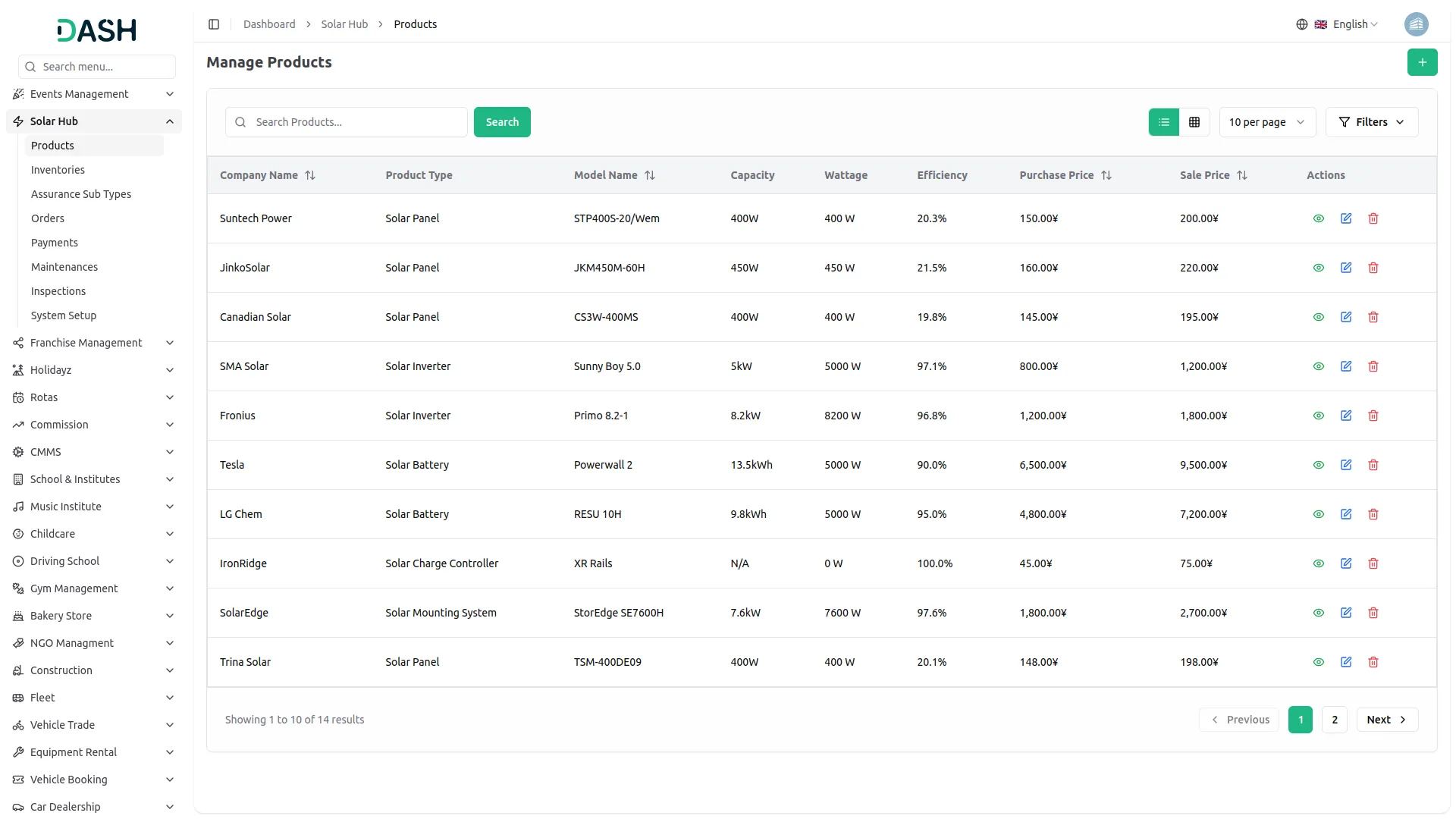
Manage Products
- To create a new Product, click the “Create” button on the Manage Products page. Select the Product Type from the dropdown, then enter the Company Name and Model Name in their respective fields.
- Optionally, enter the Serial Number, Product Category, Capacity, Wattage (W), Efficiency (%), Weight (KG), Max Voltage (V), Max Current (A), and Warranty Period (months). Enter the Purchase Price and Sale Price, and select the applicable Tax from the dropdown.
- Enter the Warranty Covered and Warranty Not Covered details in their respective text areas, and add a Description if needed, then click Create to save the record.
- The list page displays all products in a table with columns for Company Name, Product Type, Model Name, Capacity, Wattage, Efficiency, Purchase Price, Sale Price, and Actions.
- Use the Search bar to find products by name, or use the Filter by Product Type dropdown and click Apply to narrow results by product type. Click Clear to reset the filter. The list view can be toggled between list and grid layout using the view icons.
- In the Actions column, use the View to see the full details of a product. Use the Edit to update any product information. Use the Delete to permanently remove the product from the system.
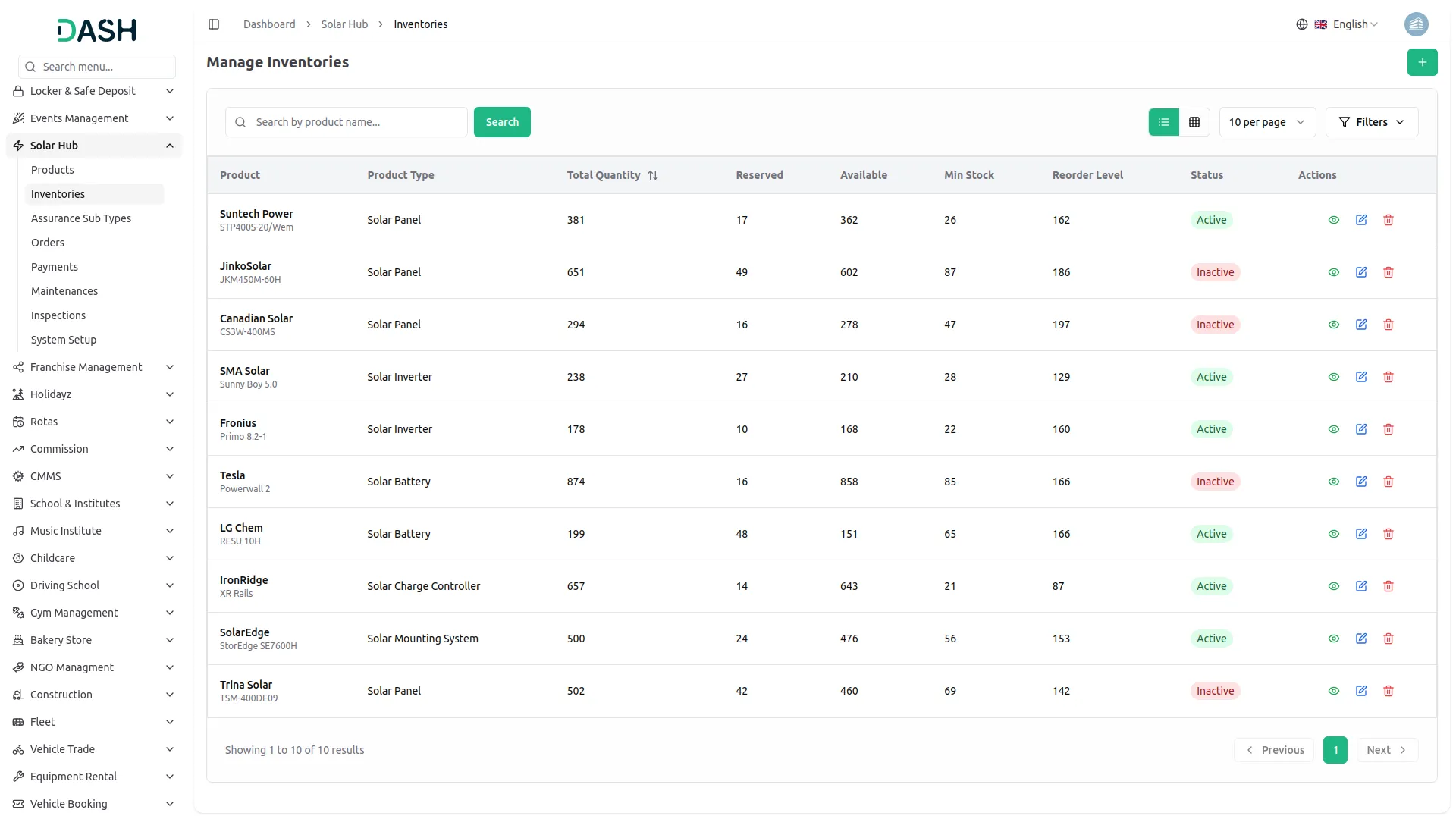
Manage Inventories
- To create a new Inventory record, click the “Create” button on the Manage Inventories page. Select the Product Type from the dropdown, then select the Product from the Product dropdown. Enter the Total Quantity, and optionally enter the Reserved Quantity, Minimum Stock Level, and Reorder Level. Add any relevant Notes in the text area, then click Create to save the record.
- The list page displays all inventory records in a table with columns for Product, Product Type, Total Quantity, Reserved, Available, Min Stock, Reorder Level, Status, and Actions.
- Use the Search bar to find inventory records by product name, or use the Filter by Product Type and Filter by Status dropdowns and click Apply to narrow results. Click Clear to reset the filters.
- The list view can be toggled between list and grid layout using the view icons. Status will show as either Active or Inactive, reflecting the current availability of that inventory record within the system.
- In the Actions column, use the View to see the full details of an inventory record. Use the Edit to update any inventory information. Use the Delete to permanently remove the inventory record from the system.
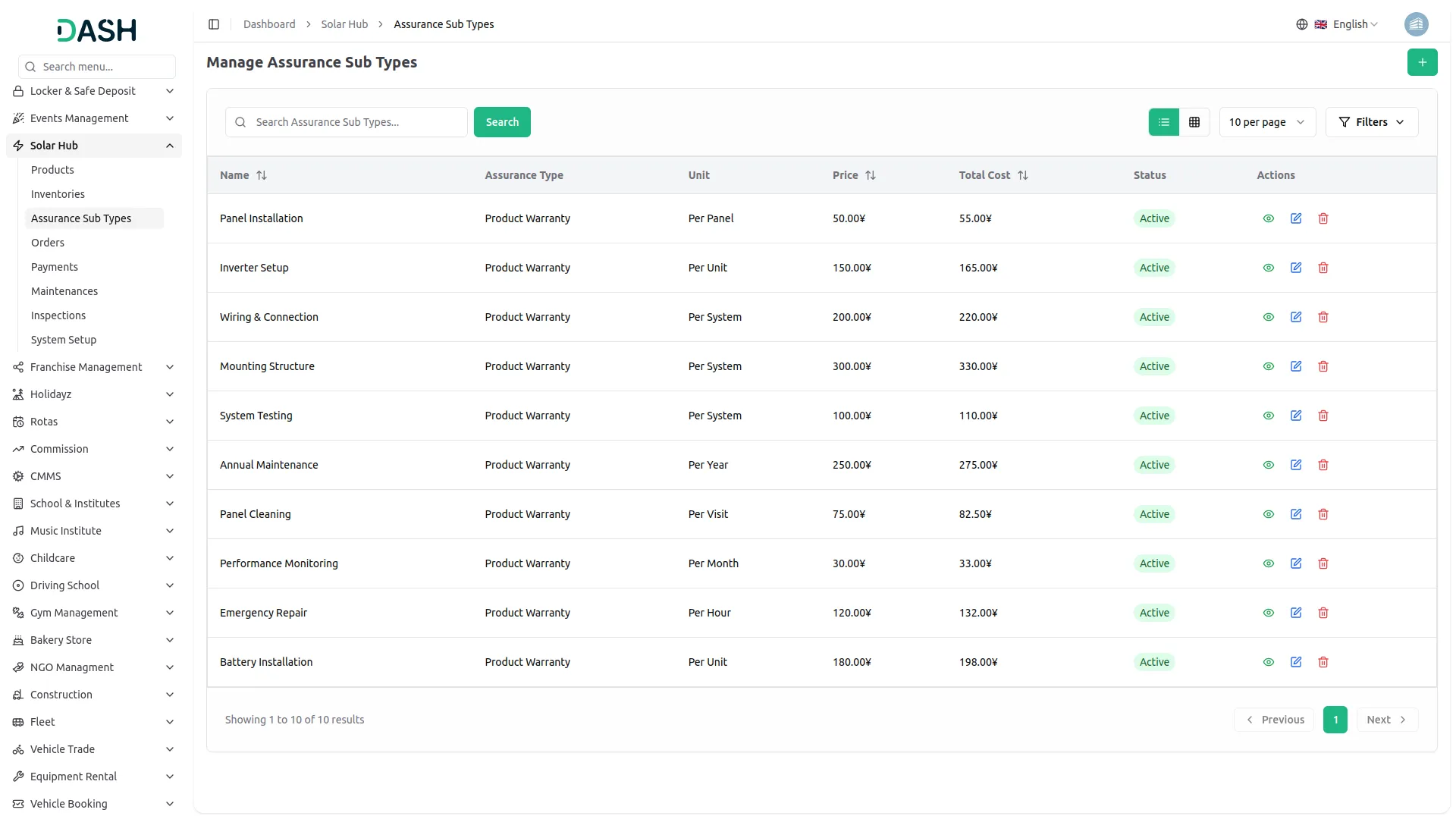
Assurance Sub Types
- To create a new Assurance Sub Type, click the “Create” button on the Manage Assurance Sub Types page. Select the Assurance Type Id from the dropdown, then enter the Name in the text field.
- Optionally, enter the Unit and a Description. Enter the Price, and select the applicable Tax from the dropdown, the Total Cost will be calculated automatically. Check or uncheck the Is Active checkbox to set the record as active or inactive, then click Create to save the record.
- The list page displays all assurance sub types in a table with columns for Name, Assurance Type, Unit, Price, Total Cost, Status, and Actions.
- Use the Search bar to find assurance sub types by name, or use the Filter by Assurance Type and Filter by Status dropdowns and click Apply to narrow results. Click Clear to reset the filters.
- The list view can be toggled between list and grid layout using the view icons. Status will show as either Active or Inactive, reflecting the current availability of that assurance sub type within the system.
- In the Actions column, use the View to see the full details of an assurance sub type. Use the Edit to update any assurance sub type information. Use the Delete to permanently remove the assurance sub type from the system.
Manage Orders
- To create a new Order, click the “Create” button on the Manage Orders page. Under Order Details, select the Customer, Service Type, and Property Type from their respective dropdowns.
- Enter the Load Demand (kW), and set the Order Date, Delivery Date, and Installation Date using the date pickers. Assign a User from the Assign User dropdown. Set the Order Status (defaulting to Pending) and Payment Status (defaulting to Unpaid) from their respective dropdowns.
- Optionally, add an Order Description in the text area. Under Order Items, select the Product Type and Product, then enter the Quantity, Price, and Discount %. Taxes and Tax Amount will be calculated automatically, updating the Items Summary with Subtotal, Discount, Tax Amount, and Total.
- Click “Add Item” to include additional order items. Under Assurance Items, select the Assurance Type and Sub Type, then enter the Quantity, Price, and Discount %. Tax details will calculate automatically, updating the Assurance Summary accordingly. Click ” Add Assurance” to include additional assurance items. The overall Total Amount reflecting all items and assurances is displayed at the bottom of the page, then click Create to save the order.
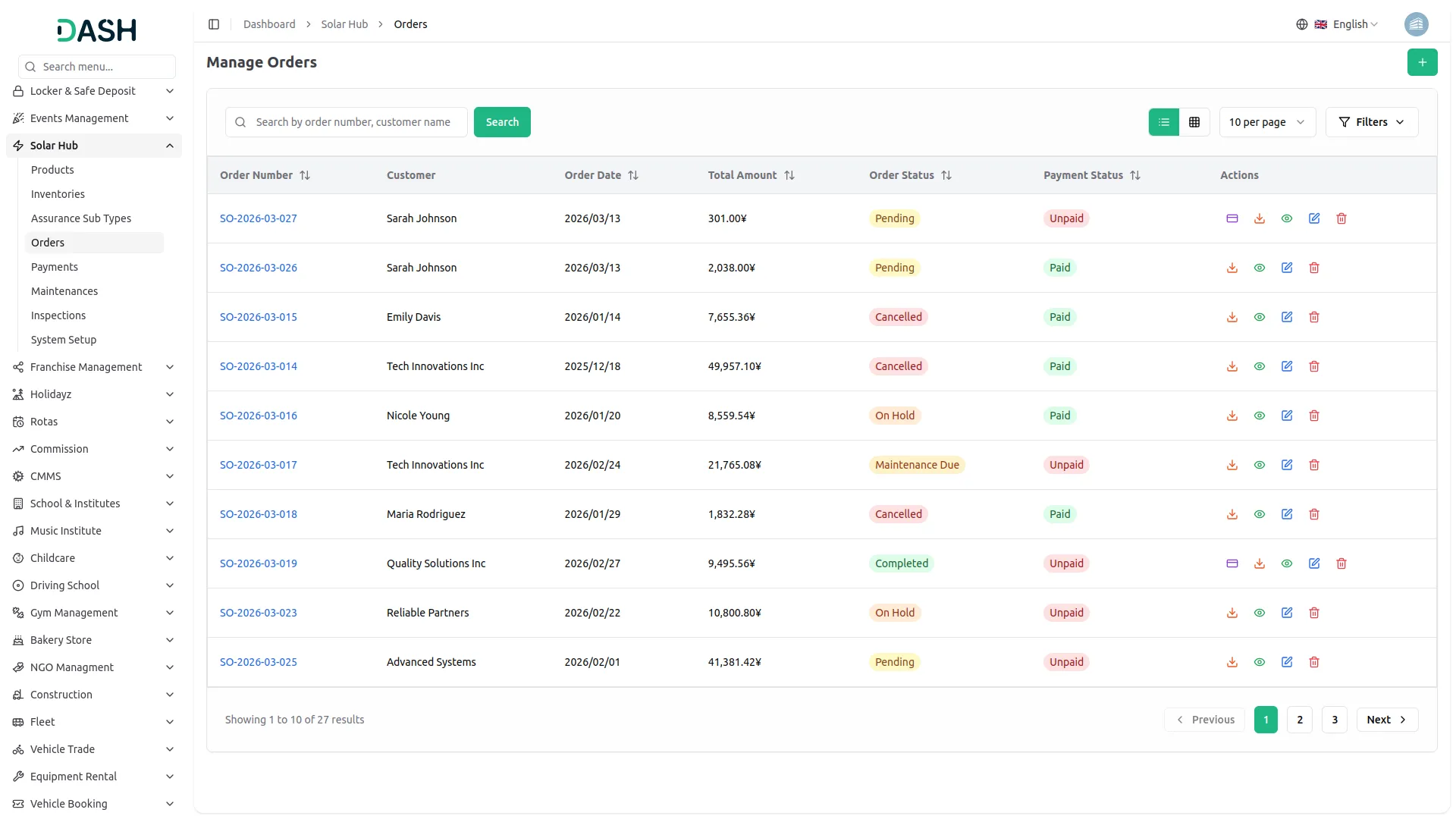
- The list page displays all orders in a table with columns for Order Number, Customer, Order Date, Total Amount, Order Status, Payment Status, and Actions. Use the Search bar to find orders by order number or customer name, or use the Filter by Order Status and Filter by Payment Status dropdowns and click Apply to narrow results.
- Click Clear to reset the filters. Results can also be adjusted using the per-page selector to control how many records appear at a time. The list view can be toggled between list and grid layout using the view icons.
- Order Status may show as Pending, Approved, In Progress, Completed, Cancelled, Rejected, Maintenance Due, or On Hold. Payment Status will show as either Paid or Unpaid.
- In the Actions column, use the Download to export the order details. Use the View to see the full details of an order. Use the Edit to update any order information. Use the Delete to permanently remove the order from the system.
Manage Payments
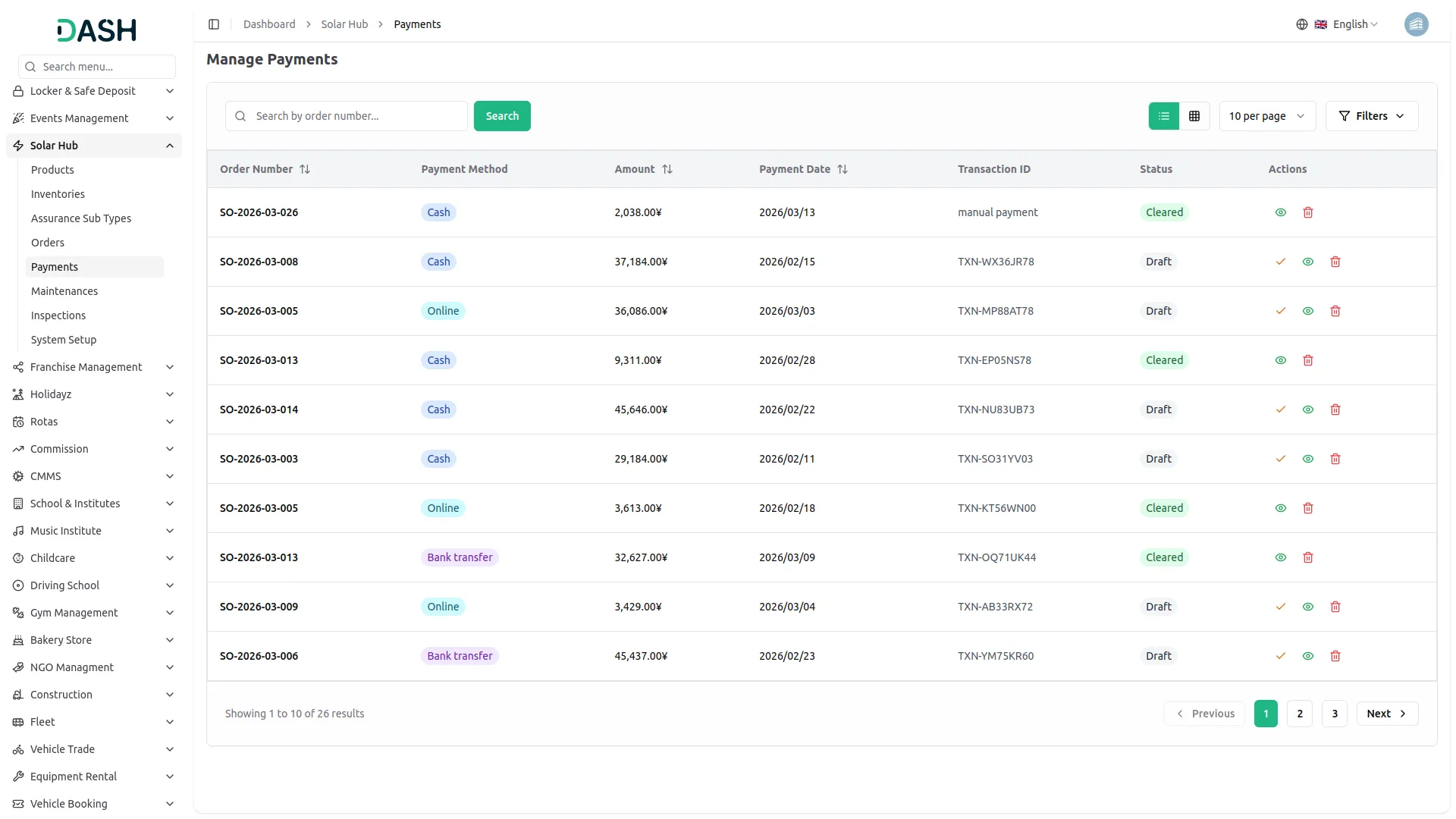
- The list page displays all payment records in a table with columns for Order Number, Payment Method, Amount, Payment Date, Transaction ID, Status, and Actions. Use the Search bar to find payments by order number, or use the Filter by Payment Method and Filter by Status dropdowns and click Apply to narrow results.
- Click Clear to reset the filters. Results can also be adjusted using the per-page selector to control how many records appear at a time. The list view can be toggled between list and grid layout using the view icons. Status will show as either Cleared or Draft, reflecting the current state of the payment within the system.
- In the Actions column, use the Mark as Cleared to update a payment’s status from Draft to Cleared. Use the View to see the full details of a payment record. Use the Delete to permanently remove the payment record from the system.
Manage Maintenance
- To create a new Maintenance record, click the “Create” button on the Manage Maintenances page. Select the Order Number from the dropdown, then enter the Subject in the text field.
- Set the Request Date and optionally select a Delivery Date using the date pickers. Select the Maintenance Type (defaulting to Paid) and enter the Amount. Set the Status (defaulting to Pending) and optionally assign a User from the Assign User dropdown. Select the Bank Account from the dropdown, and optionally add a Description in the text area, then click Create to save the record.
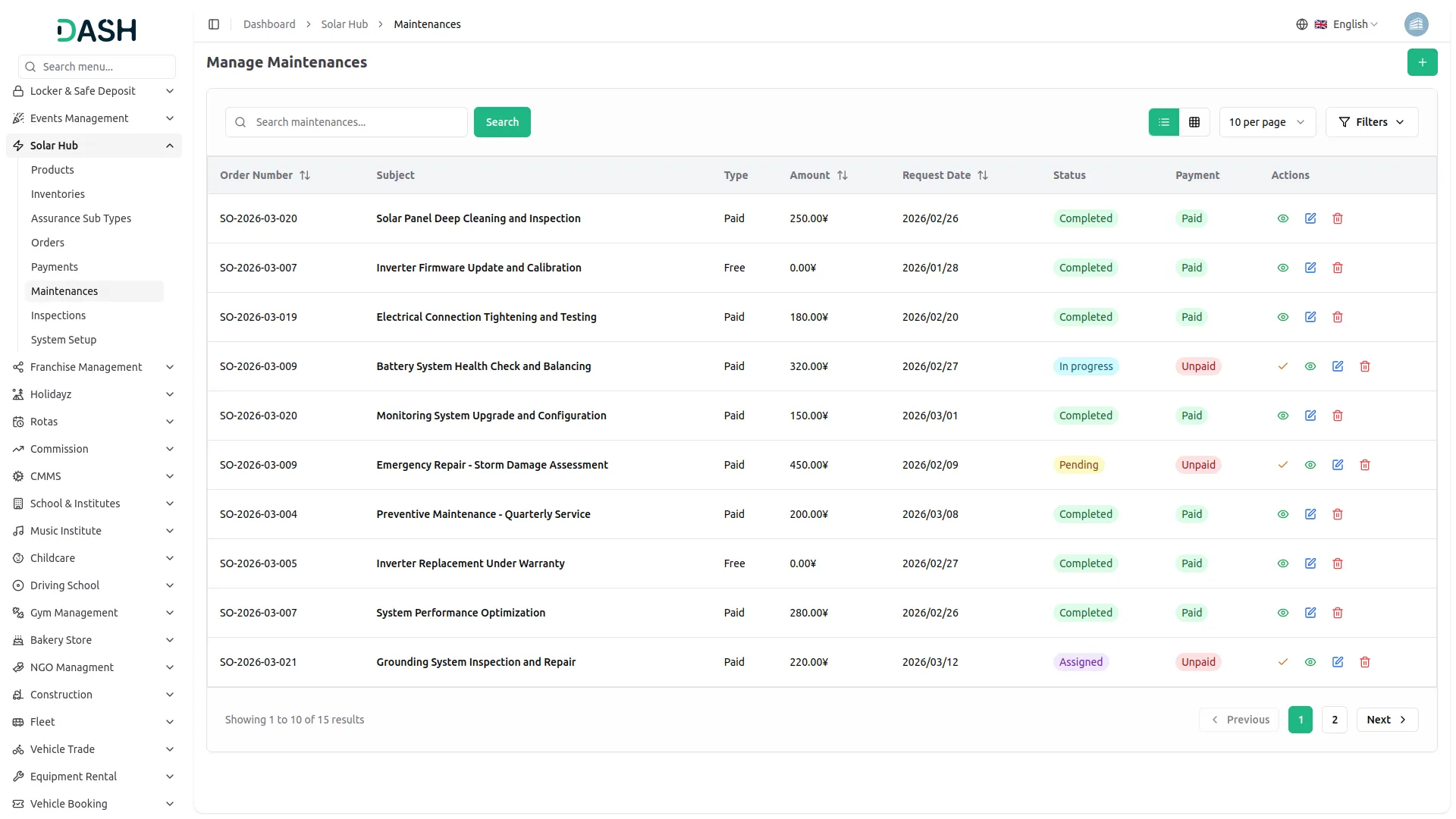
- The list page displays all maintenance records in a table with columns for Order Number, Subject, Type, Amount, Request Date, Status, Payment, and Actions. Use the Search bar to find maintenance records by name, or use the Filter by Maintenance Type, Filter by Status, and Filter by Payment dropdowns and click Apply to narrow results. Click Clear to reset the filters.
- The list view can be toggled between list and grid layout using the view icons. Status may show as Completed, In Progress, Pending, or Assigned. Payment will show as either Paid or Unpaid, reflecting the current payment state of that maintenance record within the system.
- In the Actions column, use the Mark as Cleared to confirm and clear the payment for a maintenance record. Use the View to see the full details of a maintenance record. Use the Edit to update any maintenance information. Use the Delete to permanently remove the maintenance record from the system.
Manage Inspections
- To create a new Inspection, click the “Create” button on the Manage Inspections page. Select the Order Number from the dropdown, then enter the Subject in the text field. Set the Inspection Date using the date picker, and select the Inspection Type (defaulting to Routine) from the dropdown.
- Set the Status (defaulting to Pending) and optionally assign a User from the Assign User dropdown. Optionally, add any Remarks in the text area, then click Create to save the record.
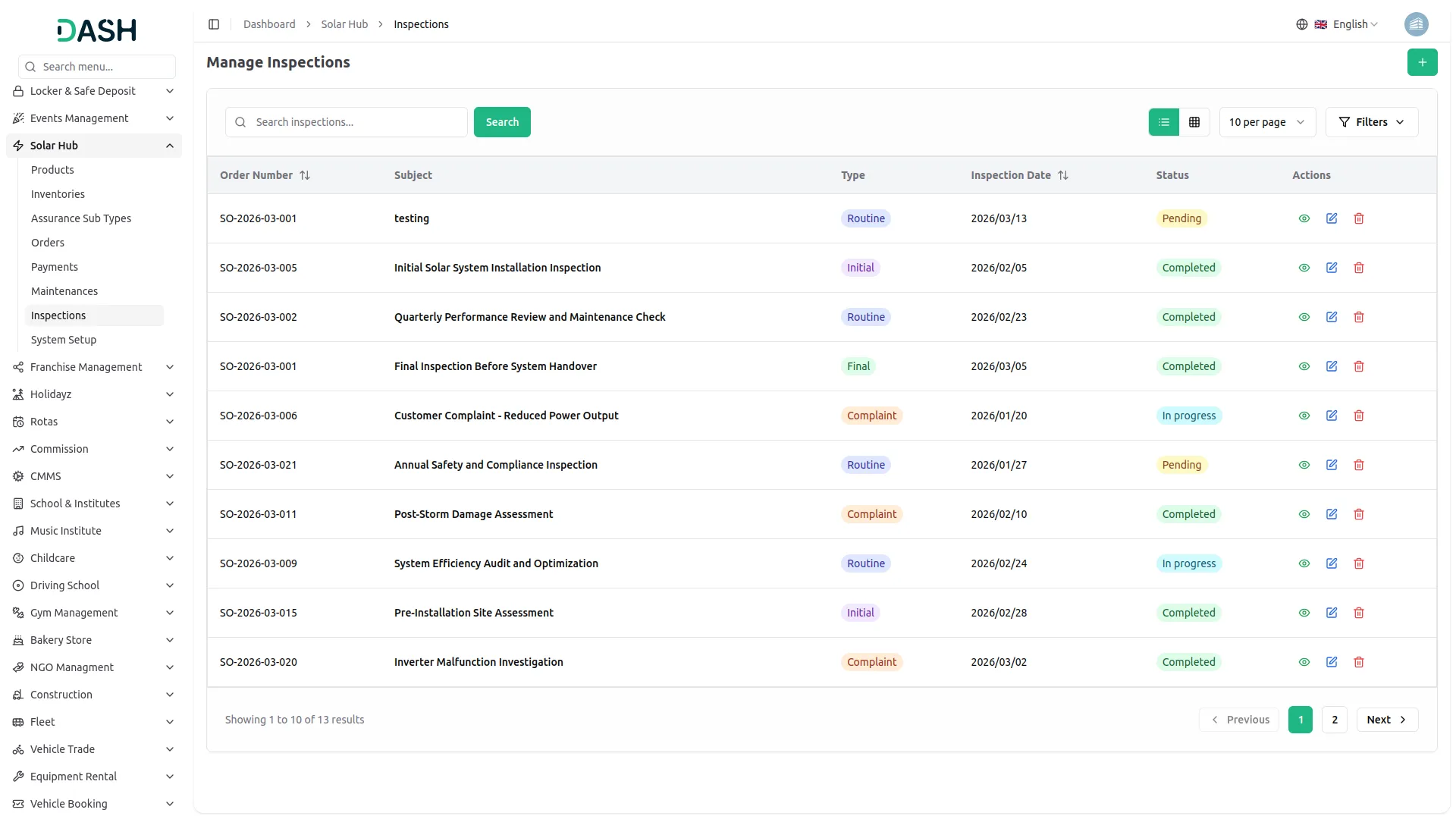
- The list page displays all inspections in a table with columns for Order Number, Subject, Type, Inspection Date, Status, and Actions. Use the Search bar to find inspections by name, or use the Filter by Inspection Type and Filter by Status dropdowns and click Apply to narrow results. Click Clear to reset the filters.
- The list view can be toggled between list and grid layout using the view icons. Type may show as Complaint, Initial, Routine, or Final. Status may show as In Progress, Completed, or Pending, reflecting the current state of that inspection within the system.
- In the Actions column, use the View to see the full details of an inspection. Use the Edit to update any inspection information. Use the Delete to permanently remove the inspection from the system.
Categories
Related articles
- Product Enquiry Integration in eCommerceGo SaaS
- Coupon Email Integration in eCommerceGo SaaS
- Custom Field Integration in Dash SaaS
- Tawk.to Messenger Integration in Dash SaaS
- Mailchimp Integration in Dash SaaS
- Game Zone Add-On Detailed Documentation
- Asset Borrow And Rent Integration in Dash SaaS
- Google Analytics Integration in Dash SaaS
- Tiffin Service Manager Integration in Dash SaaS
- WhatsApp Twilio Integration in BookingGo SaaS
- Nepalste Integration in Dash SaaS
- Recurring Invoice/Bills Integration in Dash SaaS
Reach Out to Us
Have questions or need assistance? We're here to help! Reach out to our team for support, inquiries, or feedback. Your needs are important to us, and we’re ready to assist you!


Need more help?
If you’re still uncertain or need professional guidance, don’t hesitate to contact us. You can contact us via email or submit a ticket with a description of your issue. Our team of experts is always available to help you with any questions. Rest assured that we’ll respond to your inquiry promptly.
Love what you see?
Do you like the quality of our products, themes, and applications, or perhaps the design of our website caught your eye? You can have similarly outstanding designs for your website or apps. Contact us, and we’ll bring your ideas to life.