
Backup & Restore – WorkDo Dash SaaS Add-On Guide
Learn how to create backups and restore data in WorkDo Dash SaaS.
Introduction
The Backup & Restore software is a comprehensive data protection and recovery platform designed to help system administrators and IT professionals safeguard critical business data through automated backup processes. This system provides complete control over database and file backup operations, allowing users to create, manage, and restore backups of both database content and project files. The software supports selective backup options, enabling users to choose between database-only backups, file-only backups, or comprehensive full system backups. All backup operations are managed through the Super Admin Panel, ensuring that only authorized personnel can perform these critical data protection tasks. Whether you need to create regular backup schedules, perform emergency data recovery, or maintain data compliance requirements, this software provides all the tools needed to ensure your business data remains secure and recoverable.
How to Install the Add-On?
To Set Up the Backup & Restore Add-On, you can follow this link: Setup Add-On.
How To Use the Backup & Restore Add-On?
Creating a New Backup
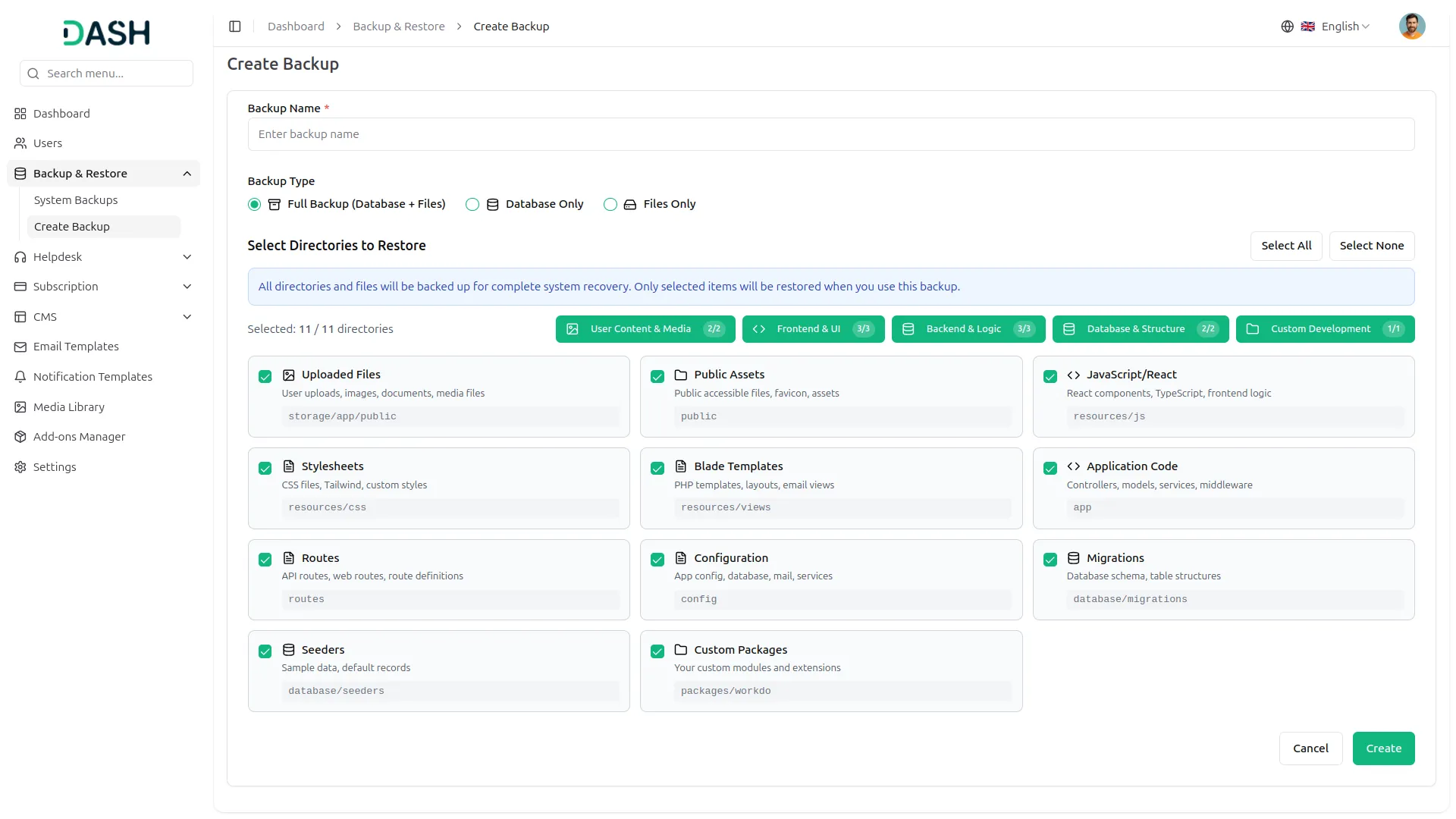
- To create a new backup, navigate to the System Backups section in the Backup & Restore section from the Super Admin Panel and click the “Create Backup” button. This functionality is restricted to authorized administrators only.
- Enter a unique Backup Name that indicates the backup’s purpose or timing for easier identification during restoration or management.
- Select your Backup Type from three available options: “Full Backup (Database + Files)” for comprehensive system recovery, including database and project files, “Database Only” for database content and structures only, or “Files Only” for project directories and files only.
- In the “Select Directories to Restore” section, choose which directories to include in your backup. All selected content will be backed up, but only the chosen items will be restored when using this backup. The system organizes directories into categories: “User Content & Media”, “Frontend & UI”, “Backend & Logic”, “Database & Structure”, and “Custom Development”.
- Available directories include Uploaded Files, Public Assets, JavaScript/React, Stylesheets, Blade Templates, Application Code, Routes, Configuration, Migrations, Seeders, and Custom Packages. Each option displays a checkbox, name, description, and file path. Select or deselect directories as needed using individual checkboxes.
- Click “Create” to initiate the backup process or “Cancel” to exit. The system will process your request and redirect you to the backup list page to monitor the status.
Backup List and Management
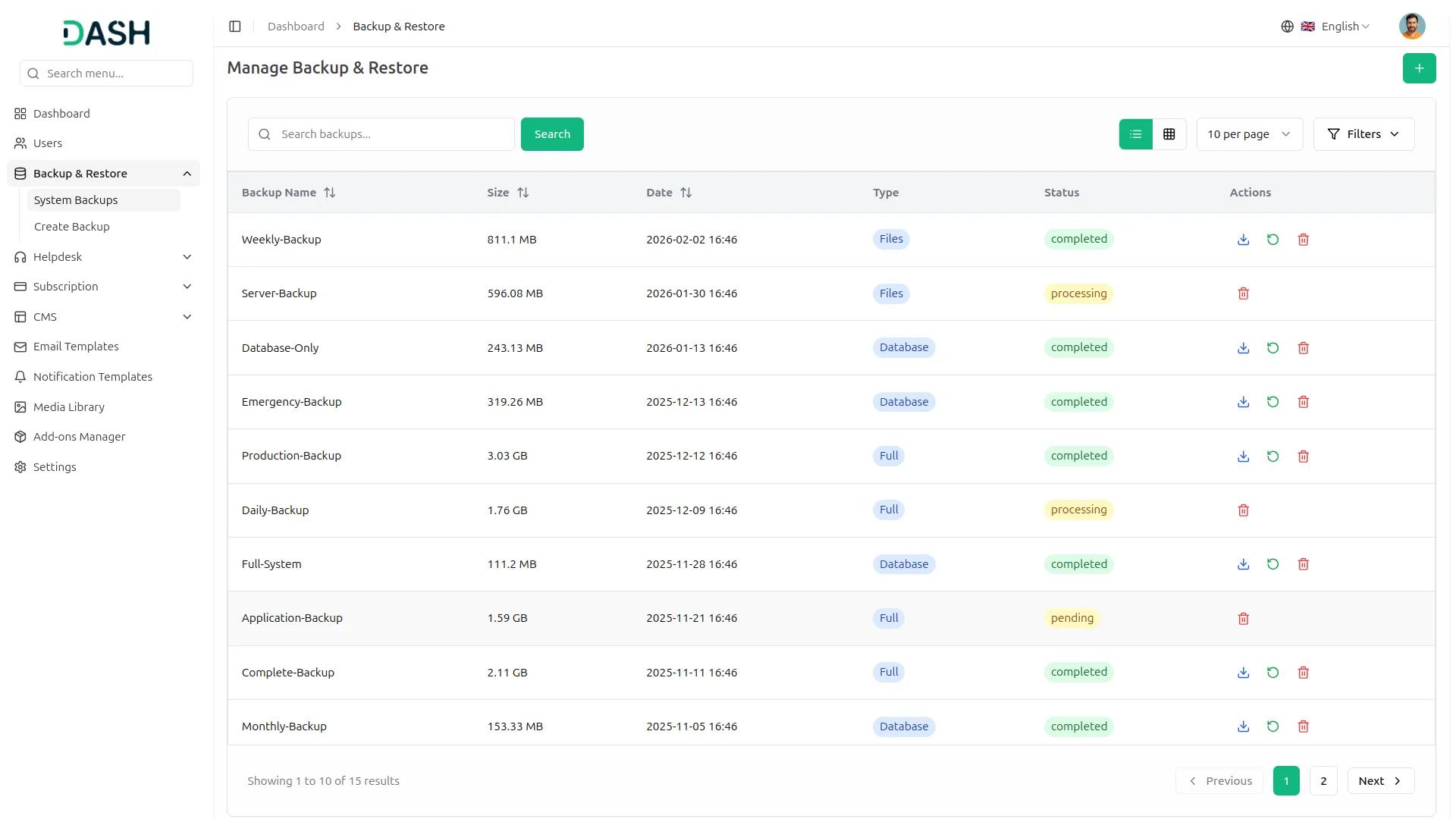
- The System Backups list page displays all backup records with columns for Backup Name, Size, Date, Type, Status, and Actions, providing centralized management of your system backups.
- The Type column indicates “Full”, “Database”, or “Files”. The Size column shows the backup file size for storage management. The Date column displays creation timestamps for identifying recent backups.
- The Status column shows color-coded labels: “Completed” for ready backups, “Processing” for backups being created, and “Pending” for queued backups.
- For completed backups, the Actions column provides Download to retrieve files locally, Restore to recover system state, and Delete to remove unnecessary backups. Processing or pending backups only allow deletion.
- Regularly review your backup list to maintain recent backups for emergency recovery. Delete old backups to free storage space while keeping at least one recent complete backup.
System-Defined Backup Path
- All created backups are securely stored within the project directory under clearly defined paths. Database backup files are saved in the storage/app/public/media/backups folder, while project file archives are stored in the storage/app/public/media/backups directory.
- These structured storage paths make it easy for administrators to access, organize, and manage backup files directly from the server. Each file can be manually retrieved or restored as needed, ensuring clear traceability and efficient recovery processes.
Categories
Related articles
- WhatsApp Messenger – WorkDo Dash SaaS Add-On Guide
- Create IMAP Credentials for Gmail & Outlook in TicketGo
- ToyyibPay – WorkDo Dash SaaS Add-On Guide
- Coupon Email – eCommerceGo SaaS Add-On Guide
- Zoom Meeting – BookingGo SaaS Add-On Guide
- Event – vCard SaaS Add-On Guide
- Diagram – WorkDo Dash SaaS Add-On Guide
- Google Drive – WorkDo Dash SaaS Add-On Guide
- BitPay – BookingGo SaaS Add-On Guide
- Contract Template – WorkDo Dash SaaS Add-On Guide
- Abandon Cart Guide – eCommerceGo SaaS
- Garage & Workshop Management – WorkDo Dash SaaS Add-On Guide
We're Here to Help - Let's Talk
Have questions about our solutions, customization services, or business tools? Our team is here to help you. let's talk.