Transform HR Decisions with Advanced HR Analytics Software
HR Analytics Software enables precise workforce insights, improving productivity, performance, and HR strategy effectiveness.
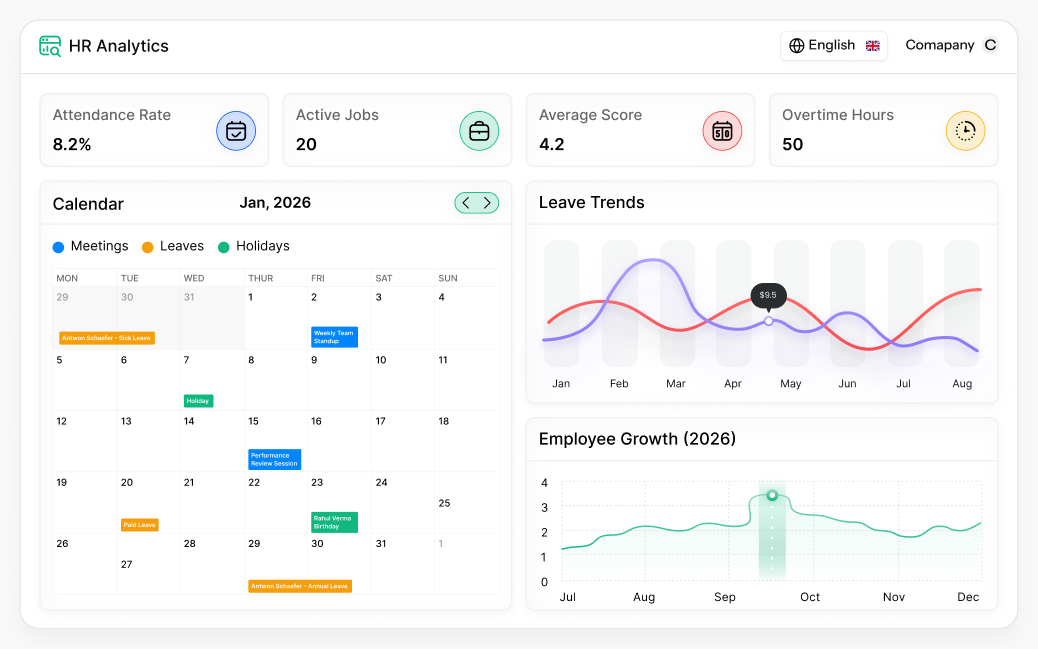
What Is HR Analytics?
HR Analytics is the process of collecting, analyzing, and interpreting employee-related data to improve decision-making in an organization. It helps HR teams understand how people-related factors—such as hiring, performance, engagement, and retention—impact overall business results.
Instead of relying on guesswork or intuition, HR analytics uses data to identify patterns, trends, and insights about the workforce.
Why Is HR Analytics Important for Organizations?
In today's competitive business environment, organizations can no longer rely only on intuition or past experience. HR Analytics helps companies make informed decisions by using data to better understand their workforce.
How Is HR Analytics Used?
HR analytics helps organizations measure and optimize HR processes. By leveraging HR data, businesses can identify patterns, improve decisions, uncover hidden issues, and enhance overall HR efficiency and performance.
Assessing Recruitment Efforts
Analyzing recruitment metrics with HR analytics tools helps organizations optimize talent acquisition and improve hiring outcomes. Tracking candidate sources allows HR teams to allocate recruitment budgets effectively and target the right candidates, while examining time-to-hire data uncovers workflow bottlenecks, enabling realistic hiring timelines and better alignment between managers and candidates.
Collecting candidate feedback further refines recruitment practices, enhancing the hiring experience. By leveraging these insights, businesses can streamline recruitment, improve the candidate journey, and secure top talent faster.
Improving Compensation Factors
If engagement surveys indicate employees feel undercompensated, HR analytics systems can help identify and address these concerns. Companies can conduct pay equity audits or benchmark salaries against HR analytics and insights from similar roles, locations, and industries.
By analyzing HR and analytics data, businesses can identify compensation disparities, make informed adjustments, and ensure competitive pay. This not only enhances employee engagement but also strengthens employer branding, making it easier to attract and retain top talent in competitive local and regional job markets.
Explore HR Analytics SoftwareTypes of Analytics in HR
HR analytics isn’t one-size-fits-all. Organizations use various analytics methods to analyze workforce performance engagement, and HR effectiveness, helping businesses use HR data to gain insights and make informed decisions.
1. Descriptive Analytics
Descriptive analytics examines what has already happened in the workforce. Using HR analytics tools and HR data, organizations track metrics like turnover, absenteeism, demographics, and performance trends to understand past patterns and identify areas needing attention.
2. Diagnostic Analytics
Diagnostic analytics answers why something happened. For example, if turnover increased in a specific department, HR data and analytics can help identify root causes, such as compensation gaps, low engagement scores, or ineffective management practices.
3. Predictive Analytics
Predictive analytics focuses on what might happen in the future. Using HR and data analytics and human resource analysis, organizations can forecast employee attrition, predict high-performing candidates, or estimate workforce requirements for upcoming projects.
4. Prescriptive Analytics
Prescriptive analytics recommends actions organizations should take. Using HR analytics systems and data insights, businesses can improve engagement, optimize recruitment processes, adjust compensation strategies, and enable leaders to make data-driven decisions that enhance workforce performance.
Benefits of HR Analytics Software
HR analytics turns workforce data into insights that improve decision-making, operational efficiency, and employee satisfaction, helping companies align people strategies with business objectives.
Using HR analytics systems, organizations can identify the most effective recruitment channels, optimize time-to-hire, and enhance the candidate experience. This ensures better talent acquisition outcomes, reduces hiring costs, and improves employee retention across local and regional markets.
By analyzing human resources data analytics and engagement metrics, HR teams can understand what drives employee satisfaction. This enables businesses to design personalized retention strategies, address potential issues proactively, and create a more motivated and loyal workforce.
HR and data analytics allows organizations to track employee performance, set realistic KPIs, and identify top performers. Using HR analytics insights, managers can implement targeted development plans and ensure that talent is aligned with organizational objectives.
Through HR analytics and insights, companies can conduct pay equity audits, benchmark salaries, and ensure fair compensation practices. This helps maintain employee satisfaction, improve engagement, and attract top talent in competitive local and regional markets.
Human resource analysis provides actionable insights into workforce trends, skill gaps, and succession planning. HR analytics automation helps businesses forecast staffing needs, allocate resources effectively, and maintain operational efficiency.
HR analytics software can monitor labor law compliance, track employee records, and flag potential risks. By using HR and analytics, organizations reduce legal exposure and ensure proper documentation across locations.
By leveraging HR data and analytics meaning, organizations can make informed, evidence-based decisions rather than relying on intuition. This improves overall HR strategy, drives business growth, and ensures that workforce management aligns with organizational goals.
Examples of HR Analytics
HR analytics transforms workforce data into actionable insights, enhancing performance, engagement, and efficiency. By analyzing hiring, attendance, productivity, and behavior, companies identify issues early and make smarter, data-driven decisions.
Recruitment Analytics
Tracking candidate sources, time-to-hire, and cost-per-hire to optimize talent acquisition and improve hiring quality.
Employee Performance Analytics
Monitoring KPIs, productivity, and skill gaps to identify top performers and areas needing improvement.
Employee Engagement and Retention Analytics
Analyzing surveys and turnover trends to predict attrition and enhance employee satisfaction.
Compensation & Benefits Analytics
Conducting pay audits, benchmarking salaries, and designing benefits to retain talent.
Workforce Planning & Predictive Analytics
Forecast staffing, spot skill gaps, and plan succession to align workforce strategy.
Training and Development Analytics
Measuring the effectiveness of learning programs and linking training outcomes to performance improvements.
Sources of Data for HR Analytics
Organizations use both internal and external data to generate meaningful HR insights. These sources help leaders understand workforce trends, support better decisions, and create strategies that improve employee experience, productivity, and overall organizational performance.
HR Information Systems (HRIS)
HRIS platforms serve as one of the most important data sources in HR analytics. They store essential employee information such as demographics, job details, promotions, attendance, benefits, and employment history.
Applicant Tracking Systems (ATS)
Recruitment analytics begin with data collected from ATS platforms. These systems record candidate profiles, application stages, sourcing channels, screening results, interview scores, and time-to-hire.
Performance Management Systems
Performance data, including KPIs, appraisal scores, evaluations, and manager feedback, provides valuable insights into employee productivity and potential. These data points help HR teams measure performance trends, identify skill gaps, and support talent development planning.
Payroll and Compensation Systems
Payroll platforms supply crucial data such as salary structures, bonuses, overtime, deductions, and payment history. HR analytics uses this information to assess pay equity, monitor compensation trends, and ensure competitive and fair salary practices across departments and roles.
Learning and Development Platforms
Training participation, certification records, skill assessments, and course completion data help organizations measure the impact of learning programs. These insights enable companies to understand how training initiatives contribute to performance improvement and skill enhancement.
Employee Engagement and Survey Tools
Engagement surveys, pulse feedback, sentiment analysis, and 360-degree evaluations provide qualitative insights into employee morale, workplace culture, and job satisfaction. These data sources help organizations identify engagement drivers and potential issues affecting retention.
Time and Attendance Systems
Time-tracking tools monitor attendance patterns, tardiness, absenteeism, shift schedules, and overtime usage. This data supports productivity analysis, workforce planning, and identifying concerns like burnout or staffing shortages.
Workforce Planning and Scheduling Tools
Data from planning software helps organizations optimize resource allocation, workload balance, and staffing strategies. HR teams use this information to forecast talent needs and prevent workforce bottlenecks.
Exit Interview and Offboarding Data
Exit feedback, turnover patterns, resignation reasons, and final evaluations help organizations understand why employees leave. This data is critical for strengthening retention strategies and enhancing the overall employee experience.