

Employees Contract Management Software for HR Professionals
Manage employee contracts with software for tracking, alerts, renewals, and secure centralized storage.
What is Contract Management?
What Is Contract Management
Contract Management is the process of creating, organizing, monitoring, and maintaining employee contracts throughout their entire lifecycle—from issuance and approval to renewal or expiration. It ensures employment agreements stay compliant, up to date, and aligned with company policies, while reducing manual effort and legal risk.
Benefits of a Modern HR Contract Management System
A modern HR Contract Management system brings structure to this process by combining contract creation, tracking, approvals, and renewals in one centralized platform. HR teams can manage multiple contract types, automate reminders, standardize documentation, and maintain full visibility across all employee agreements.
Learn More About Contract Management
For a deeper breakdown of concepts, workflows, benefits, and real-world examples, explore our detailed guide:
👉 Contract Management — an in-depth look at how modern teams manage contracts efficiently and compliantly.
Key Components of HRM Contract Management
Effective HRM contract management ensures clarity, compliance, and protection for both employer and employee, helping organizations manage all staff types, prevent legal issues, and foster positive employee relations.
Creating a Clear Work Agreement
The foundation of successful HR contract management is a well-crafted work agreement. This document should clearly outline the terms of employment, including:
- Job Role and Responsibilities: A detailed description of the position, the tasks involved, and expectations.
- Compensation & Benefits: Salary, bonuses, and the full benefits package. To ensure payroll is processed smoothly, you can also explore our Payroll Management solution.
- Working Conditions: This includes working hours, location (office or remote), and any flexibility options. If you're looking to track employee attendance and manage working hours, see our Attendance Management software.
- Legal Compliance: Ensure the agreement aligns with local labor laws and industry standards to protect both parties.
By creating a detailed and legally sound contract, both parties—employer and employee—are on the same page from day one.
Onboarding and Induction
Once the HR contract is signed, the next step is onboarding. This includes:
- Document Collection: Gathering all necessary employee documents, such as ID proof, qualifications, and previous employment records.
- Training and Orientation: Familiarizing the employee with the company culture, job duties, and HR policies. For a smooth and comprehensive onboarding process, check out our Employee Onboarding software.
Proper onboarding sets the right tone and gives employees the foundation they need to succeed in their new roles.
Performance Management and Evaluation
A contract is only the beginning. Regular performance evaluations are vital in ensuring that the employee’s role is evolving and remains in line with both their career goals and the organization’s expectations. These evaluations may include:
- Setting KPIs: Defining clear, measurable objectives to track the employee’s performance.
- Regular Appraisals: Setting timelines for performance reviews, constructive feedback, and professional development opportunities.
Performance management tool in HR contract management systems can help streamline the appraisal process.
Amendments and Modifications
HR contracts aren’t set in stone. They often need to be updated due to changes in the employee’s role, personal situation, or company policies. This component includes:
- Contract Modifications: Addressing changes in roles, salary hikes, or any updates to the benefits structure.
- Employee Requests: Handling requests for amendments, such as changes to leave policies or work hours, in a standardized manner. If you are managing leave effectively, our Leave Management system is a great companion solution.
HR contract management software can make tracking these changes much easier by storing digital records and notifying HR managers of upcoming renewals or updates.
Resolving Conflicts and Disputes
No employment relationship is without its challenges. A well-defined HR contract should include procedures for resolving conflicts to protect both the organization and the employee. This typically involves:
- Dispute Resolution: Outlining clear steps for mediation or arbitration in case of disagreement.
- Termination Conditions: Specifying how and when employment can be terminated, as well as the required notice period. To make sure your processes stay compliant with legal standards, explore the Compliance Management platform.
Having these provisions in place ensures both sides understand their rights and responsibilities should issues arise.
Compliance and Risk Management
Ensuring compliance with local, federal, and international labor laws is an integral part of HR contract management. Contracts must include clauses that cover:
- Legal and Regulatory Compliance: Ensuring that contracts align with labor regulations, preventing any legal liabilities.
- Insurance and Liability: Addressing requirements for health insurance, workers' compensation, and liability coverage.
- Audit Trails: Maintaining detailed records of contract changes and performance metrics for legal audits.
Contract labour management systems and contract management solutions can help automate compliance checks, reducing the risk of errors.
Compensation and Employee Benefits
The details around salary, bonuses, and benefits need to be crystal clear. A comprehensive contract should outline:
- Salary and Payment Terms: Define the pay structure, payment frequency, and any additional bonuses or commissions.
- Benefits: Specify the complete benefits package, including health insurance, retirement plans, and paid time off based on job role.
- Allowances: Include any other allowances such as travel, housing, or meal stipends if applicable.
These terms should be transparent to prevent confusion or misunderstandings later on.
Termination and Exit Strategy
Sometimes, ending the working relationship is necessary. A good contract must clearly outline the exit strategy to ensure a smooth transition:
- Notice Period: Specifying the notice period required from either the employer or the employee.
- Exit Process: Outlining the process for resignations, layoffs, and final settlements. For a smoother transition across the organization, you can visit our Employee Offboarding system to ensure all administrative steps are followed.
- Post-Employment Terms: Including non-compete clauses, confidentiality agreements, or restrictions on future employment to protect company interests.
The HR service agreement should always specify the terms under which employment can be ended, ensuring clarity for both parties.
Technology and Document Management
In today's digital world, HR contract management software is essential for streamlining processes and ensuring the security of sensitive data. Key points include:
- Digital Document Storage: Keeping contracts securely in cloud-based systems for easy access, searching, and compliance.
- Automation: Using tools to automate the creation of contracts, approval workflows, and amendment tracking.
- Digital Signatures: Implementing e-signatures to guarantee faster approval, processing, and security.
For organizing and securing employee data beyond contracts, consider our Database Management solution, which keeps all records safe and easily accessible.
Renewal and Extension
For contracts with a fixed duration or temporary employment agreements, include:
- Contract Review Process: A structured process for reviewing employee performance and deciding on renewals.
- Extension Terms: Conditions under which a contract can be extended or converted into a permanent position.
Automating this process through contract management systems ensures that contracts are renewed on time without delays.
Key Features of Our HRM Contract Management Software
Our HRM Contract Management Software is designed to streamline and automate the entire process of managing employee agreements. Whether it's creating various employment types or handling renewals, this software provides a comprehensive solution for HR departments. Below are the key features:
Managing Employment Types
The software supports a variety of employment types, each customizable to meet your organization's needs. These include:
- Permanent Full-time Positions
- Fixed-term Agreements
- Part-time Roles
- Temporary Employment
- Consultant Arrangements
- Internship Agreements
- Probationary Roles
- Seasonal Assignments
Each type can be configured with flexible parameters like duration, probation periods, and notice requirements. The system ensures HR teams can track employee agreements in real time, keeping on top of all key milestones.
Employee Agreement and Renewal Management
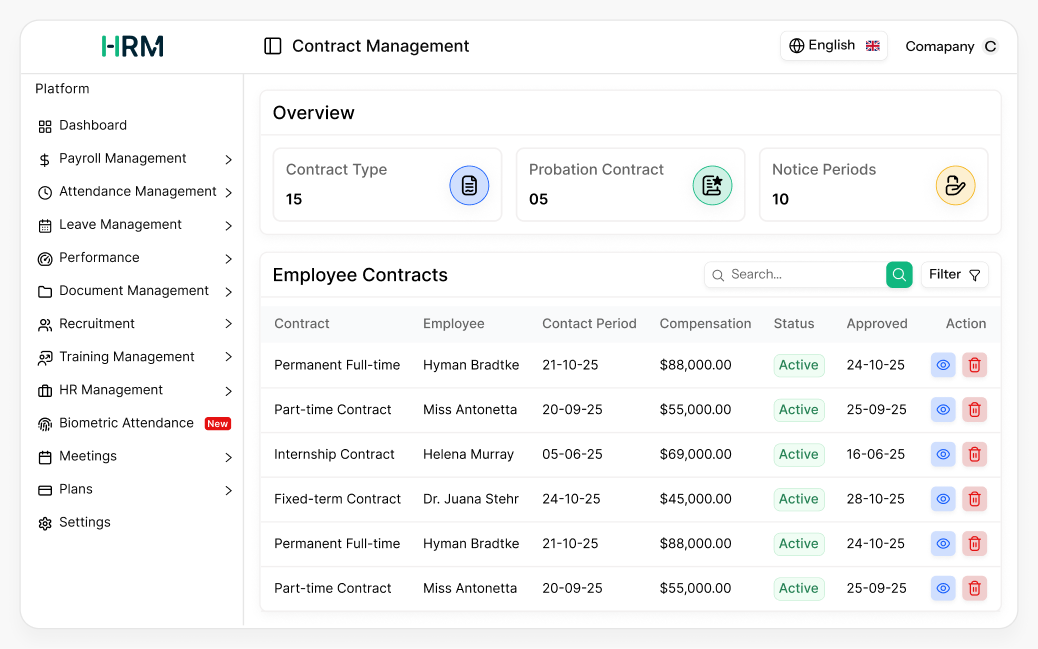
Managing employee agreements and their renewals is simplified with this feature. You can access a comprehensive overview of each agreement, including essential details like the employee’s name, compensation, contract period, and status. The software allows you to track the status of agreements, whether they are active, expired, or pending renewal.
As agreements near expiration, the system automatically notifies HR teams, ensuring timely renewals. Compensation adjustments can also be made before renewing agreements, ensuring fairness and consistency across all employees. The approval workflow makes it easy for HR managers to approve or reject renewal requests, streamlining the process and ensuring all terms are met before renewal.
By automating much of the renewal process, this feature helps HR departments stay proactive and efficient, eliminating the risk of missed deadlines.
Centralized Document Management
Store all employee agreements and related documentation securely in one place:
- Document Storage: Store contracts and other vital employee documents securely and access them whenever needed.
- Search Functionality: Quickly search and filter based on employee name, agreement type, or status for quick retrieval.
- Status Changes: Get notifications when an agreement’s status changes, ensuring no important action is missed.
This system eliminates manual paperwork and reduces the risk of losing important documents.
User-friendly Interface
The software's intuitive design makes it easy to navigate and use:
- Simplified Data Entry: Add or update employee details effortlessly.
- Centralized Dashboard: Access all features from a single, organized dashboard for a smooth experience.
The user-friendly layout reduces the complexity of managing employee agreements and enhances overall productivity.
Agreement Templates Management
The Agreement Templates feature allows HR teams to easily create and store templates for various roles and types of employment. Predefined templates include:
- Permanent Full-time Positions
- Internship Agreements
- Consultant Arrangements
- Part-time Employment
- Fixed-term Employment
These templates are fully customizable, which helps HR departments maintain consistency and reduce time spent drafting new documents. Using these templates also ensures compliance with company policies.
Detailed Reporting and Analytics
The software offers comprehensive reporting and analytics tools:
- Agreement Expiry Insights: Visualize upcoming expiration dates to prepare for renewals or transitions.
- Type Distribution Reports: Track the distribution of different employment types within your organization.
- Compensation Analysis: Gain insights into employee pay, contract durations, and status for better planning.
These insights help HR departments make informed decisions regarding employee agreements and workforce planning.
Why Choose WorkDo's HRM Contract Management Software?
WorkDo’s HRM Contract Management Software streamlines contract workflows, improves compliance, reduces manual tasks, and provides insights, helping organizations efficiently manage their entire contract lifecycle.
What Our Clients Say! About HRM
Our clients are at the heart of everything we do. Here's what they have to say about their experience with our solutions.
I recently purchased products from WorkDo on CodeCanyon, and I am beyond impressed.

from codecanyon
Best products with the best features on envato! I highly recommend what is good has to grow. And incredible support!
from codecanyon
I really love WorkDo's support. WorkDo offers excellent support with quick and enthusiastic responses.
from codecanyon
Their customer service is outstanding, always ready to assist with any concerns you may have.
from codecanyon
Smarter Contract Management Starts Here
Centralize contracts, automate renewals, reduce risks, and ensure compliance with a secure, end-to-end contract management system.