
Integrated Case Management & Flow: Best Practices Guide
Integrated case management combines systems and workflows into unified platforms. Case flow management optimizes case movement through stages, eliminating bottlenecks and ensuring SLA compliance for efficient legal operations.
The Evolution of Integrated Case Management Systems
Integrated case management represents the evolution of legal technology from isolated systems to unified platforms that streamline every aspect of case handling. Unlike traditional approaches that force legal professionals to juggle multiple disconnected tools, integrated case management combines case tracking, document management, billing, and client communication into a single, cohesive workflow.
Case flow management complements this integration by optimizing how cases move through defined stages, eliminating bottlenecks, and ensuring consistent service delivery. Together, these approaches create powerful synergies that reduce administrative overhead while improving client outcomes and firm profitability.
Modern legal practices face increasing pressure to deliver faster results, maintain compliance, and provide transparent client service—all while managing growing caseloads with limited resources. Integrated case management and optimized case flow management provide the foundation for meeting these challenges through automation, standardization, and data-driven insights.
This comprehensive guide explores proven strategies for implementing integrated case management systems, optimizing case flow processes, and achieving measurable improvements in efficiency, compliance, and client satisfaction.
Understanding Integrated Case Management
What is Integrated Case Management?
Integrated case management is a comprehensive approach that unifies all case-related functions—tracking, documentation, communication, billing, and reporting—within a single platform or tightly connected ecosystem. Rather than managing cases through separate systems for different functions, integrated case management creates seamless workflows that span the entire case lifecycle.
The core principle behind integrated case management is eliminating data silos that force manual data entry, create inconsistencies, and slow down processes. When case information flows automatically between modules, legal professionals spend more time on high-value activities and less time on administrative tasks.
Key components include unified data architecture, cross-module workflows, centralized communication, and real-time synchronization across all system functions.
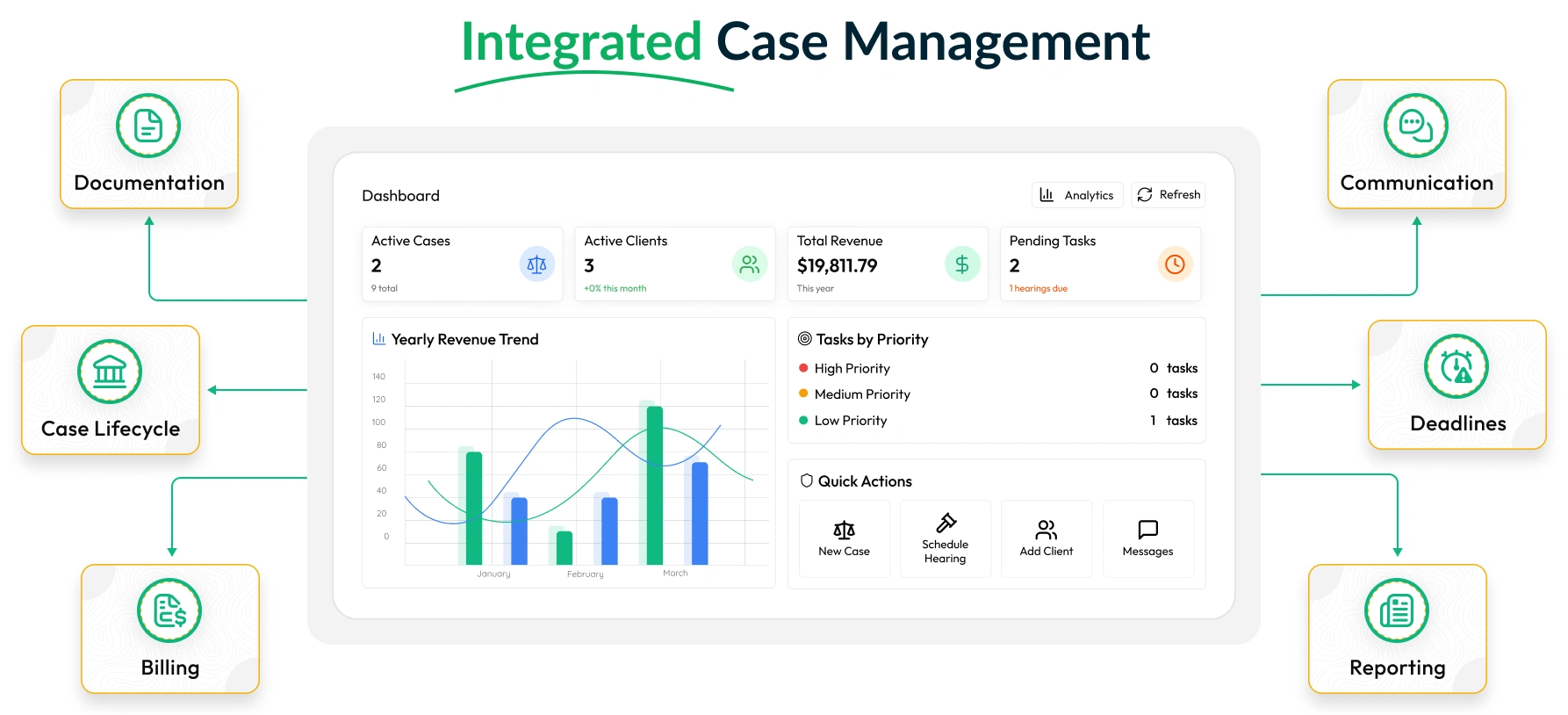
Benefits vs Standalone Systems
Integrated case management platforms deliver significant advantages over standalone systems that handle individual functions separately. These benefits compound over time, creating sustainable competitive advantages for forward-thinking legal practices.
Operational Efficiency Gains: Integrated systems eliminate the need to switch between multiple applications, reducing context switching and improving focus. Legal professionals report 30-40% time savings when moving from standalone tools to integrated platforms.
Data Consistency and Accuracy: Single data entry points prevent errors and inconsistencies that arise when information must be maintained in multiple systems. This improved accuracy reduces compliance risks and enhances client trust.
Comprehensive Reporting: Integrated platforms provide holistic insights that standalone systems cannot match, enabling analysis of relationships between case characteristics, resource allocation, and outcomes.
Case Flow Management Fundamentals
Defining Case Flow and Common Bottlenecks
Case flow management refers to the systematic approach of moving cases through predefined stages efficiently while maintaining quality standards and meeting SLA requirements. Effective case flow management requires understanding typical workflows, identifying common bottlenecks, and implementing processes that prevent delays.
Common bottlenecks include information gathering delays, resource allocation issues, approval and review processes, and communication gaps between team members and external parties.
SLA Management and Stage Mapping
Service Level Agreements (SLAs) provide the framework for consistent case flow management by establishing clear expectations for response times, deliverable quality, and milestone achievement. Effective SLA management requires mapping case stages to specific timeframes while building in flexibility for case complexity variations.
Typical Case Stage Mapping:
- Intake and Initial Assessment
- Investigation and Discovery
- Strategy Development
- Active Management
- Resolution Preparation
- Case Closure
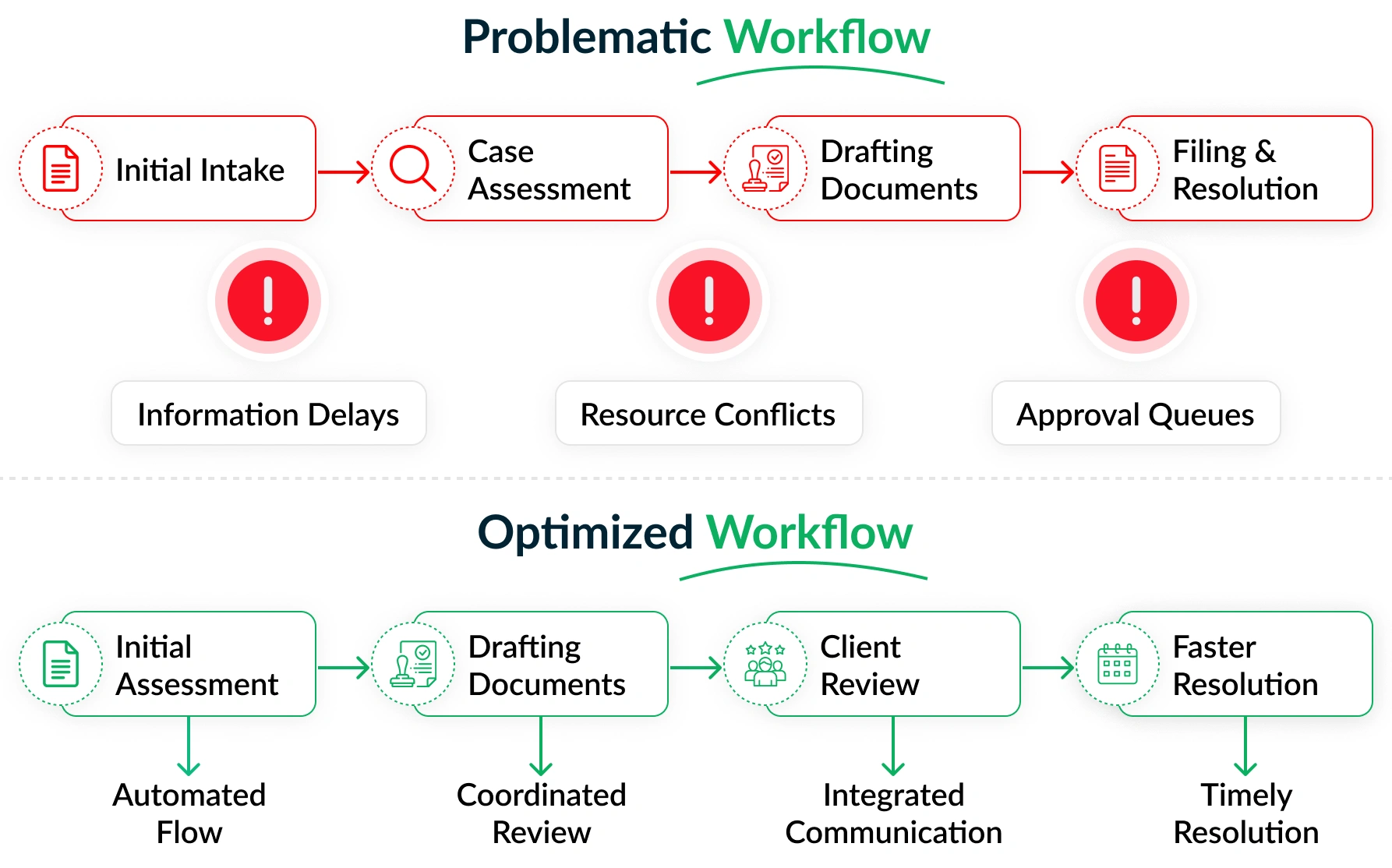
The Complete Case Management Process Workflow
Step-by-Step Case Management Process
The case management process follows a structured workflow designed to ensure consistency, accountability, and successful outcomes. Understanding each phase helps organizations implement effective case management systems and optimize their operational efficiency.
Phase 1: Case Intake and Initial Assessment
Case intake begins when a new matter enters the system through various channels—client referrals, court filings, or internal requests. During initial assessment, case managers collect essential information, verify details, and classify cases based on complexity, urgency, and resource requirements. This phase establishes the foundation for all subsequent activities.
Phase 2: Case Planning and Resource Allocation
Once assessed, cases enter the planning phase where teams develop comprehensive strategies, assign responsibilities, and allocate resources. This includes setting realistic timelines, identifying potential obstacles, and establishing communication protocols among stakeholders. Effective planning prevents delays and ensures all team members understand their roles.
Phase 3: Active Case Management and Coordination
The implementation phase involves executing planned activities while maintaining constant oversight. Case managers coordinate between different departments, track task completion, manage deadlines, and address issues as they arise. Regular status updates and progress reviews keep all stakeholders informed and engaged.
Phase 4: Documentation and Compliance Monitoring
Throughout the case lifecycle, proper documentation ensures regulatory compliance and creates detailed audit trails. This includes maintaining client communications, tracking billable hours, storing evidence securely, and generating required reports. Compliance monitoring prevents legal issues and supports quality assurance efforts.
Phase 5: Case Resolution and Closure
The final phase focuses on achieving case objectives and formal closure. This includes finalizing deliverables, conducting outcome evaluations, obtaining client approval, and archiving case materials. Proper closure procedures ensure knowledge transfer and support future similar cases.
Continuous Improvement Loop
Effective case management includes feedback mechanisms that capture lessons learned, identify process improvements, and update best practices. This continuous improvement approach helps organizations refine their case management processes over time.
Digital case management systems automate many of these workflow steps, reducing manual effort while improving accuracy and consistency. Automation features include automatic task assignments, deadline reminders, approval workflows, and real-time reporting that keeps teams focused on high-value activities rather than administrative tasks.
Leveraging Workflow Automation
Automation Triggers and Smart Assignments
Workflow automation reduces manual tasks, improves consistency, and accelerates case processing by automatically executing routine activities based on predefined triggers and rules. Smart assignment capabilities ensure work reaches the right people at the right time.
Common Automation Triggers:
- Case status changes automatically notify relevant parties
- Deadline approaches generate reminders and escalations
- Document updates trigger review processes
- Client communications automatically log interactions
Smart Assignment Strategies include skill-based routing, workload balancing, geographic considerations, and client preference accommodation.
Reminders, Escalations, and Exception Handling
Proactive reminder systems and escalation procedures prevent missed deadlines while ensuring appropriate attention for high-priority or problematic cases. Exception handling processes address unusual circumstances without disrupting overall workflow efficiency.
Effective reminder systems send initial notifications 1-2 weeks before deadlines, escalate to supervisors when deadlines are missed, and customize frequency based on task importance. Clear escalation paths and response time requirements ensure issues receive appropriate attention.
Performance Monitoring and Dashboard Analytics
Key Performance Indicators and Metrics
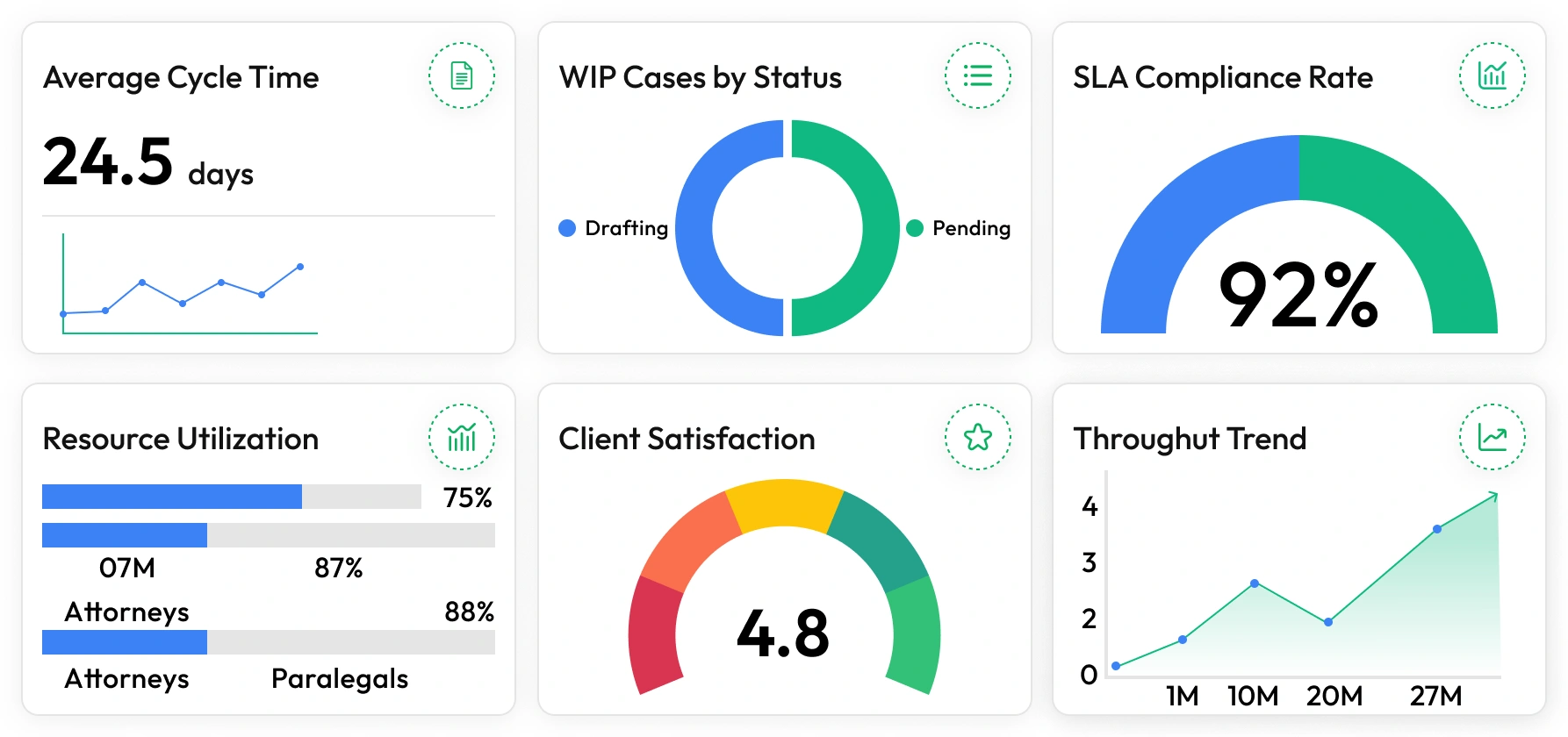
Effective performance monitoring requires tracking metrics that provide actionable insights into case flow efficiency, resource utilization, and client satisfaction. Focus on KPIs that drive meaningful improvement rather than vanity metrics.
Essential Metrics:
- Cycle Time: Average time from case intake to resolution
- Work in Progress (WIP): Number of active cases by status and age
- Throughput: Cases completed per time period
- SLA Compliance: Percentage meeting timeline requirements
- Resource Utilization: Attorney and staff capacity usage rates
- Client Satisfaction: Feedback scores and retention rates
Real-Time Dashboard Implementation
Real-time dashboards provide instant visibility into case flow performance, enabling proactive management and rapid response to emerging issues. Effective dashboard design balances comprehensive information with clear, actionable insights.
Design principles include role-based views, exception highlighting, drill-down capability, and mobile optimization. Start with simple dashboards and add complexity gradually as users become comfortable with the system.
Change Management and Adoption Strategies
Driving Adoption in Legal Teams
Successful integrated case management implementation depends on user adoption more than technical capabilities. Legal professionals often resist change, making comprehensive change management essential for realizing system benefits.
Effective strategies include executive sponsorship, champion programs, gradual rollout, and regular success communication. Address common resistance by providing security information, demonstrating concrete value, offering adequate training, and maintaining ongoing support resources.
Training and Continuous Improvement
Effective training programs and continuous improvement processes ensure organizations maximize their integrated case management investment over time. Focus on building competence and confidence while fostering innovation.
Training components include initial onboarding, role-specific sessions, advanced features education, and regular refresher training. Continuous improvement frameworks incorporate user feedback, performance analysis, process refinement, and technology updates.
Conclusion and Next Steps
Integrated case management and optimized case flow management represent significant opportunities for legal organizations to improve efficiency, enhance client service, and build sustainable competitive advantages. Success requires combining the right technology platforms with thoughtful process design and comprehensive change management.
Organizations that commit to systematic implementation, continuous improvement, and user-focused design consistently achieve 40-50% reduction in administrative overhead, 25-30% improvement in case cycle times, and 90%+ client satisfaction rates.
📌 Frequently Asked Questions (FAQs)
Reach Out to Us
Have questions or need assistance? We're here to help! Reach out to our team for support, inquiries, or feedback. Your needs are important to us, and we’re ready to assist you!


Need more help?
If you’re still uncertain or need professional guidance, don’t hesitate to contact us. You can contact us via email or submit a ticket with a description of your issue. Our team of experts is always available to help you with any questions. Rest assured that we’ll respond to your inquiry promptly.
Love what you see?
Do you like the quality of our products, themes, and applications, or perhaps the design of our website caught your eye? You can have similarly outstanding designs for your website or apps. Contact us, and we’ll bring your ideas to life.