
What Is Workforce Management and Its Core Business Processes
Workforce management schedules staff, tracks time, and improves staffing decisions daily.

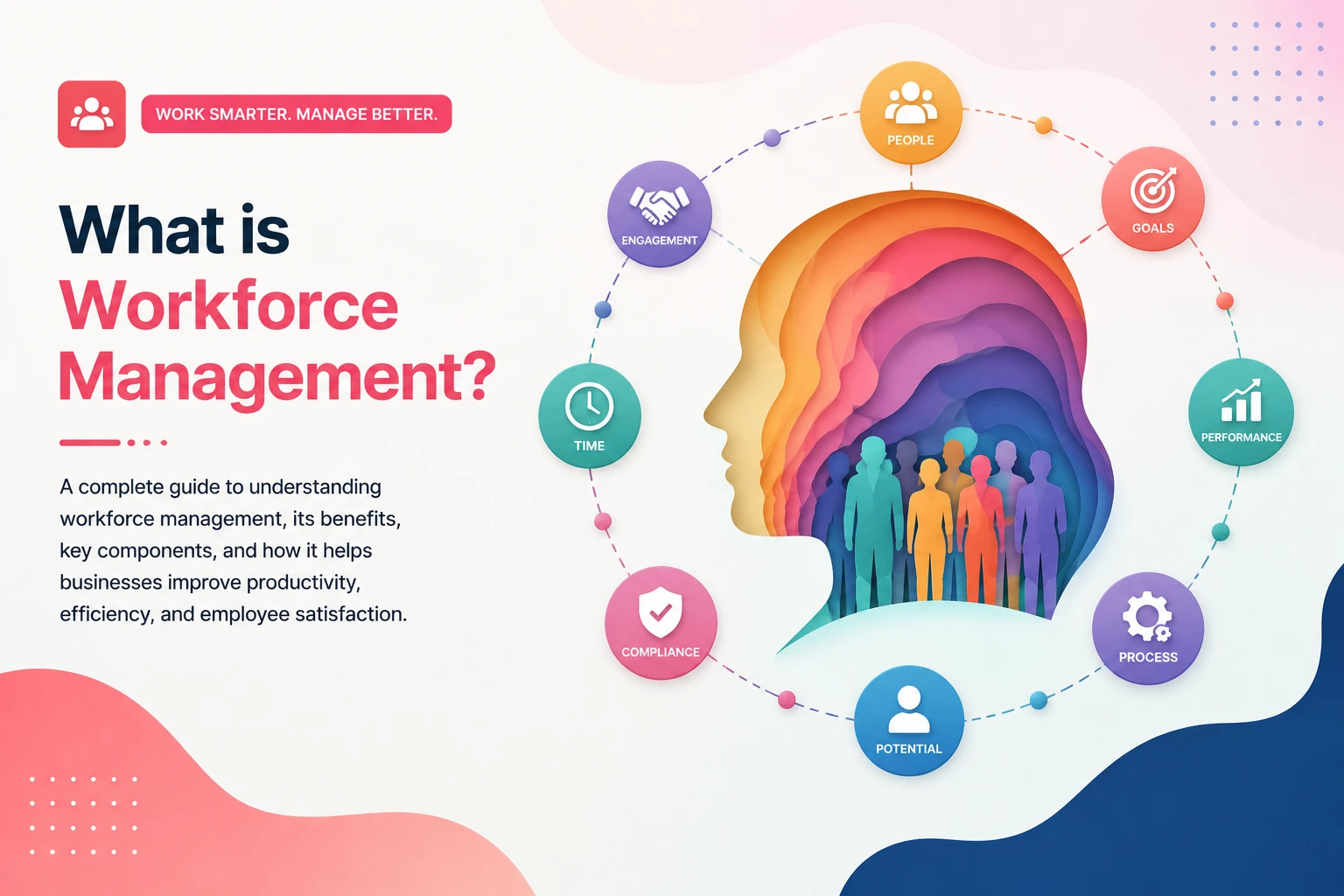
What Is Workforce Management?
Workforce management is the discipline of planning, scheduling, tracking, and optimizing how employees work so an organization has the right people, with the right skills, in the right place, at the right time and cost. It brings together processes like labor forecasting, staff scheduling, time and attendance, leave and absence management, performance monitoring, and compliance with labor laws into one unified approach.
In practice, workforce management aims to increase productivity, control labor expenses, and reduce operational risk by matching staffing levels to real demand and ensuring employees are used efficiently across shifts, locations, and roles. Modern WFM is usually supported by dedicated software that automates scheduling, captures time data, connects smoothly with HR and payroll systems, and provides analytics so managers can make data-driven decisions about staffing and resource allocation.
Why Is Workforce Management Important?
Effective staff planning and coordination play a major role in profitability, customer satisfaction, and overall employee well-being. When scheduling and resource allocation are poorly handled, it can result in overstaffing, understaffing, unnecessary overtime, compliance issues, and employee burnout—problems that negatively affect both revenue and operational performance.
When done well, workforce management enables organizations to:
- Reduce labor costs by aligning staffing levels with real demand and minimizing unnecessary overtime.
- Improve operational efficiency by ensuring the right skills are available at the right time and location.
- Strengthen compliance with labor laws and internal policies through automated rules and controls.
- Enhance employee experience via fair scheduling, transparency, and self-service options for shifts and leave.
Core Components of Workforce Management
Workforce planning
Workforce planning is about understanding how many people with which skills are needed, and when. It combines long-term planning (based on growth, strategy, and skill gaps) with short-term planning (based on expected workload in the coming weeks or months).
By using demand forecasts and historical data, organizations can determine the required headcount, shift patterns, and staffing flexibility to meet service levels without overspending on labor.
Scheduling and shift management
Scheduling is the operational heart of workforce management. It involves assigning employees to specific shifts, roles, and locations in a way that balances business requirements, employee availability, skills, and legal constraints.
Modern WFM systems use optimization engines that automatically generate schedules based on rules such as coverage needs, skill requirements, contracts, and preferences. This reduces manual effort, improves fairness, and supports multi-location and 24/7 operations.
Time and attendance tracking
Time and attendance management ensures that actual working hours are captured accurately. This is typically done using biometric devices, web clocks, mobile apps, or geolocation-based check-ins for field employees.
Accurate time tracking feeds directly into payroll, reduces errors and fraud (such as buddy punching), and provides real-time visibility into who is present, late, on break, or working overtime. It also creates an auditable record for compliance and internal controls.
Leave and absence management
Leave and absence management covers vacation, sick leave, paid time off, holidays, and other absence types. A good workforce management solution centralizes policies, entitlements, accruals, and approval workflows so that leave is handled consistently and transparently.
Self-service capabilities allow employees to request leave, view balances, and track approval status without heavy HR involvement. Managers can see the impact of absences on coverage and adjust schedules to avoid service gaps.
Compliance and labor laws
Labour law compliance is a critical element of workforce management, especially in regulated industries or multi-jurisdiction operations. WFM systems can enforce rules related to maximum working hours, minimum rest periods, overtime thresholds, night shifts, and weekly days off.
By embedding these rules into scheduling and time tracking, organizations reduce the risk of violations, penalties, and legal disputes. They also maintain accurate records, which supports audits and inspections.
Performance, analytics, and reporting
Modern workforce management platforms provide analytics and dashboards that turn raw time and schedule data into actionable insights. Common metrics include utilization, adherence, overtime trends, absenteeism rates, productivity per employee, and staffing gaps.
These insights help leaders identify inefficiencies, compare locations or teams, and test “what-if” scenarios such as demand spikes or staffing changes. Over time, this enables continuous improvement and more strategic decision-making.
Workforce Management Strategies
No single approach to workforce management works for every organization. To maximize efficiency, productivity, and employee satisfaction, businesses should adopt flexible strategies that address both internal and external workforce challenges. Here are key workforce strategies to refine your approach:
Make Accurate Workforce Predictions
Understanding your employees’ work patterns is crucial, but insights are most effective when applied strategically. Analyze your workforce to identify areas of need and determine where additional resources or teams could add value. Craft a business case for workforce expansion and calculate realistic costs, ensuring you know when and how to act. Accurate workforce predictions allow organizations to plan proactively, optimize staffing levels, and achieve business objectives efficiently.
Overcome Global Workforce Challenges
Businesses operate within a dynamic global environment where external factors—economic shifts, regulatory changes, and global events—can impact workforce operations. Regular workforce evaluations and disaster recovery plans help organizations remain proactive and adaptable. By anticipating challenges, companies can avoid abrupt disruptions and maintain continuity while protecting employee productivity and business outcomes.
Monitor and Optimize Employee Performance
A critical aspect of workforce management is understanding employee roles and performance expectations. Establish measurable goals for teams and individuals, track outcomes, and identify areas for improvement. Engage with employees to uncover obstacles that hinder productivity and provide support to help them succeed. Continuous performance optimization ensures your workforce remains efficient, goal-aligned, and motivated.
Adapt to Remote and Hybrid Workforces
Modern workplaces often require flexibility, including remote or hybrid work arrangements. To manage such workforces effectively, deploy WFM solutions that allow monitoring of productivity and engagement regardless of location. Ensure compliance with local labor regulations, especially for employees operating in different states or regions. Clear metrics, consistent communication, and the right tools are essential to maintain equity and accountability.
Evolve and Improve Continuously
Workforce management is not a one-time task—it’s an ongoing process. Strategies that worked last year may not align with current business objectives or market conditions. Regularly review and update workforce management plans, adopt innovative WFM solutions, and remain open to change. Continuous evolution of workforce strategies ensures your organization stays competitive, efficient, and capable of meeting both current and future demands.
How to Choose Workforce Management Software?
Choosing the right workforce management software starts with identifying your business needs, comparing key features like scheduling, time tracking, and analytics, and ensuring the solution is scalable, user-friendly, and compliant with labor laws.
- Scalable: Your organization’s needs will evolve over time, so find a solution that can match your goals. It takes time, effort, and money to change solutions, and you’ll save substantially if you choose one that grows with you.
- Customizable: Every business has unique workflows and requirements, so select software with flexible rules, templates, and dashboards that adapt to your industry, locations, and processes without custom coding.
- Responsive: WFM software must handle real-time changes like demand spikes or absences, with auto-updates, seamless data syncing, and built-in compliance that adapts to evolving labor regulations.
- Connectivity: Choose platforms with open APIs and pre-built connectors to HRIS, payroll, ERP, and CRM systems, ensuring all people data flows automatically for higher accuracy and efficiency.
- People-Friendly: The best solutions offer intuitive mobile apps, self-service portals, and simple interfaces that employees and managers love, backed by responsive support that acts on your feedback.
Key Benefits of Workforce Management Solutions
A good workforce management solution ensures that the right tools are matched to a business’s specific needs. The appropriate solution can provide the following benefits:
Regulated Finances
Advanced workforce management software can calculate labor requirements to reduce unnecessary staffing and overtime, helping businesses control labor costs. Some systems also show the budget impact of schedules in real time, ensuring financial planning is accurate.
More Accurate Payroll
Manual errors in payroll are minimized as workforce management software tracks hours worked, calculates overtime, and ensures payroll accuracy. This reduces costly mistakes and saves time on administrative tasks.
Enhanced Productivity
By analyzing attendance, time, and performance data, employers can compare results with similar companies. Insights gained can highlight productivity gaps and help businesses take targeted action to improve efficiency.
Smarter Schedule Creation
Workforce management software can alert managers to staffing shortages and automatically generate schedules based on role, department, or location. This ensures shifts run smoothly and that all operational requirements are covered.
Compliance Risk Minimization
Leave, entitlements, and allocations can be automated, and detailed records maintained for audits. This reduces compliance risks and ensures that labor laws and company policies are consistently followed.
Common Workforce Management Challenges
Managing a workforce efficiently comes with several challenges that businesses often face. One of the main issues is accurate scheduling, especially in organizations with shift-based operations or fluctuating workloads. Ensuring the right number of employees are assigned at the right time while avoiding overstaffing or understaffing can be complex.
Another challenge is time and attendance tracking. Manual processes often lead to errors in recording work hours, overtime, and absences, which can affect payroll accuracy and labor cost management. Businesses also struggle with forecasting labor demand, as unpredictable market conditions or seasonal peaks can make it difficult to anticipate staffing needs effectively.
Compliance with labor laws and regulations is another common hurdle. Maintaining accurate records, managing leave entitlements, and adhering to local employment laws requires constant monitoring and can be time-consuming without proper tools.
Employee engagement and productivity are also critical challenges. Ensuring fair workload distribution, tracking performance, and providing visibility into schedules are essential for maintaining motivation and efficiency across teams.
The Future of Workforce Management Is Smarter
Effective workforce management helps businesses ensure the right people are working at the right time while keeping costs under control. With smart tools for scheduling, time tracking, forecasting, and compliance, organizations can work more efficiently and support employees better. Using a modern solution like WorkDo HR Software makes these processes even easier by centralizing all workforce tasks in one place, reducing errors, improving productivity, and creating a smoother experience for both managers and employees.
📌 Frequently Asked Questions (FAQs)
We're Here to Help - Let's Talk
Have questions about our solutions, customization services, or business tools? Our team is here to help you. let's talk.