
Understanding B2B: Meaning, Definition & Real-World Use
What is B2B? Learn the meaning of business-to-business and how its model differs from B2C.

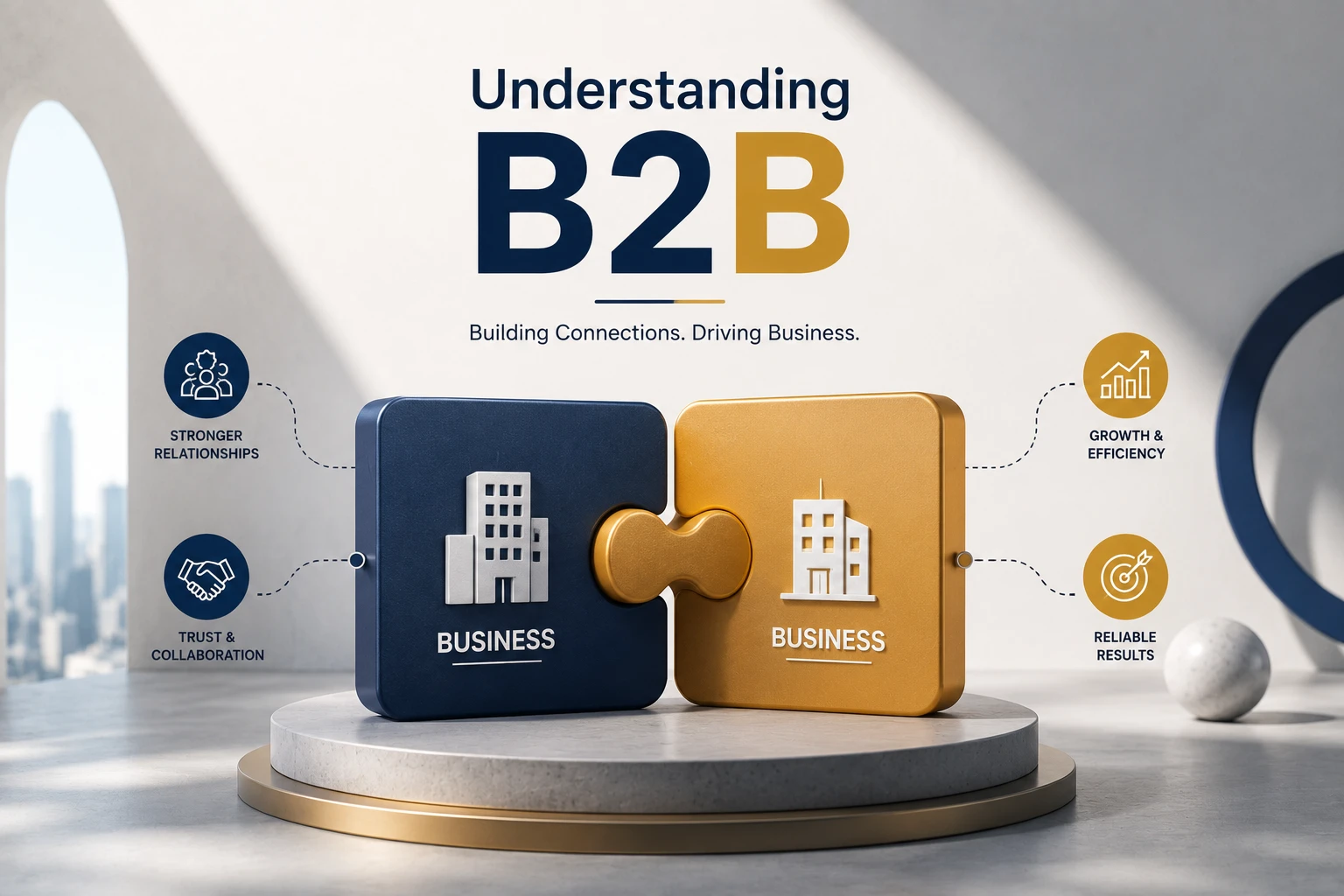
What Is B2B (Business-to-Business) and How Does It Work?
B2B stands for business-to-business, which means one company sells products, services, or information directly to another company. Unlike buying from stores as an individual customer, B2B transactions happen between businesses that need goods or services to operate, grow, or serve their own customers.
The business-to-business definition is simple: it’s commerce conducted between two companies. Examples include a manufacturer selling parts to another company that assembles products or a software provider offering tools to organizations. This contrasts with business-to-consumer (B2C), where a company sells directly to individuals.
How Does B2B Work?
Business-to-business (B2B) transactions involve one company selling products or services to another company rather than to individual consumers. This process is essential for the smooth functioning of industries and supply chains worldwide.
- Identify Business Needs: One company decides it needs supplies, equipment, or services to support its operations.
- Find Suitable Vendors: They research and compare different suppliers based on price, quality, and reliability.
- Negotiate Terms: Both businesses agree on price, delivery schedules, payment terms, and service expectations.
- Place an Order: The buyer sends a purchase order confirming what they want to buy and the agreed-upon terms.
- Delivery and Payment: The seller delivers the goods or services, issues an invoice, and the buyer pays within the agreed time frame.
- Ongoing Relationship: B2B relationships often last long-term, with continuous collaboration, support, and repeat orders.
Why B2B Is Important for Businesses
Business-to-business (B2B) relationships are essential for the success and sustainability of many industries and supply chains. They enable large-scale operations by allowing companies to depend on other businesses for the supply of essential products, materials, and services needed to run efficiently. Without these partnerships, large-scale manufacturing and distribution would not be feasible.
B2B interactions also drive innovation, as collaboration between businesses often leads to the development of new products and the improvement of services to meet evolving market demands. Additionally, B2B deals are built on trust and reliability, fostering long-term relationships that contribute to steady revenue and overall business stability. These partnerships support business growth by enabling bulk purchases, reducing costs, improving product quality, and enhancing competitiveness in the marketplace.
Effective B2B Business Growth Strategies
To leverage B2B for business growth, companies use several proven strategies:
- Targeted Marketing: Understanding the specific needs of other businesses and tailoring marketing efforts to those industries helps attract the right clients.
- Strong Customer Relationships: Providing excellent customer service and consistent product quality encourages repeat business and loyalty.
- Digital Transformation: Using technology like e-commerce platforms and customer relationship management (CRM) tools streamlines B2B transactions and improves efficiency.
- Networking and Partnerships: Building strong professional networks and strategic alliances opens doors to new markets and opportunities.
- Offer Customized Solutions: Many businesses prefer suppliers who adapt products or services to their unique needs, helping close bigger deals.
B2B is not just about transactions; it’s a critical driver for business success and expansion. By applying smart business growth strategies, companies can grow sustainably and create lasting value in their industries. Manage client relationships and workflow automation effortlessly with resources in B2B CRM and Management.
Why Business to Business Matters – Optimizing B2B Strategies
Business-to-business (B2B) transactions are the engine behind many industries, connecting companies that supply goods and services necessary for others to operate and grow. Understanding why B2B matters helps businesses focus on strategies that maximize these valuable relationships.
Most B2B commerce today happens online through company websites, specialized marketplaces, or e-procurement platforms. This allows businesses to easily find suppliers, compare products, and place orders digitally. Understanding what B2B means helps clarify how companies connect and work together behind the scenes to create and deliver the products and services we all use every day. Discover cutting-edge tools and software designed to streamline B2B software operations in our technology.
How B2B Drives Business Growth
Optimizing B2B strategies requires a deep understanding of the specific needs and challenges faced by partner businesses. Success hinges on building trust through consistent, transparent communication and delivering tailored solutions that meet unique business requirements.
Leveraging digital tools such as e-commerce platforms, customer relationship management (CRM) software, and automated workflows can streamline purchasing processes, reduce errors, and enhance the overall experience for all stakeholders.
Benefits of B2B – Boost Your Business
Business-to-business (B2B) offers significant advantages that can substantially boost a company’s growth and profitability. One of the most notable benefits is the ability to handle larger order values and volumes. B2B transactions typically involve bulk purchasing , which enables businesses to negotiate better pricing and secure wholesale rates. This reduces per-unit costs and improves profit margins for both buyers and sellers. Additionally, B2B partnerships often lead to long-term relationships built on trust and mutual benefit, creating stability and recurring revenue streams.
Another advantage of B2B is access to specialized products and services tailored to specific business needs. This customization gives companies a competitive edge, as they can offer unique solutions that directly address the challenges faced by their clients. Furthermore, B2B models generally have more predictable and structured transactions, allowing for better planning and risk management.
Your Ultimate Weapon for B2B Success: Meet Workdo
Looking to take your B2B business to the next level? Workdo’s is your all-in-one SaaS platform that simplifies complex enterprise operations from end to end. Imagine managing appointments, sales, inventory, customer support, and projects in one seamless, customizable dashboard designed specifically for B2B needs.
With powerful features like multi-business appointment scheduling, AI-driven analytics, and an open-source ERP system, Workdo helps you streamline workflows, cut costs, and make smart, data-backed decisions. Its white-label branding options ensure your platform looks and feels totally yours, boosting trust and professionalism with your clients. Optimize online ordering and digital storefronts with insights from e-commerce and Platforms.
Whether you are a growing startup or an established enterprise, Workdo’s scalable tools adapt as you expand. Say goodbye to juggling multiple disjointed systems. You gain full control, enhance collaboration across teams and partners, and accelerate your business growth faster than ever before.
Empower your B2B company today with Workdo SaaS partner trusted by businesses ready to innovate, scale, and win. Unlock your enterprise’s full potential with all-in-one efficiency designed just for you. Build powerful marketing campaigns that resonate with corporate buyers in Marketing and Strategy.
B2B vs B2C: Key Differences Explained
B2B (business-to-business) and B2C (business-to-consumer) represent two distinct business models that differ mainly in their target audience and transaction types. B2B involves selling products or services from one business to another, often with larger order volumes and longer sales cycles. The decision-making process usually involves multiple stakeholders and focuses on logic, cost efficiency, and long-term relationships. In contrast, B2C targets individual consumers with faster sales cycles, smaller transactions, and more emotional, convenience-driven buying behavior.
B2B vs B2C Meaning
While B2B and B2C both involve commerce, their meanings highlight critical differences. B2B focuses on relationships between companies, where buying decisions are often complex, involving contracts, negotiations, and customized solutions. B2C centers on selling to end consumers, emphasizing simplicity, branding, and quick conversions. The volume and price points in B2B transactions are typically higher, with longer-term client engagements, whereas B2C sales often involve one-time or repeat purchases on a smaller scale.
Understanding Business-to-Consumer (B2C)
Business-to-consumer (B2C) describes companies that sell goods or services directly to individual buyers for personal use. The B2C market addresses a broad audience, relying heavily on marketing strategies that appeal to emotions, desires, and lifestyle needs. Transactions tend to be quicker, with a focus on brand recognition, ease of purchase, and customer experience. Examples include retail stores, restaurants, and e-commerce platforms
B2B vs B2C Strategies for Success
The marketing approaches for B2B and B2C differ significantly due to their unique audiences. Successful B2B marketing uses logical, data-driven messages, thought leadership, and relationship-building tactics, focusing on demonstrating return on investment and solving business problems. Channels often include direct sales, industry events, and personalized outreach. Conversely, B2C marketing aims to create emotional connections and drive quick decisions through mass advertising, social media, and appealing visuals. Understanding these differences allows businesses to craft effective campaigns tailored to their specific market, ensuring maximum impact.
Conclusion:
In today’s competitive landscape, effective B2B marketing requires a blend of strategic planning, personalized messaging, and innovative tools. The key takeaway is that success hinges on understanding the unique needs of high-value accounts, leveraging data-driven insights, and implementing multi-channel campaigns like account-based marketing (ABM).
Utilizing storytelling through case studies, videos, and interactive content helps build trust and engagement with prospects. Tailoring your messaging to address specific pain points and showcasing measurable results reinforces your credibility and fosters long-term relationships. By adopting these strategies, businesses can generate high-quality leads, close high-value deals, and ultimately achieve sustainable growth in the B2B space.
📌 Frequently Asked Questions (FAQs)
We're Here to Help - Let's Talk
Have questions about our solutions, customization services, or business tools? Our team is here to help you. let's talk.