

SaaS Benefits – Unlocking the Advantages of Software as a Service
SaaS benefits include lower costs, scalability, and faster updates for flexible operations.

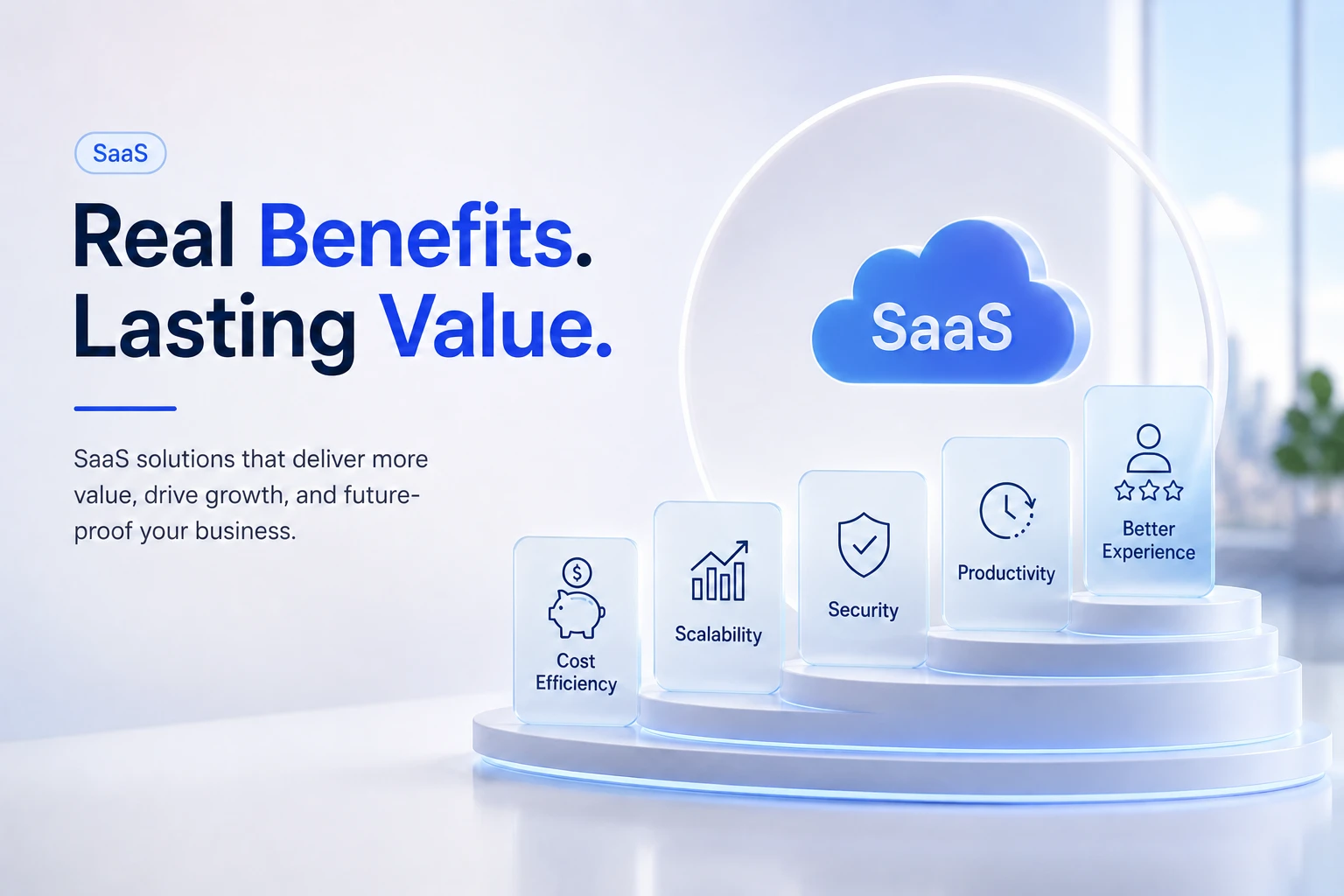
SaaS Benefits: Unlocking the Advantages of Software as a Service for Modern Businesses
In today’s fast-evolving digital landscape, Software as a Service (SaaS) has become a cornerstone technology for businesses aiming to boost efficiency, scalability, and innovation. SaaS solutions offer numerous benefits that help companies save costs, enhance productivity, and stay competitive. This blog explores the key benefits of SaaS and why it is rapidly becoming the preferred software delivery model worldwide.
Why Choose SaaS Solutions?
Software as a Service, or SaaS, refers to delivering software applications over the internet. Instead of installing software on individual machines, users access SaaS products through a web browser, enabling seamless access, automatic updates, and centralized data management. This software-as-a-service model eliminates the need for heavy upfront investments and ongoing IT maintenance, offering businesses the flexibility to focus on growth and innovation.
SaaS applications simplify operations by providing out-of-the-box functionality that is scalable and easily customizable. The SaaS benefits extend beyond cost savings to enabling faster deployment times and supporting remote collaboration across global teams with ease. If you’re new to SaaS and want to understand the fundamental concept, its definition, and its impact on businesses What Is SaaS?
Top Benefits of SaaS Solutions for Businesses
These benefits make SaaS an attractive option for businesses looking to enhance operational efficiency while controlling costs. With cloud-based delivery, companies gain the agility to scale quickly and adapt to changing market conditions without the traditional software complexities. Additionally, SaaS unlocks the potential for remote collaboration and innovation by enabling seamless access to the latest technology from anywhere in the world.
1. Cost Savings and Predictable Expenses
One of the greatest advantages of SaaS is the shift from large upfront capital expenditures to predictable subscription-based payments. Businesses pay only for the software they use, avoiding expensive hardware purchases and complex installations. This pay-as-you-go pricing model improves cash flow management and reduces financial risk, especially for startups and small to medium-sized enterprises.
2. Scalability and Flexibility
SaaS benefits include unparalleled scalability. As business demands change, SaaS solutions can quickly adjust by adding or removing users and features without disruption. This flexibility supports businesses during growth phases and fluctuating market conditions, allowing them to stay agile and responsive.
3. Accessibility Anywhere, Anytime
Software as a service applications are cloud-hosted, which means employees can access their tools from anywhere with an internet connection. This capability enhances productivity by supporting remote work, multi-location operations, and real-time collaboration. SaaS benefits companies looking to empower distributed teams and streamline communication.
4. Automatic Updates and Reduced IT Burden
SaaS providers manage all maintenance, updates, and security patches centrally. Users always run the latest software version with enhanced features and improved security, without the hassle of manual upgrades. This reduces the IT workload and ensures business continuity without unexpected downtime.
5. Enhanced Security and Compliance
Although initially concerns existed around cloud security, today’s SaaS benefits often exceed the security levels of traditional software. Providers invest heavily in encryption, multi-factor authentication, and compliance certifications to protect sensitive data. This makes SaaS a secure choice for handling critical business information.
6. Integration and Customization
SaaS solutions offer extensive integration capabilities with other business systems such as CRMs, accounting software, and marketing platforms. This interconnectedness improves data consistency and workflow efficiency. Additionally, many SaaS products allow customization to fit specific business processes, ensuring companies get software tailored to their unique needs. If you’re interested in the business side of SaaS, including business models and sales strategies, make sure to explore our Business Model and Sales overview.
Boosting Productivity and Integration with SaaS Solutions
Among the most valuable SaaS benefits is the significant boost in productivity that businesses can achieve by adopting SaaS solutions. These software-as-a-service applications automate routine tasks, streamline workflows, and reduce manual errors, allowing teams to concentrate on strategic and creative work. Furthermore, SaaS solutions are designed to integrate smoothly with other software Product and Tool, such as CRM systems, marketing platforms, and accounting software. This seamless integration eliminates data silos and enhances collaboration across departments, ultimately driving greater operational efficiency and business agility.
Integration: The Backbone of Efficient Workflows
True productivity gains come from integrating technologies into a cohesive ecosystem. When systems communicate naturally, sharing data, workflows, and insights in real time, manual errors shrink and processes accelerate. This integration isn’t about adding complexity; it’s about removing friction and creating an environment where everything just works together.
Customization: Adapting Technology to Business Needs
No two businesses are alike, and the flexibility to add specialized features, such as scheduling, commission tracking, or e-commerce management, means companies can adapt without disruption. These modular additions fit into existing frameworks, providing new capabilities without a steep learning curve or costly IT overhauls.
The Real Impact: Beyond Software
Ultimately, the point of these tools isn’t just to check a box but to empower people, unlock new ways of working, and deliver measurable outcomes. A carefully integrated, feature-rich environment reduces busywork, enhances collaboration, and helps businesses respond more quickly to changing demands.
Why This Matters Now
- Remote and hybrid work require anytime, anywhere access without sacrificing security.
- Automation helps free teams from repetitive tasks to focus on high-value activities.
- Scalable solutions ensure that growth doesn’t mean chaos.
- Reducing software silos leads to clearer data, better decisions, and faster execution.
Discover various SaaS solutions and how they can transform your operations by visiting our Products and Tools.
Measuring SaaS ROI: Key Metrics That Drive Success
When investing in SaaS solutions, understanding how to measure the return on investment (ROI) is crucial to maximizing SaaS benefits and ensuring long-term success. SaaS ROI quantifies how effectively a software as a service application boosts business revenue or saves costs relative to the total investment made.
Key Metrics for SaaS ROI
- Total Cost of Ownership (TCO): This includes subscription fees, implementation costs, training, and ongoing support expenses. Knowing your TCO helps you understand the full financial commitment involved in a SaaS model.
- Customer Acquisition Cost (CAC): Measures how much you spend on average to acquire a new customer using the SaaS platform. Lower CAC improves marketing ROI and overall profitability.
- Customer Lifetime Value (CLV or LTV): Represents the total revenue a business expects from a single customer over the entire duration of their relationship. Increasing LTV directly enhances SaaS ROI by maximizing revenue per customer.
- Churn Rate: The percentage of customers discontinuing their subscription in a given period. Minimizing churn is essential to sustaining predictable revenues and improving SaaS solution value.
- Monthly Recurring Revenue (MRR): Tracks predictable revenue earned every month through subscriptions. Growth in MRR is a positive indicator of SaaS success.
- Time to Value (TTV): The duration it takes for the SaaS solution to start delivering measurable benefits. Shorter TTV means faster realization of SaaS benefits.
- User Engagement and Satisfaction: Metrics such as Net Promoter Score (NPS), product usage rates, and customer feedback help assess how well the SaaS application meets user needs and contributes to retention.
By consistently monitoring these metrics, companies can optimize SaaS investments, detect issues early, and align their strategy to maximize the transformative benefits SaaS solutions offer. For a technical dive into SaaS, including platform structures and architectural designs, visit our Platform and Architecture section.
Security, Compliance, and Reliability in SaaS: What You Need to Know
Security is a critical SaaS benefit that businesses prioritize when adopting software as a service solutions. Modern SaaS providers implement advanced security measures, including encryption for data in transit and at rest, multi-factor authentication (MFA), and rigorous identity and access management (IAM) protocols. These safeguards help protect sensitive business information from unauthorized access and cyber threats.
Compliance with industry standards and regulations such as GDPR, HIPAA, and SOC 2 is another cornerstone of reliable SaaS solutions. Leading providers maintain continuous monitoring and auditing processes to ensure they meet evolving legal requirements, giving businesses peace of mind regarding data privacy and governance.
Reliability in SaaS is achieved through cloud infrastructure designed for high availability, automatic backups, and disaster recovery capabilities. SaaS solutions commonly guarantee uptime above 99.9%, ensuring business continuity and minimizing service disruption. Together, these security, compliance, and reliability features form a robust foundation for SaaS applications, maximizing trust and the overall SaaS benefits for organizations. Learn about the leading companies and providers in the SaaS industry and how they shape the market by checking out the Companies and Providers information
Conclusion
SaaS benefits extend far beyond simple software delivery—they fundamentally transform how businesses operate by reducing costs, enhancing scalability, and accelerating innovation. By adopting software as a service solutions, companies gain access to cutting-edge technology that is secure, reliable, and continuously updated without added IT burden. The flexibility to access these solutions from anywhere enables modern, agile workforces while seamless integration with other business tools drives higher productivity. Measuring key SaaS ROI metrics ensures organizations unlock maximum value and growth potential. Embracing SaaS is not just about keeping up with technology, but about harnessing its full benefits to future-proof your business in an increasingly digital world.
📌 Frequently Asked Questions (FAQs)
We're Here to Help - Let's Talk
Have questions about our solutions, customization services, or business tools? Our team is here to help you. let's talk.