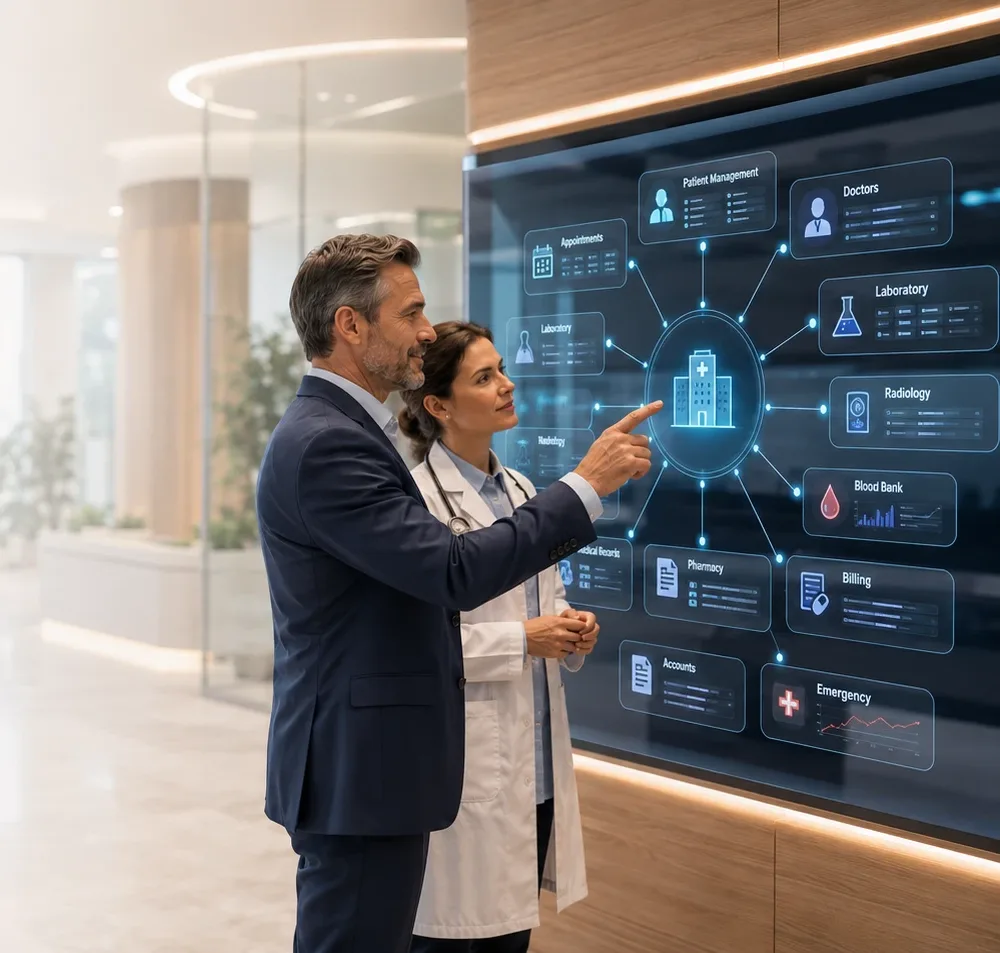
Built for Every Kind of Hospital Facility, Not Just One
This page walks through what that looks like across different kinds of facilities. Find the one closest to yours, and see which capabilities actually apply.
A diagnostic center processes samples and hands back results. A 200-bed multi-specialty hospital admits patients, tracks beds, runs an OT schedule, and settles insurance claims before anyone goes home. Neither one needs the other's workload - but building two separate systems, or forcing one facility to wade through features it'll never touch, isn't the answer either.
This is where a hospital management system earns its name: not by doing everything for everyone, but by letting each facility use exactly the part that fits. A diagnostic lab turns on sample tracking and results. A hospital turns on beds, OT scheduling, and insurance claims. Same platform, different combination.
One System, Many Shapes
Every scenario below draws from the same connected system covered on Features - nothing here is a separate product bolted on afterward. What changes is which pieces get switched on, not the underlying platform.
Some vendors and IT teams use the term hospital automation system to describe this same idea: automating the specific workflows a facility actually runs, rather than digitizing paperwork for its own sake. The label varies. The approach here is the same either way.
Find the Facility Closest to Yours
Seven scenarios, seven different combinations of the same system. None of these are hypothetical - each one maps to capabilities already covered elsewhere in this cluster.

Multi-Specialty Hospitals
This is the full-suite scenario: patient registration and records, OPD and IPD billing, insurance and TPA claims, and bed or ward tracking, all running from the same set of records. A patient referred from general medicine to cardiology doesn't repeat their history, and a bill doesn't need to be reconciled against a separate ledger by hand. See patient management and billing management for the detail behind both halves of this.
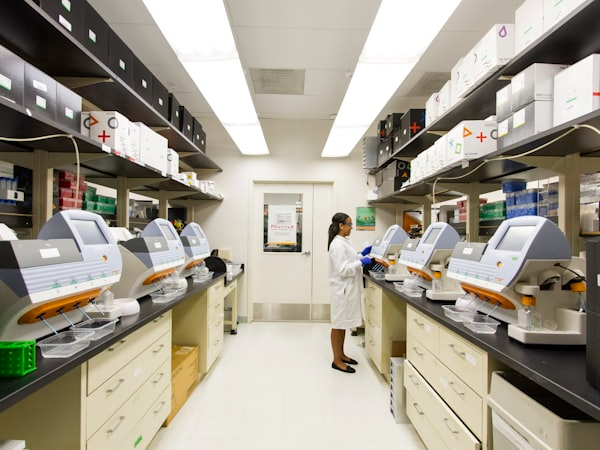
Diagnostic & Pathology Centers
A standalone lab doesn't need bed management or an OT schedule - it needs sample tracking from collection to result, structured reports with reference ranges, and a searchable patient history, without carrying the weight of a full hospital setup. That's a narrower slice of the same system, not a separate product.

Eye Care & Optical Centers
An optical center runs on a different rhythm: eye-test prescriptions with expiry tracking, an eyewear inventory and order flow, and appointment booking, all tied into the same accounting records covered in billing management, so an order and its payment are never two separate things to reconcile.
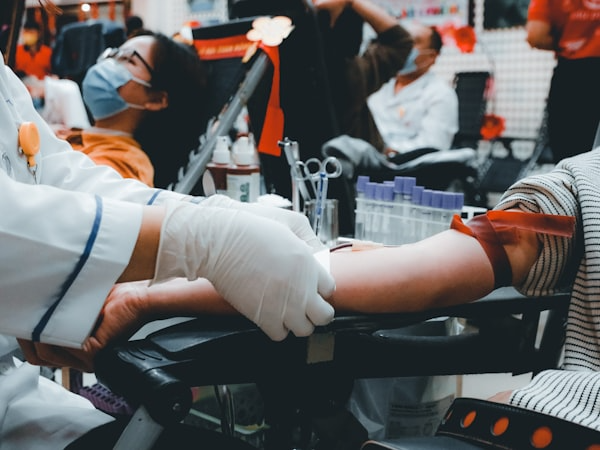
Specialty Diagnostic Services
Blood banks and radiology or imaging centers share a pattern: both extend a hospital's core patient records rather than standing entirely on their own. A blood bank tracks donor registries, component storage, and priority-based requests; a radiology service manages a test catalog, multi-test requests linked to a patient and doctor, and image-attached reports. Both plug into the same patient record covered in patient management, instead of keeping a separate file per department.

Nursing Homes & Long-Term Care Facilities
Long-term care runs on a longer timeline than a single visit - residents stay for months or years, not hours. The emphasis shifts toward accurate histories maintained over time, plus the practical side of daily operations: visitor check-ins and passes for family visits, and secure tracking for residents' belongings. It's a genuinely different mix than an acute hospital, built from the same underlying records.
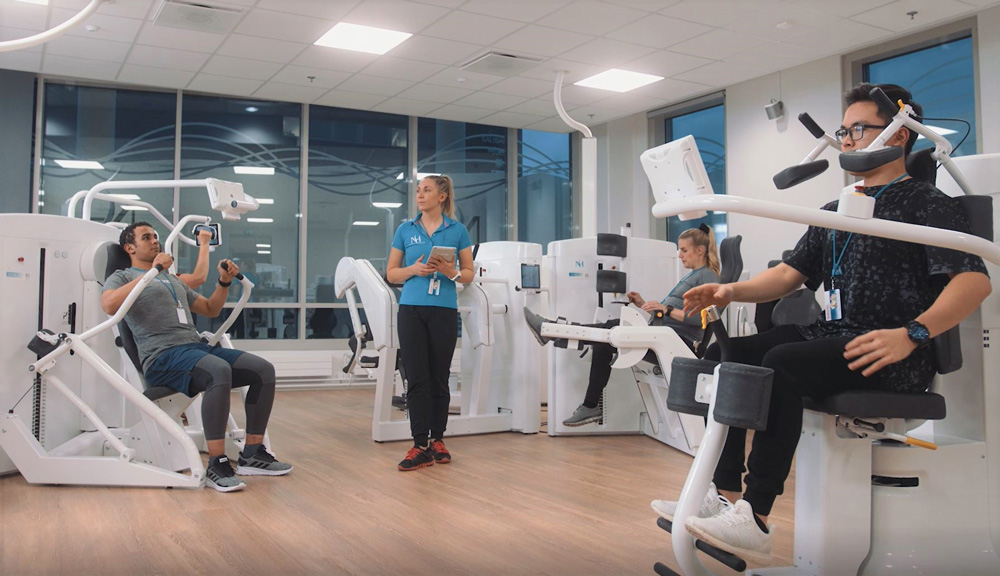
Wellness & Nutrition Clinics
A nutrition or wellness practice runs on recurring relationships rather than one-off visits: appointment booking, diet plan charts built around specific goals, and ongoing health tracking for members who come back on a schedule rather than as-needed.
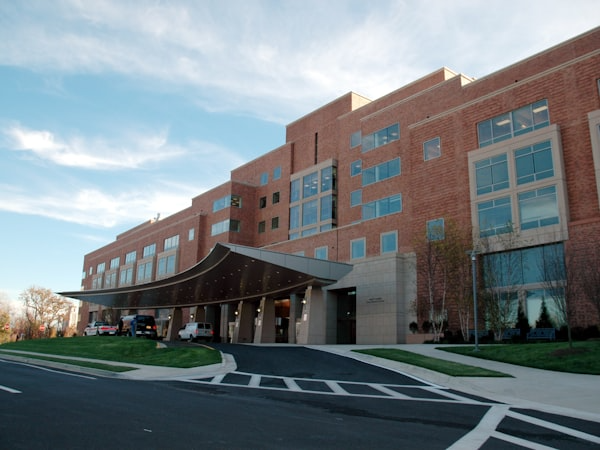
Multi-Location Hospital Chains
Running several branches changes the questions being asked. Staff attendance needs to be tracked consistently across every location, instead of reconciled branch by branch by hand. Patient communication runs through a live chat channel on a platform patients already have installed, instead of relying on calls that go straight to voicemail. This is the operational-scale scenario: the same system, stretched across locations instead of departments.
Who's Using It on a Given Day
Facility type is one way to look at this. Role is another, and it cuts across every scenario above.
- Front-desk staff register patients and manage the day's appointments - covered in full on patient management.
- Doctors review patient history during consultations, wherever that patient was last seen in the system.
- The billing and insurance desk turns a visit into an invoice and tracks claims to settlement - covered in full on billing management.
- The finance team works from the ledger and reports, usually without touching the billing desk directly.
- Patients book visits, check records, and pay bills through the portal, without picking up the phone.
Whatever facility type above matches yours, these are the people actually opening the system each day.
See Your Own Facility in the System
Reading about a scenario is one thing - watching it work is another. Whether the closest match above was a multi-specialty hospital or a single diagnostic lab, the fastest way to know if it fits is to see it running. See the full benefits of a hospital management system for the operational picture behind every scenario above, or go straight to the demo.