


Learning & Training Management Systems Software (LMS)
Learning and training management systems deliver courses, track progress, and boost employee skills.
What Is a Training & Learning Management System?
A training & learning management system combines tools for delivering learning content and for managing the administrative side of training programs. It helps organizations create, assign, track, and report on learning activities to improve employee skills and compliance.
What is an LMS?
An LMS (Learning Management System) is software for delivering, tracking, and managing online or blended learning. It centralizes courses, materials, and assessments. An LMS lets organizations create learning paths, monitor progress, and measure performance.
What is a TMS?
A Training Management System focuses on the logistics of training. It schedules sessions, assigns resources, manages vendors, and tracks attendance and compliance. A TMS reduces admin work and makes training programs more efficient.
For a more detailed explanation, examples, benefits, and use-cases, check out our in-depth blog:
👉 What Is LMS? — your complete guide to learning management systems.
Training Management System vs Learning Management System
Although often used interchangeably, a Training Management System (TMS) and a Learning Management System (LMS) serve different purposes.
Training Management System (TMS)
Training management system software focuses on administrative tasks such as scheduling, enrollments, attendance, and compliance tracking.
- Training calendars and resource planning
- Batch enrollment and attendance tracking
- Policy, audit, and compliance management
Learning Management System (LMS)
A learning management system software emphasizes the learning experience—content delivery, engagement, assessments, and analytics.
- Structured learning paths and course delivery
- Learner participation and interaction tools
- Assessment outcomes and performance insights
Who Should Use This Training & Learning Management System?
This Training & Learning Management System (LMS) is designed for organizations that want to manage employee training in a structured, scalable, and measurable way.
HR teams
HR teams managing employee training and compliance programs
Learning & Development managers
Learning & Development (L&D) managers responsible for skill development
Small and mid-sized businesses
Small and mid-sized businesses seeking cost-effective training software
Enterprises
Enterprises with complex training structures and compliance requirements
Remote and hybrid teams
Remote and hybrid teams that need online learning management systems
employees onboarding
employees onboarding or undergoing long-term development programs
Key Features of Training & Learning Management System
Our Training & Learning Management System (LMS) simplifies employee training, automates learning workflows, and supports long-term skill development for organizations of all sizes.
Training Types Management
Training Types help HR teams organize learning initiatives in a structured and meaningful way. Each training type can be linked to specific departments and branches, ensuring the right training reaches the right employees. This structured approach supports modern training methods in HRM and improves learning consistency across the organization.
What this feature does:
- Create different training categories such as:
- Professional Certification
- Soft Skills Development
- Digital Literacy
- Quality Management
- Project Management
- Safety and Compliance
- Assign training types to specific departments and branches
- Standardize learning programs across the organization
This ensures maximum reach with minimal effort.
Training Program Creation & Control
Training Programs represent the actual courses delivered to employees. HR teams can design programs with complete control over duration, cost, capacity, and training category.
A typical training program follows this flow:
- Program creation under a selected training type
- Status assignment (Draft, Active, or Completed)
- Enrollment setup (self-enrollment or mandatory)
- Training material upload
- Session planning and execution
This functionality turns the platform into a powerful training management system software that supports both skill-building and compliance-focused learning.
Training Sessions Scheduling & Delivery
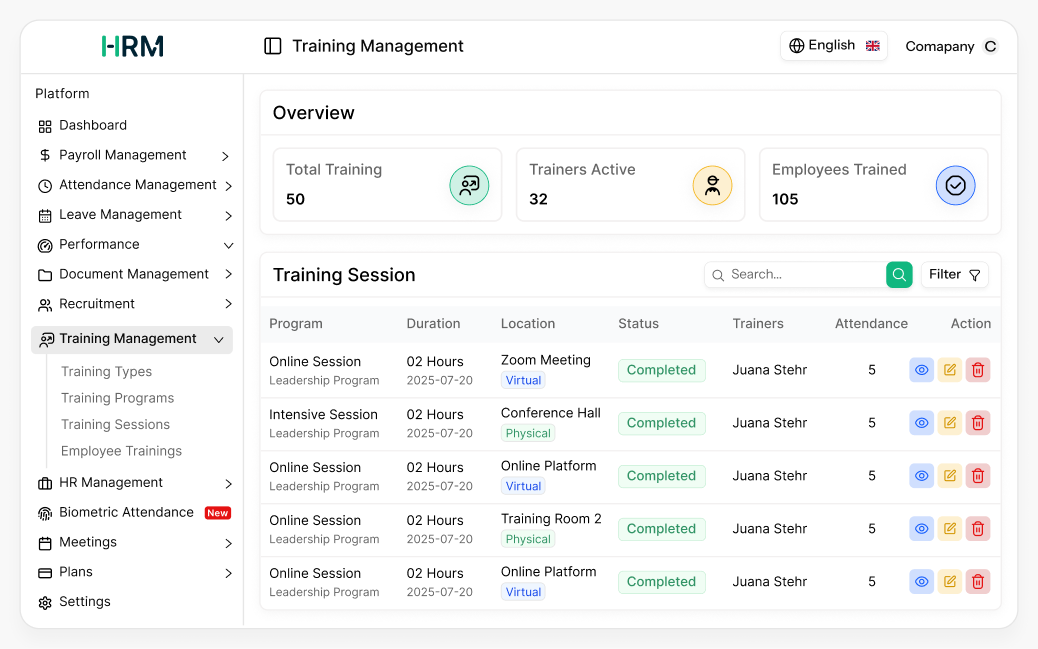
Training Sessions allow organizations to deliver learning in flexible formats. Sessions can be scheduled as physical classroom training, virtual workshops, or online sessions depending on business needs.
Each session includes:
- Date and time scheduling
- Location (physical or virtual)
- Assigned trainers
- Session status tracking
With calendar-based planning and real-time session updates, the LMS functions as a reliable online learning management system for modern workforces.
Employee Training Assignment & Progress Tracking
The Employee Trainings module gives HR teams complete visibility into individual learning journeys. Training programs can be assigned to employees individually or in bulk, making large-scale learning initiatives easy to manage.
Once assigned, HR managers can track:
- Training status (Assigned, In Progress, Completed)
- Assignment and completion dates
- Assessment participation
- Overall learning progress
This feature strengthens training and development in HRM by ensuring accountability and transparency in employee learning.
Assessments, Scores & Certification Management
Learning effectiveness is measured through built-in assessments and evaluations. After completing a training program, employees can be assessed based on predefined criteria.
The system records:
- Assessment attempts
- Scores and results
- Pass or fail status
- Certification eligibility
Certificates can be generated and downloaded directly from the system, helping organizations maintain compliance and skill validation through a centralized employee learning management system.
Centralized LMS Dashboard & Reporting
The LMS dashboard provides a real-time overview of all training activities. Instead of switching between tools, HR teams can monitor training performance from a single screen.
Key insights include training participation, completion rates, active programs, and employee performance trends. These insights support data-driven decisions and improve overall learning outcomes using advanced learning management solutions.
Benefits of Using a Training & Learning Management System
Implementing a learning management system delivers measurable business and workforce benefits beyond basic training delivery.
Why Choose Workdo’s Training & Learning Management System
Workdo.io offers a powerful HR learning management system designed to support modern organizations. It delivers a unified LMS within a complete HR software ecosystem.
Performance Management
Align employee training with performance goals to support continuous improvement and skill development.
Employee Onboarding
Deliver structured training programs that help new employees learn faster and adapt smoothly.
Engagement and Feedback Tools
Use feedback insights to improve learning programs and keep employees motivated.
Mobile-First Learning Experience
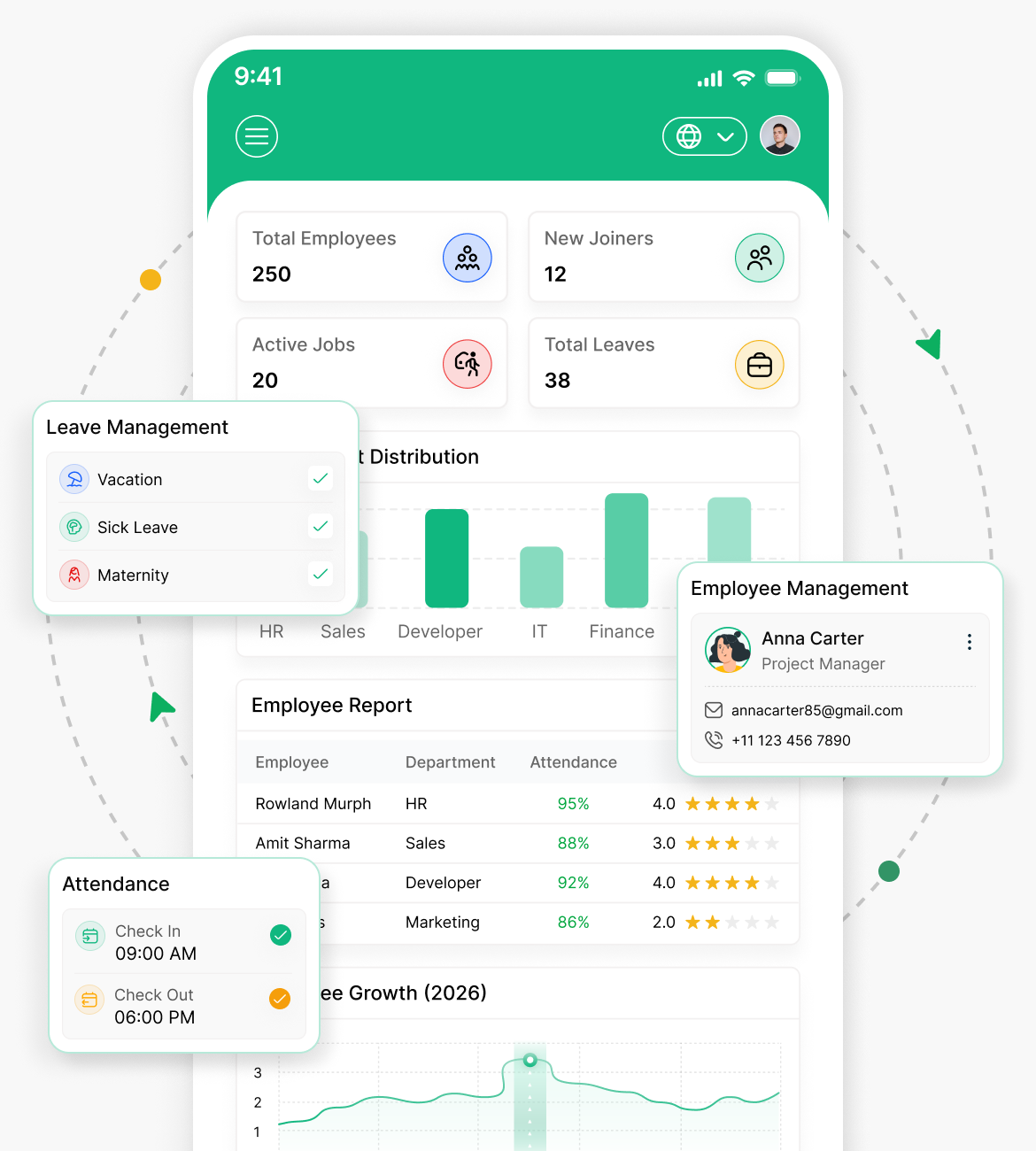
Empower your workforce to learn anytime, anywhere. Our Learning Management System (LMS) is built with a mobile-first approach, enabling employees to access training whether they’re in the office, on the field, or working remotely.
Access courses and training materials seamlessly from mobile devices.
Complete quizzes, assignments, and learning modules on the go.
Monitor learning progress and performance in real time.
A safe and intuitive platform designed for smooth mobile learning.
Types of Learning Management Platforms
Organizations can choose from various learning management platforms based on size, industry, and training needs:
Scalable, cost-effective, and accessible from anywhere
Designed for large organizations with complex learning structures
Seamlessly connected with HRMS modules
Ideal for remote and digital-first learning strategies
What Our Clients Say About Us
See what our customers are saying about their experience with our products.

infinitiedip09
Great code quality of HRM SaaS. The structure is well designed and the implementation feels solid, stable, and reliable for real development usage.
akhrot-1989
Latest software with an easy-to-manage admin panel. The support team is very friendly and responsive, and they quickly resolve issues whenever they appear. They also helped me fix AWS storage integration smoothly and efficiently, which made the overall setup experience much better. Highly recommended.
luiseduardo_galindo
It’s an easy-to-customize website that perfectly fits my development project needs. The flexibility allows me to modify and adapt features without difficulty, making it very useful for practical implementation.
aoxoex
Not good experience because the installation process is not working properly and caused multiple issues during setup, making it difficult to use the system effectively.
fairuzajaff
This script is one of the best HRM systems I have used so far. It is practical, useful, and covers most essential requirements needed for managing HR-related tasks efficiently. Recommended for anyone looking for a reliable HRM solution.
kenyalifestyle
The code quality is good, clean, and structured in a way that makes it easy to understand and use for development purposes without unnecessary complexity.
Mr0Human
The script works well and is easy to use for generating monthly payslips. However, it currently lacks a bi-weekly payment option, which could be useful for some businesses depending on their payroll structure and needs.
DevUSA
Thanks for the support provided during usage, everything was handled professionally and the assistance helped resolve my queries in a simple and clear manner.
NisvetReiz
Great system overall with very helpful support. The experience has been smooth, and the support team is always responsive and ready to assist whenever required, making it reliable for long-term use.
eximanshu
Loved the product and I am fully satisfied with both the support and the script. Everything works as expected and the overall experience has been very smooth and reliable from start to finish.
Empower Teams With Smart Training & Learning Management
Deliver structured training programs, track progress effortlessly, and build a skilled, future-ready workforce.