
Key HR Functions in Core HR for Organizational Success
Core HR covers payroll, recruitment, benefits, and compliance for productive workforces.

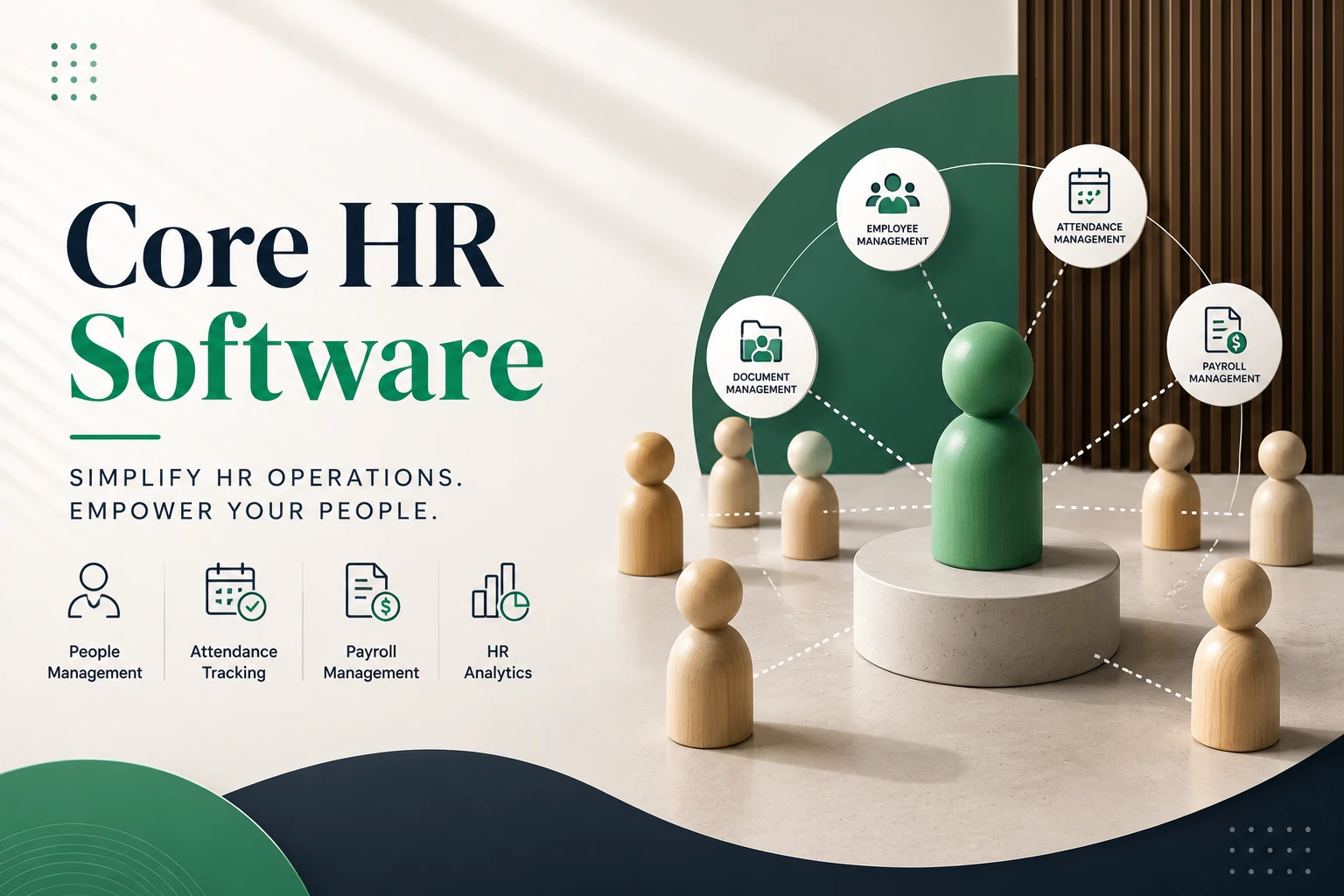
What is core HR software?
HR Core software is a Coordination system designed to manage essential human resources functions and streamline HR operations. It acts as a central repository for key employee information, including personal details, payroll, benefits, leave management, and compliance tracking. By consolidating these critical HR tasks into one platform, Core HR ensures that HR teams, managers, and organizational leaders have access to a single, up-to-date, and accurate source of data.
This centralized approach helps improve efficiency, reduce errors, and enhance decision-making. HR Core typically forms the foundation of a broader human capital management (HCM) ecosystem, connecting seamlessly with other specialized modules such as recruitment, performance management, learning and development, and talent management, to provide a comprehensive solution for managing the entire employee lifecycle.
Functions of Human Resource core software
HR software streamlines essential HRM functions, allowing HR teams to focus on strategic tasks. It centralizes employee data, storing personal information, job titles, and documents like contracts and certifications. The software automates payroll processing, ensuring accurate salary calculations, deductions, and tax compliance, and manages various salary structures. It also tracks attendance and leave, automating requests and approvals to ensure compliance with company policies.
HR Core software also manages employee benefits, such as health insurance and retirement plans, ensuring proper administration. Overall, it reduces administrative workload, enhances accuracy, and improves efficiency within the organization.
Key HR functions supported by core HR
The image you shared highlights the major HR functions that strong HR core software helps organize and connect. While some advanced features may sit in separate modules, HR is the foundation that links all of them together:
- Talent recruitment: Stores candidate and new-hire data, creates positions, and transitions successful candidates into employees without duplicate data entry.
- Employee Onboarding: Captures documents, personal details, bank and tax information, and assigns roles, departments, and managers from day one.
- Training & learning management: Records skills, certifications, training history, and tracks who needs which learning programs.
- Performance management: Maintains goals, review cycles, ratings, and feedback, all tied back to each employee’s core profile.
- Workforce engagement: Provides portals, communication spaces, and recognition or feedback tools linked to employee records.
- Payroll management: Uses HR data like salary, attendance, and deductions to generate accurate, timely payroll and payslips.
- Compliance management: Centralizes contracts, policies, and mandatory documents, helping HR meet legal and audit requirements.
- Succession planning: Uses role, performance, and skill data to identify high-potential employees and plan future leadership pipelines.
- Diversity and inclusion: Enables tracking of workforce composition and representation metrics while maintaining secure, compliant data structures.
- Employee wellbeing: Connects leave, workload, engagement, and feedback data so HR can monitor burnout risks and support wellbeing programs.
- Exit management: Manages resignations, clearances, final settlements, and documentation, ensuring complete and compliant offboarding.
Together, these functions show how core HR is not just about storing basic employee details; it is the strategic foundation that powers the full employee lifecycle and supports organizational success.
Implementation best practices and change management
Learn key implementation best practices and change management strategies to ensure smooth adoption of new systems, minimize disruption, and maximize organizational success.
- Start with clean data by standardizing fields (names, codes, job titles), removing duplicates, and establishing clear data ownership between HR and other teams.
- Define clear project phases: configuration, data migration, pilot testing with a small group, followed by organization-wide rollout.
- Communicate early about the new system’s purpose, highlighting how it benefits both employees and managers.
- Provide simple training, quick reference guides, and accessible support channels during the initial months post-implementation.
- Gather feedback after the system goes live to refine workflows and make improvements.
- Gradually add more automation over time instead of attempting to digitize everything on day one.
How to choose the right core HR solution
Choosing the right HR core solution begins with understanding your organization’s needs, size, locations, and pain points, like manual payroll or fragmented data. Mapping current HR processes (hiring, onboarding, payroll, etc.) helps prioritize must-haves (payroll, compliance, leave tracking) over nice-to-haves (performance, learning modules). Focus on usability, localization, and scalability for long-term growth. WorkDo’s platform centralizes employee data, automates payroll/leave, and supports multi-location operations, easing HR work.
Its modular structure allows for scalable expansion into recruitment and performance modules. Live demos or trials are key to assessing fit, and involving HR, finance, IT, and managers reduces resistance. WorkDo offers guided onboarding, configuration support, and responsive assistance for seamless implementation. By considering full costs, implementation, training, and support, WorkDo helps streamline HR operations and supports sustainable growth.
Why WorkDo’s Is the Right Core HR Software
WorkDo’s HRMS stands out as the ideal HR core partner by delivering comprehensive automation across employee lifecycle management, from recruitment to payroll and performance tracking. Its intuitive HRM platform centralizes staff data, reduces manual errors, and supports businesses of all sizes with customizable features like multi-language support and role-based permissions.
Key strengths include a unified dashboard for real-time analytics on payroll summaries, attendance, and employee stats, enabling faster decision-making. The system streamlines payroll with accurate payslip generation, tax handling, and self-service employee access, while finance tools to eliminate third-party dependencies.
Driving HR Innovation with WorkDo
- Staff and Role Management: Easily create user profiles, assign custom roles, and maintain secure employee records with hierarchy tracking for compliance and audits.
- Recruitment Pipeline: Automate job postings, application tracking, and onboarding within the HRMS, boosting hiring efficiency as a built-in recruitment management system.
- Leave, Attendance, and Performance: Handle approvals, goal setting, appraisals, and awards seamlessly, fostering employee engagement and retention.
- Additional Modules: Secure document storage, asset tracking, training programs, and resignation workflows ensure end-to-end HR operations under one roof.
This all-in-one approach enhances productivity, supports remote/hybrid work, and scales with organizational growth, making WorkDo the reliable HR partner.
Advantages of core HR in organizations
A well-implemented HR core system offers several key advantages for organizations. First, it significantly reduces reliance on manual paperwork and spreadsheets, cutting down on errors and saving HR teams considerable time. By automating routine tasks, HR can focus on more strategic activities. The system also enhances transparency and trust within the organization, as employees have faster, direct access to their personal information, pay details, leave balances, and HR policies. This improves employee satisfaction and engagement.
Moreover, HRcore systems make HR processes more consistent and trackable, providing a clear audit trail for decisions and actions. This not only helps streamline compliance with labor laws and company policies but also simplifies audits. With organized, accurate data, organizations can make data-driven decisions regarding hiring, budgeting, and workforce planning. This leads to better resource allocation, improved cost management, and the ability to identify and address HR trends proactively.
Core HR vs. HCM: What’s the difference?
HR Core focuses on the essential employee data and processes every company needs: employee records, organization structure, attendance, leave, and payroll. It answers questions like “who works here, where, in which role, at what compensation, and with what employment status?” and ensures these details are accurate and compliant.
Human Capital Management (HCM) builds on hr core by adding strategic layers like talent acquisition, learning and development, performance management, succession planning, and engagement analytics. In practice, HR core is the system of record, while HCM systems use that data to optimize the full employee lifecycle and drive long-term workforce strategy.
Must‑have features in modern core HR software
- Modern core hr software should offer a centralized employee database with role-based access, so HR, managers and employees only see what they need.
- A self-service portal is now essential, allowing employees to update personal data, submit leave requests, download payslips, and view policies without routing everything through HR.
- Other must-have features include automated payroll calculations, configurable workflows for approvals, attendance, and leave management, and strong reporting dashboards for headcount, turnover, and payroll costs.
- Cloud-based access, mobile compatibility, and ease with recruitment, performance, and finance tools make the solution future-ready and easier to adopt.
Core HR: The Backbone of Scalable Success
A reliable HR system is the foundation of any thriving organization, bringing key processes, such as hiring, payroll, compliance, and performance management, together into a single, unified platform. By centralizing these functions, organizations gain access to real-time, accurate data that minimizes errors, streamlines workflows, and accelerates critical decision-making.
Automation of routine HR tasks allows HR teams to shift their focus from administrative work to strategic initiatives, such as talent development, workforce planning, and employee engagement. Meanwhile, managers benefit from actionable insights and data-backed information, enabling them to make confident decisions that drive team performance and organizational growth.
For companies experiencing rapid growth, a modern core HR system is not just a convenience; it’s essential. It ensures processes remain efficient and compliant, scales with the organization’s needs, and supports sustainable success by empowering both employees and leadership. In today’s competitive business environment, investing in a robust HR system is a strategic move that strengthens the entire workforce ecosystem, ultimately enhancing productivity, employee satisfaction, and long-term organizational resilience.
📌 Frequently Asked Questions (FAQs)
We're Here to Help - Let's Talk
Have questions about our solutions, customization services, or business tools? Our team is here to help you. let's talk.