

Essential HRM Functions for Efficient HR Operations
Key HRM functions streamline payroll, recruitment, performance, and attendance management.

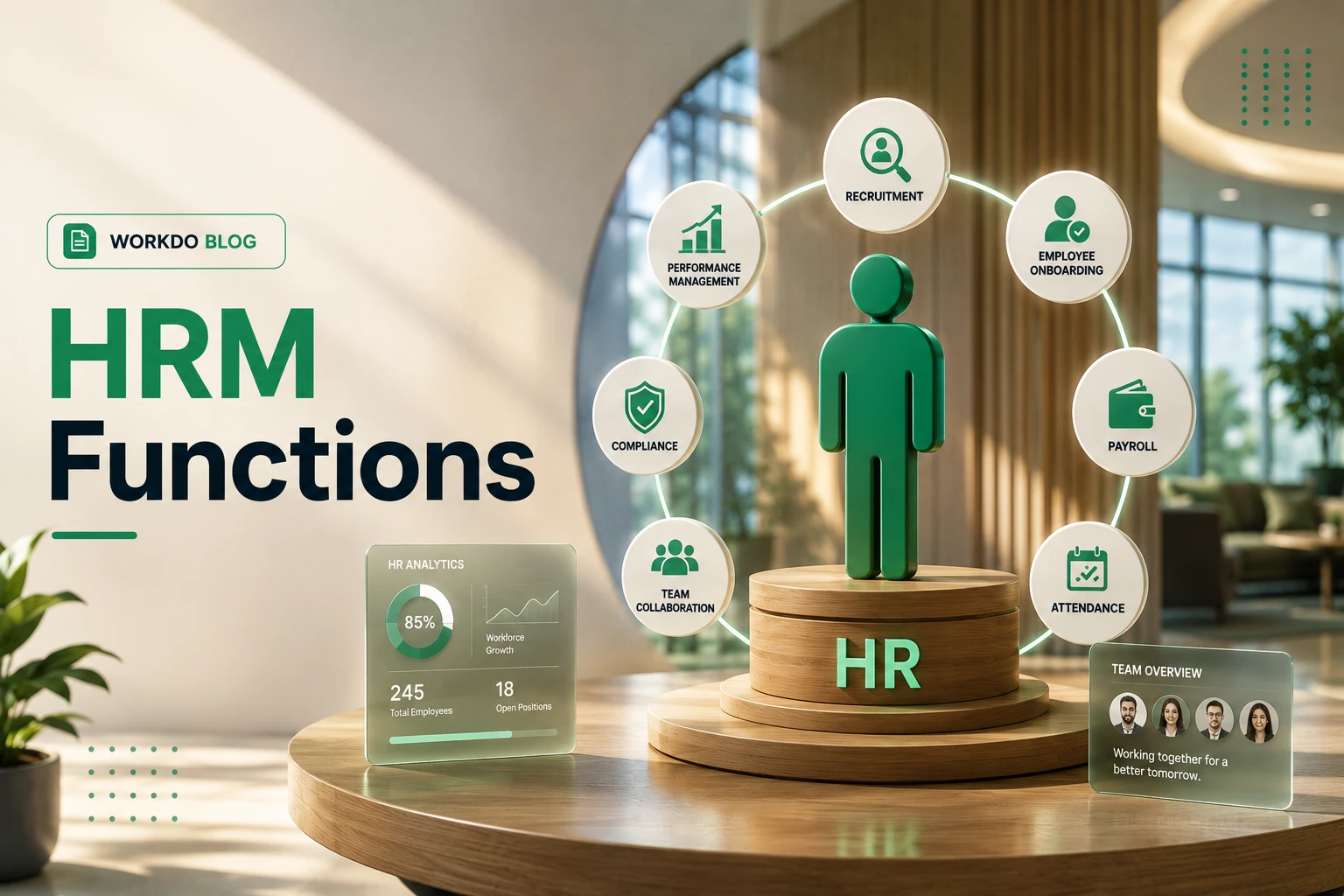
What are the Functions of HRM?
Human Resource Management handles essential business functions to keep your organisation running smoothly and your team productive. The key functions include recruitment and hiring to find the right talent, training and development to build employee skills, performance management to track results, compensation and benefits to attract and retain staff, employee relations to resolve conflicts, payroll management to process salaries, and HR administration to maintain records. Additionally, HRM manages managerial tasks like planning, organising, directing, and controlling workforce activities to ensure everything aligns with your business goals.
Beyond day-to-day operations, HRM provides strategic support through workforce planning, policy development, compliance with labour laws, analytics to guide decisions, and culture-building initiatives that boost employee engagement. Together, these functions create a productive workplace where your employees stay motivated and committed, directly contributing to your bottom line and long-term business success.
The Essential Role and Importance of HRM Functions
Human Resource Management (HRM) has shifted from a back-office administrative role to a strategic business driver. Today, its primary value lies in aligning the workforce with the company’s long-term goals, ensuring that every employee contributes to the organisation’s success.
7 Core Functions of HRM
The fundamental machinery of HR operates through seven key pillars:
- Recruitment & hiring: Sourcing and hiring the right talent to close skill gaps and fit the company culture.
- Performance Management: Continuous monitoring and feedback to align individual output with business objectives.
- Learning & Development (L&D): Upskilling employees to maintain competitiveness and foster innovation.
- Compensation & Benefits: Designing fair remuneration packages to attract and retain top performers.
- HR Planning: Forecasting future workforce needs to prevent labour shortages or surpluses.
- Employee Relations: Managing conflict, grievances, and maintaining a healthy work environment.
- Compliance & Safety: Ensuring adherence to labour laws and maintaining workplace safety standards.
Why HRM Matters Strategically
Beyond these daily tasks, HRM plays a critical strategic role:
- Business Alignment: It translates business strategy into people strategy. For example, if a company wants to innovate, HR builds a culture of creativity and hires for agility.
- Culture & Engagement: HR is the architect of company culture. A strong culture attracts talent, improves morale, and lowers turnover.
- Risk Mitigation: By managing compliance and legal standards, HR protects the organisation from costly lawsuits and reputational damage.
Challenges Before Using Structured HRM Functions
Before companies adopt a proper HRM function or HRMS, their HR processes usually feel scattered and reactive. Some common pain points include:
- Information hiding in silos: Employee data is split between email threads, paper files, WhatsApp chats, and multiple Excel sheets. Finding anything urgent, like an old contract or ID proof, takes too long.
- Heavy manual work: HR teams spend hours updating attendance, responding to basic queries, chasing managers for approvals, and copying data from one sheet to another. This leaves little time for strategic work like workforce planning or engagement.
- Frequent errors: Manual entries in payroll, leave, or overtime calculations can lead to wrong salaries, delayed reimbursements, and frustrated employees. Fixing these mistakes costs more time and trust.
- Weak compliance: Missing documents, inconsistent policy implementation, and poor record‑keeping increase the risk of legal issues, inspection problems, or employee disputes.
- Unclear employee experience: New joiners do not know the process, existing staff are unsure whom to contact, and different locations may follow different rules. This inconsistency hurts the employer brand and retention.
- Poor visibility for management: Leaders cannot clearly see headcount, department‑wise costs, absenteeism patterns, or attrition trends. Decisions then rely on guesswork instead of data.
How to Choose the Right HRM Function Setup
Selecting the right mix of HRM functions is less about buying the most feature‑heavy system and more about matching tools to your current stage of growth. Start by listing the pain points your HR team and managers face today, such as inconsistent attendance data, slow onboarding, or poor visibility into employee records. Then map those problems to specific HR functions like workforce management, employee database management, or onboarding and exit workflows.
It also helps to prioritise what must be solved in the next 6–12 months instead of trying to fix everything at once. Many businesses begin with core functions like employee records, compliance, and leave/attendance, then gradually add asset management, engagement tools, and contract management as they scale. This phased approach keeps change manageable for HR, avoids overwhelming employees, and delivers quick wins that build internal trust in the new HRM setup.
Why WorkDo HRMS Is the Smart Choice for Modern HR Functions
A modern HRMS like WorkDo is designed to simplify how companies handle every stage of the employee lifecycle, from hiring to exit. It connects key HRM functions, such as compliance management, workforce planning, employee onboarding, offboarding, asset tracking, employee engagement, day‑to‑day employee management, and centralised employee records, inside one unified platform instead of scattering them across spreadsheets and different tools. This gives HR teams a single source of truth for people data and makes it much easier to maintain control as the organisation grows.
By automating routine work like approvals, document collection, record updates, and notifications, WorkDo helps HR save time and cut down on manual errors that often appear in payroll, contracts, and attendance. Managers gain real‑time visibility into their teams’ attendance, performance, and engagement, while employees get a smoother experience with self‑service access to their profiles, leave balances, and essential documents. The result is a more organised HR function that operates with higher accuracy, faster response times, and a better overall experience for everyone involved, from HR and management to individual employees on the ground.
- All-in-One HR Solution: Brings all HR tasks (like hiring, onboarding, and compliance) into one easy-to-use platform.
- Self-Service for Employees: Employees can update their own information, check leave balances, and view documents, saving HR time.
- Real-Time Data: Managers can quickly see how employees are performing and if they’re meeting attendance goals.
- Grows with Your Company: The system adjusts as your business grows, making it easy to manage more employees without extra work.
- Secure & Compliant: Keeps employee data safe and ensures your company stays up-to-date with labour laws and regulations.
Benefits of Using HR Functions Through an HRMS
Using HRM functions through an HRMS makes managing people in a company much easier and more organised. It sets clear steps and timelines for every HR task, like onboarding, performance reviews, and employee exit management, reducing confusion and speeding up the process. With all HR data in one system, HR teams and leaders can quickly see important information, like headcount, leave trends, and performance, helping them make better decisions.
Many routine tasks, like tracking attendance or approving leave, can be automated or handled by employees themselves, freeing up HR staff to focus on more important things like company culture and employee development. An HRMS also helps with compliance by keeping employee records, contracts, and policies organised and up to date, making audits or inspections easier to handle. It ensures that employees, no matter where they work, go through the same processes, which builds trust and professionalism.
Lastly, by offering tools for employee feedback, recognition, and engagement, an HRMS helps employees feel valued and listened to, which leads to higher job satisfaction, better retention, and a stronger overall workplace.
How Organisations Leverage HRM Functions
When companies start using structured HRM functions properly, HR shifts from a “support department” to a real business partner. Managers get clarity on team availability, performance, and skills. Employees get transparent policies and faster resolutions. HR gets reliable data to influence leadership decisions.
Over time, this leads to a more disciplined, data‑driven way of managing people: new hires settle quickly, top performers are recognised and retained, non‑performers are managed fairly, and exits are handled smoothly. For growing organisations, this kind of structure is what allows them to scale without losing control of their people processes.
Which Businesses Benefit Most from HRM Functions?
HRM functions are useful across almost every industry, but some business types gain especially strong value when they organise HR through a structured system. Multi‑location companies, such as retail chains, service centres, and franchise networks, use HR functions to keep policies, attendance rules, and employee records consistent across branches. This helps them avoid confusion, reduce admin work at each outlet, and maintain a common standard for hiring, onboarding, and performance.
Project‑based businesses like IT services, agencies, construction, and consulting firms rely on HRM functions to manage shifting teams, contracts, and assets across different clients or sites. They use workforce management to allocate staff to projects, contract management for varied employment terms, and asset tracking to monitor equipment in the field. Even small and mid‑sized businesses benefit by using HR functions to replace scattered spreadsheets, build proper employee databases, and create a smoother experience for new hires and existing staff.
Future Trends in HRM Functions
HRM functions are quickly moving from basic record‑keeping to intelligent, insight‑driven operations. Automation is taking over repetitive tasks such as reminders, approvals, and document collection, allowing HR teams to focus more on people development and culture. At the same time, analytics is turning everyday HR data, like attendance, turnover, and performance scores, into practical insights that support workforce planning and leadership decisions.
Another key trend is the growing demand for mobile‑first and self‑service HR experiences. Employees now expect to apply for leave, access payslips, update details, and view company updates from their phones without chasing HR for every small request. Systems that support this kind of flexible, always‑on access will make HRM functions feel more transparent and convenient, which directly improves engagement and retention.
📌 Frequently Asked Questions (FAQs)
We're Here to Help - Let's Talk
Have questions about our solutions, customization services, or business tools? Our team is here to help you. let's talk.