
What is Performance Management and HR Best Practices to Implement
Performance management guides employees toward goals through proven HR best practices.

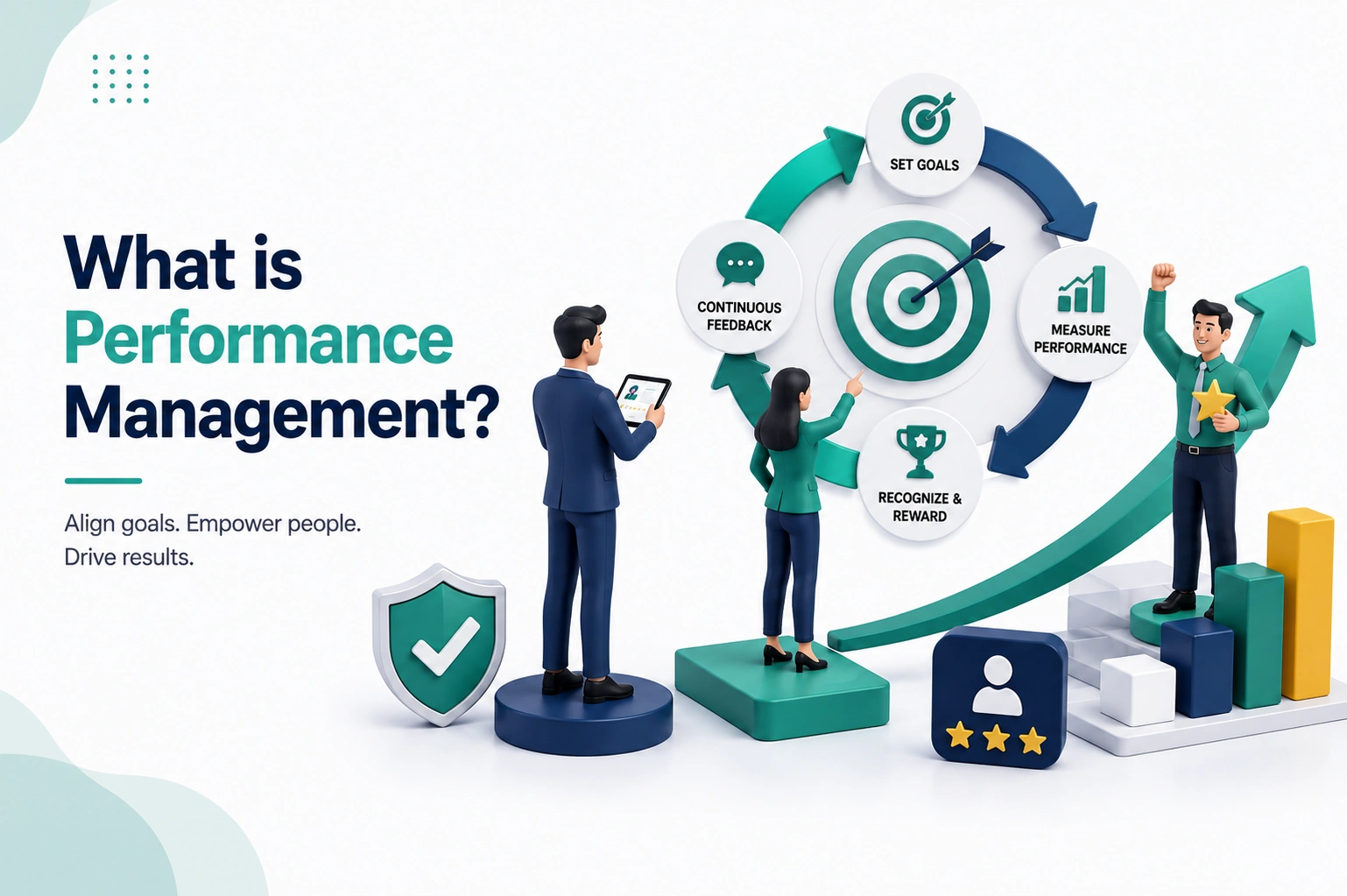
What Is Performance Management?
Performance management is a structured process that helps organizations ensure employees are working efficiently toward business objectives. It involves setting clear goals, monitoring progress, giving feedback, and supporting employee growth. A performance management system (PMS) provides a consistent framework for HR teams to track performance, recognize achievements, and address areas needing improvement. In HRM, the focus is on enhancing individual and team performance to contribute to overall organizational success.
The purpose of this process goes beyond evaluating past performance—it also guides future development. By using methods such as goal setting, appraisals, and continuous feedback, organizations can motivate employees and align their efforts with business priorities. The benefits include higher productivity, improved employee engagement, and more effective workforce planning. Implementing a clear performance management policy fosters a culture of accountability, growth, and organizational success.
Why is Performance Management Important?
A study by Harvard Business Review Analytic Services shows that more than half of business leaders prioritize productivity when investing in performance processes, employee engagement, and career development. However, only 31% saw measurable improvement as a direct outcome. This gap underscores the need for a well-designed and effectively executed performance management system—one that genuinely supports growth, aligns goals, and enhances overall performance.
Key Reasons Why Performance Management Is Crucial
- Employee engagement: Clear expectations and regular feedback boost commitment and involvement.
- Productivity: Continuous dialogue helps employees align efforts with organizational goals, increasing efficiency.
- Professional development: Employees gain clarity on career paths, skills growth, and future opportunities.
- Trust: Open communication fosters understanding and strong relationships between employees and managers.
- Organizational success: A robust performance management process ensures individual performance contributes to key business objectives.
- Training priorities: Regular assessments identify skill gaps, guiding learning and development efforts.
- Retention: Recognizing contributions and supporting growth helps retain top talent.
- Compensation and promotions: Performance insights guide fair pay raises and career advancements.
- Customer satisfaction: Motivated, well-aligned employees deliver better results for customers consistently.
Purpose of Performance Management
- Clarify roles, expectations, and accountabilities
- Align individual and team goals with the company’s vision and mission
- Engage and retain high performers
- Develop employees’ personal and professional growth
- Encourage creativity, agility, and problem-solving
- Motivate employees to achieve their best results
Impact on Employees, Teams, and Organizations
- Employee success: Employees gain clear goals, understand performance expectations, and receive frequent feedback to improve their contributions.
- Team success: Performance management fosters accountability, alignment, and collaboration, helping teams perform at a high level and build positive working relationships.
- Organizational success: When individual and team contributions are aligned with business goals, companies achieve greater transparency, efficiency, and overall growth. A strong performance management process in HRM ensures everyone is working toward a common objective, driving sustainable business success.
How WorkDo’s HRM Enhances Employee Performance
WorkDo’s HRM moves beyond traditional annual appraisals by offering a continuous, collaboration approach to tracking and improving employee performance. Managers can set clear goals, monitor progress in real time, and share ongoing feedback—all within the platform. Employees gain transparency and clarity about how their contributions align with broader organizational goals. This streamlined setup not only reduces administrative work for HR teams but also ensures that performance improvement becomes an ongoing, meaningful process rather than a once-a-year formality.
The software also supports employee development and engagement. With features like 360-degree feedback, KPI tracking, and personalized development plans, employees receive actionable insights to improve their skills and grow professionally. By using WorkDo’s HRM, organizations can build a high-performing workforce, align individual performance with business goals, and foster a culture of continuous learning and improvement.
Performance Management Methods in WorkDo’s HRM
Different methods used to evaluate and guide employee performance play a crucial role in helping organizations strengthen their workforce. A well-structured approach—like the one built into WorkDo’s HRM—connects individual efforts with company goals, improves productivity, and supports continuous growth. WorkDo’s module enhances these processes through automation, clear insights, and smooth connection with the rest of the HR system.
Management by Objectives (MBO)
In MBO, managers and employees set clear, measurable objectives that align with company priorities. Regular check-ins and progress tracking help ensure accountability and motivation. This method improves clarity, focus, and overall performance by aligning individual goals with organizational objectives.
360-Degree Feedback
360-degree feedback gathers input from multiple sources, including managers, peers, subordinates, and sometimes customers. This provides a holistic view of an employee’s strengths and areas for improvement. It reduces bias, promotes fairness, and encourages self-awareness, teamwork, and personal development.
Key Performance Indicators (KPIs)
KPIs are measurable metrics that show how well employees meet their targets. With WorkDo’s HRM, managers can set, track, and evaluate KPIs for each employee. This provides transparency, motivates employees, and helps leaders identify performance trends early, enabling data-driven decisions.
Behaviorally Anchored Rating Scales (BARS)
BARS evaluates employees based on observable behaviors rather than subjective opinions. Each rating is linked to a clear example of actual behavior, making evaluations accurate and fair. This method helps identify skill gaps, supports coaching, and ensures consistency across teams.
Continuous Feedback and Coaching
WorkDo’s HRM encourages ongoing feedback rather than just annual reviews. Managers can provide real-time guidance and coaching, helping employees improve continuously. This strengthens communication, builds trust, and fosters a culture of growth and engagement.
Balanced Scorecard
The Balanced Scorecard evaluates both financial and non-financial performance metrics, including employee development, internal processes, and customer satisfaction. WorkDo’s HRM incorporates these metrics into dashboards and reports, providing leaders with a complete view of individual and organizational performance. This approach promotes alignment, fairness, and ongoing improvement.
Elements of Performance Management
Effective performance management involves several core elements : or building blocks : that together ensure employees are aligned with organizational goals, receive the support they need, and are fairly assessed.
Planning and Goal Setting
The cycle begins with setting clear, measurable, and achievable goals. Employees and managers collaboratively define expectations, priorities, and success criteria. This stage ensures alignment with organizational objectives and provides a roadmap for performance.
Monitoring and Continuous Feedback
Performance is continuously tracked throughout the cycle. Managers provide regular feedback, coaching, and support to help employees stay on course. This stage is critical in performance management in HR, as it helps identify challenges early and reinforce positive behaviors.
Performance Review and Evaluation
At designated intervals, formal reviews assess how well employees have met their goals. Evaluations consider both results and competencies, providing a holistic view of performance. This stage forms the basis for decisions on promotions, compensation, and development needs.
Development and Improvement
Based on feedback and evaluations, employees receive targeted development opportunities, training, or mentoring. This stage ensures continuous skill enhancement and career growth, making performance management in human resources a tool for professional development.
Rewarding and Recognition
High performance is acknowledged through recognition programs, incentives, or career advancement. This motivates employees and reinforces the behaviors and results the organization values.
Cycle Repeats
The insights from one cycle feed into the next. Goals may be updated, expectations refined, and development plans adjusted. This creates a continuous loop of improvement, ensuring employees and teams consistently contribute to business success.
Tips for a better performance management process
When you design and implement performance management in your company, you’ll be more successful if you follow best practices. Remember, many employees want open feedback. They value opportunities to get feedback and learn. The following are areas you might consider as you build your process.
- Align performance with company goals: A significant goal of performance management is ensuring your employees work toward the company’s goals and objectives. You’ll align performance management by analyzing and understanding roles and responsibilities and how they are part of the bigger picture.
- Pursue continuous accountability: Employees should continually be held accountable for their performance, rather than just an annual review. Regular check-ins and feedback sessions can assess qualitative and quantitative performance metrics. Reviews focus on relevant outcomes, actionable interventions, and specific goals rather than a set of formulaic questions.
- Establish excellent communication channels: Performance management should involve excellent communication between managers and employees. This includes giving clear instructions, providing timely feedback, and being open to hearing about concerns or issues.
- Use performance management software: Many software programs can help you with performance management by tracking goals and progress, providing feedback and coaching, and managing employee records.
- Set clear goals: Team and individual goals must be clear, measurable, and achievable to be effective. You’ll also plan goals that align with the company’s overall objectives.
- Incorporate learning and development opportunities: A key to performance management is providing your staff with avenues to improve their skills and knowledge. This can include formal training programs, informal mentoring, and coaching relationships.
What Is the Future of Performance Management?
The future of performance management is moving away from traditional annual reviews and shifting toward a more continuous, people-focused approach. Organizations are adopting flexible systems that encourage real-time feedback, ongoing conversations, and personalized development. Instead of judging employees once a year, companies are focusing on coaching, skill building, and growth throughout the year. This creates a more supportive and high-performing work environment.
Technology will play a major role in shaping the future. Modern performance management tools use data, automation, and AI to track progress, predict performance trends, and provide personalized insights. Employees will benefit from clear goals, better communication, and customized learning paths. Managers will be able to make faster, fairer, and more informed decisions. Overall, the future of performance management is more continuous, transparent, data-driven, and deeply connected to employee well-being and development.
📌 Frequently Asked Questions (FAQs)
We're Here to Help - Let's Talk
Have questions about our solutions, customization services, or business tools? Our team is here to help you. let's talk.