

A Complete Guide to Efficient Payroll Management Systems
A payroll management system automates salaries, taxes, deductions, and accurate reporting.

What Is a Payroll Management System?
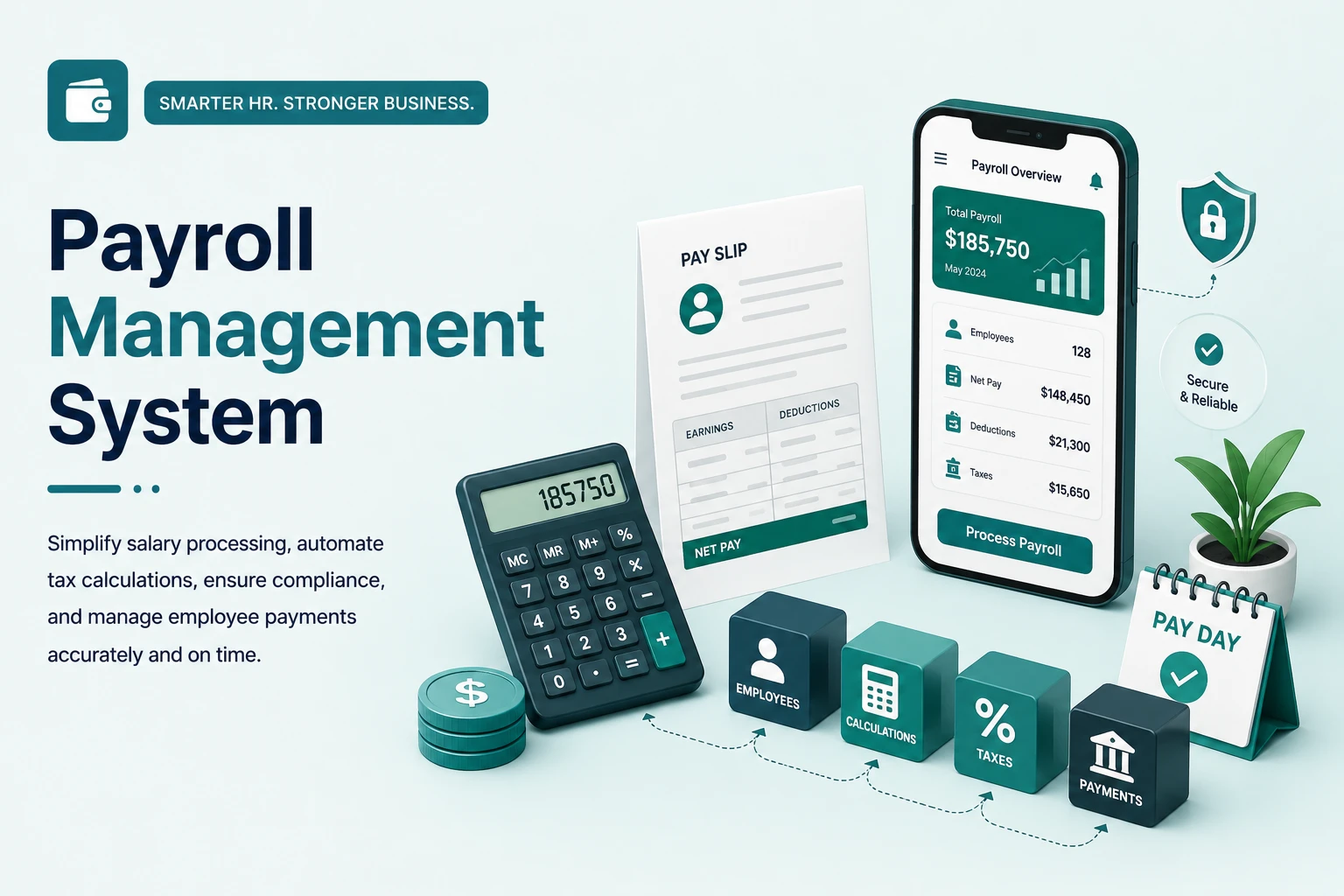
A payroll management system is a digital solution that automates the entire salary process of an organization. It calculates employee wages, taxes, allowances, and deductions accurately while ensuring compliance with legal and organizational policies. Instead of managing payroll manually, businesses use this system to streamline salary calculations, generate payslips, track attendance-linked payments, and maintain financial records.
By centralizing all payroll activities, the system minimizes errors, reduces repetitive manual work, and ensures timely salary distribution. It also connects seamlessly with HR modules like attendance, leave, expenses, and employee data, making the payroll workflow faster, more transparent, and reliable for both HR teams and employees.
The Importance of Efficient Payroll Management
Efficient handling of payroll ensures employees are paid correctly and on time, reducing complications and improving overall organizational stability. Reliable processes also strengthen trust, prevent costly mistakes, and support smoother operations across departments. Several reasons highlight why having a strong payroll system is essential:
- Ensuring accurate payments and maintaining compliance with tax rules and labor regulations
- Supporting financial planning and forecasting through clear and accessible payroll data
- Improving employee morale and engagement with consistent, error-free payments
- Helping create a positive workplace experience by reducing salary-related issues
- Lowering the number of administrative errors in payroll processing
- Being better prepared for audits with organized records and automated reporting
How Payroll Software Makes Employee Payments Faster and Easier
Payroll management systems simplify and automate the entire salary process, ensuring timely, accurate, and transparent payments. Here’s how they help:
- Automated Salary Calculations: The system automatically calculates salaries, including overtime, bonuses, allowances, and deductions, reducing errors and saving time.
- Direct Deposit Payments: Employees receive salaries directly in their bank accounts, eliminating delays and manual interventions.
- Connected with Attendance and Leave: Payroll updates automatically based on employee attendance, leave, and overtime, ensuring accurate payments.
- Tax Compliance: The system calculates and deducts taxes according to current regulations, preventing compliance issues and penalties.
- Employee Self-Service Portal: Employees can access payslips, tax forms, and payment details instantly, reducing HR queries and improving transparency.
- Expense and Reimbursement Management: Reimbursements for travel, lodging, and other expenses are processed seamlessly alongside salaries.
- Custom Reports and Analytics: Payroll reports provide insights into salary trends, costs, and workforce metrics, supporting informed decision-making.
What are the Key Features of the Payroll System?
Not all payroll systems are created equal. Many businesses assume that every payroll software works the same way and often choose one based solely on pricing. This can lead to challenges if the software doesn’t meet the specific needs of the organization. When selecting a payroll system, it is essential to choose one that offers key features and capabilities that align with your business processes and goals.
8 Key Functions of a Payroll System
Time Tracking Feature
A strong payroll system includes a dedicated time-tracking feature that records employee work hours across various schedules. By allowing employees to clock in and out digitally, it removes manual errors and ensures precise salary calculations while improving overall efficiency.
Direct Deposit
With the direct deposit feature, salaries are automatically transferred to employee bank accounts on time, and payslips are instantly generated on the portal. Employees can easily view deductions, tax details, and payment breakdowns without approaching HR for clarification.
Expense Management
Managing reimbursements for travel, lodging, or other employee expenses can be cumbersome. A payroll system with built-in expense management automates expense reports and reimbursement processes. This saves time, reduces errors, and ensures accurate and timely payments.
Compensation Management
Competitive compensation is crucial to attract and retain talent. Payroll systems with compensation management tools allow organizations to plan budgets, allocate bonuses, and reward employees effectively. Built-in analytics help make informed decisions regarding merit-based raises, cost-of-living adjustments, or performance incentives.
Employee Self-Service
Employee self-service portals empower staff to access personal records, leave balances, W-2 forms, and other payroll information independently. This reduces the administrative workload on HR teams and allows them to focus on strategic HR initiatives while employees enjoy transparency and convenience.
Payroll Reports
A good payroll system generates detailed, customizable payroll reports that provide quick insights into salary trends, labor costs, and other metrics. Customizable reports help businesses track essential KPIs, make data-driven decisions, and maintain complete visibility over payroll operations.
Tax Filing
Keeping up with changing tax laws can be challenging. Payroll systems automatically update tax rates, calculate deductions, and generate W-2s or other tax forms. This streamlines the tax filing process, reduces human errors, and ensures full compliance with government regulations.
Payroll Connectivity
Payroll systems can connect with HR software, accounting tools, and other business applications to ensure smooth data flow. This enhances operational efficiency and provides a unified experience for both employees and administrators.
Advantages of an Efficient Payroll Management System
A well-designed payroll management system transforms the way a business handles salary processing by replacing manual work with fast, automated, and error-free operations. It not only ensures accurate payments but also improves compliance, enhances data security, and supports better decision-making. By connecting payroll with other HR modules like attendance, leave, performance, and expenses, it creates a smooth workflow that reduces workload, increases transparency, and helps organizations manage their workforce more efficiently.
Accuracy and Efficiency
A payroll management system ensures precise salary calculations by automating complex processes such as deductions, allowances, taxes, and overtime. This reduces human errors and eliminates the need for time-consuming manual work. By streamlining the entire payroll cycle, the system speeds up processing, improves reliability, and ensures that every payout is delivered correctly and on time.
Saves Time
A payroll management system automates repetitive tasks like salary calculations, tax updates, leave adjustments, and report generation. This reduces manual workload and allows HR teams to complete payroll tasks much faster, giving them more time to focus on strategic and employee-centered activities.
Compliance and Tax Accuracy
The system stays updated with the latest tax laws, statutory requirements, and government regulations. It automatically applies correct tax rates, deductions, and compliance rules, helping businesses avoid costly penalties and ensuring every payroll cycle is legally accurate and audit-ready.
Enhanced Data Security
Payroll data includes sensitive information such as employee details, bank accounts, and salary records. The system protects this information with encryption, role-based access, and secure storage, ensuring that only authorized personnel can view or manage payroll data and reducing the risk of data breaches.
Employee Self-Service
Employees can access their own payslips, tax statements, leave balances, and personal details through a self-service portal. This reduces the dependency on HR for routine queries and gives employees greater transparency and control over their payroll-related information.
Provision of Real-Time Analytics
The system provides real-time insights into salary trends, labor costs, overtime expenses, and workforce management patterns. These analytics help businesses make informed decisions, plan budgets effectively, and identify opportunities to optimize HR and financial strategies.
What Are the Different Methods Used in Payroll Management?
Businesses of all sizes need to manage and maintain accurate payroll to pay employees on time and remain compliant. There are different options as well as benefits and drawbacks to each one. Here are the three main payroll management methods:
Manual Payroll Processing
This method involves calculating salaries, deductions, overtime, and taxes by hand or using spreadsheets. While it works for very small businesses, it is time-consuming and prone to errors, making it difficult to manage as the company grows.
Spreadsheet-Based Payroll
Many businesses use tools like Excel or Google Sheets to organize salary data and perform basic calculations. It offers more structure than manual methods, but still requires manual updates and leaves room for mistakes, especially with changing tax rules.
Outsourced Payroll Services
Companies can hire external payroll providers or accountants to manage salary processing, tax filings, and compliance tasks. This reduces the internal burden on HR but may cost more and offer less control over the process.
Dedicated Payroll Software
Payroll management systems automatically calculate salaries, apply tax rules, generate payslips, and maintain records. This method offers high accuracy, security, and efficiency. It’s ideal for small to large businesses looking for automation and error-free payroll cycles.
Why Your Company Needs a Payroll Management System
Managing payroll manually can be time-consuming, error-prone, and stressful for HR teams. A payroll management system automates salary calculations, deductions, taxes, and bonuses, ensuring employees are paid accurately and on time. It also helps businesses stay compliant with tax laws and statutory regulations, reducing the risk of penalties and errors.
In addition to accuracy, payroll systems save time and improve efficiency by connecting with attendance, leave, and expense management. Employees can access payslips, tax forms, and leave balances through self-service portals, reducing HR queries and improving transparency. Overall, implementing a payroll system streamlines operations, enhances employee satisfaction, and allows HR teams to focus on strategic tasks that support business growth.
📌 Frequently Asked Questions (FAQs)
We're Here to Help - Let's Talk
Have questions about our solutions, customization services, or business tools? Our team is here to help you. let's talk.