

HRMS vs HRIS vs HCM: Understanding the Core Differences
Compare HRMS, HRIS, and HCM to choose the right HR system for your business needs.

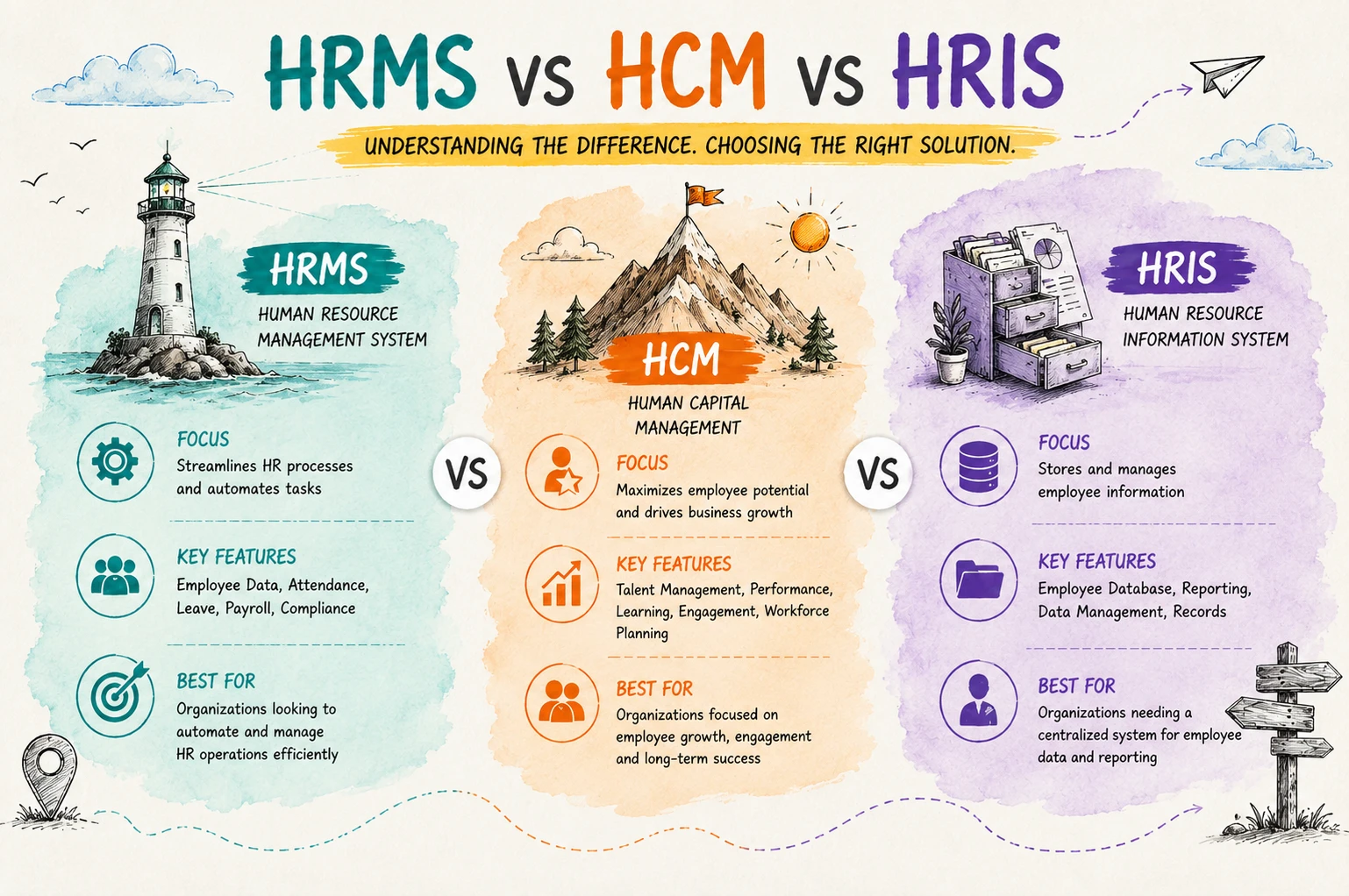
HRIS vs. HRMS vs. HCM — What’s the Difference?
HRIS, HRMS, and HCM form a natural progression in HR technology, starting with basic data management and evolving into full strategic workforce platforms. Different types of definitions have been provided below:
HRIS: Core HR Functions Simplified
HRIS, HRMS, and HCM are three commonly used HR software terms, but each serves a slightly different purpose. A Human Resource Information System is the most basic type, focusing on core HR functions such as storing employee data, processing payroll, tracking attendance, and managing benefits. It is ideal for businesses that need essential HR operations without advanced features.
HRMS: Comprehensive HR Management
HRMS builds on HRIS by adding broader HR capabilities. In addition to core HR tasks, it includes tools for recruitment, performance management, employee training, talent management, and workforce development. HRMS is perfect for companies that want to manage the full employee lifecycle with more automation.
HCM: Strategic Workforce Management
HCM goes one level further by providing a complete, strategic approach to managing the workforce. Along with HRIS and HRMS features, HCM covers workforce planning, succession planning, analytics, employee engagement, and long-term talent strategy. It is typically used by enterprises looking to align HR with business goals.
In simple terms:
- HRIS= Core HR data + payroll + attendance
- HRMS= HRIS + recruitment + performance + talent tools
- HCM = HRMS + strategic planning + analytics + workforce optimization
HRIS vs. HRMS vs. HCM Comparison
| Feature / Aspect | HRIS (Human Resource Information System) | HRMS (Human Resource Management System) | HCM (Human Capital Management) |
|---|---|---|---|
| Primary Focus | Administrative & Data Managing records, numbers, and compliance. |
Operational & Talent Managing the employee lifecycle and efficiency. |
Strategic & Global Optimizing workforce value and long-term planning. |
| Scope | Narrow (Core HR only) | Medium (Core HR + Talent Modules) | Broadest (Full Suite + Strategy) |
| Core Features |
– Employee Database (Directory) – Payroll Processing – Benefits Administration – Time & Attendance – Basic Reporting |
Includes all HRIS features plus: – Recruitment (ATS) – Onboarding – Performance Management – Learning & Development (LMS) – Employee Self-Service |
Includes all HRMS features plus: – Succession Planning – Salary Benchmarking & Comp Planning – Global Compliance (Multi-currency) – Workforce Modeling & Analytics – HR Business Intelligence |
| Primary Goal | Digitize records and automate clerical tasks. | Improve employee engagement and retention. | Drive business value and ROI from the workforce. |
| Target Audience | Small to Mid-sized businesses needing data organization. | Mid-market companies focused on growth and retention. | Enterprise or global organizations needing complex analytics. |
HRIS vs HRMS vs HCM: Which HR Solution Is Right for You?
When choosing an HR platform, knowing the difference between HRIS, HRMS, and HCM is critical. Each serves a different level of business needs. Here’s a breakdown to help you decide which fits your company best:
Choosing the right HR system depends on your company’s size, HR needs, and growth plans. Here’s a simple guide:
Small Business / Startup
- Recommended System: HRIS
- Why: Perfect for managing basic HR tasks like employee data, payroll, attendance, and leave. Affordable, easy to set up, and ideal for small teams.
Growing / Medium-Sized Business
- Recommended System: HRMS
- Why: Adds features beyond HRIS, such as recruitment, performance tracking, and training management. Helps manage the full employee lifecycle efficiently.
Large Enterprise / Fast-Growing Company
- Recommended System: HCM
- Why: Includes advanced capabilities like workforce planning, talent analytics, succession planning, and employee engagement. Aligns HR with long-term business strategy.
HRMS – Best for Growing Businesses Managing Full Employee Lifecycle
As your organization grows and the HR workload expands beyond basic data, HRMS becomes a smarter option. With HRMS, you get everything HRIS offers — plus tools for recruitment, performance evaluations, talent management, training, and employee lifecycle tracking. If you hire frequently, manage multiple roles, or want to automate recruitment to retirement processes, HRMS gives a balanced, automated, and scalable solution.
HRIS – Best for Small to Mid-Size Businesses with Basic Needs
If your business mainly needs to maintain employee records, track attendance, manage payroll and benefits, HRIS is often the most efficient and cost-effective choice. It handles the essentials — personal and employment data, salary details, leave records — and helps keep everything organized without overcomplicating things. For small teams or startups, HRIS offers value with minimal investment and simpler implementation.
HCM – Best for Enterprises Focusing on Strategy, Talent & Long-Term Growth
For larger organizations or companies with complex workforce needs, HCM takes HR management to the strategic level. HCM combines all HRIS + HRMS functions and adds advanced features: workforce planning, talent analytics, succession planning, employee engagement insights, and long-term human resource strategy. If you aim to align HR with overall business growth, nurture talent, and make data-driven workforce decisions, HCM is the ideal solution.
How to Choose the Right HR Technology for Your Business
Choosing the right HR software depends on your company’s size, HR needs, and growth plans. Start by identifying core tasks like payroll, recruitment, performance management, and employee engagement. Small businesses may need an HRIS, medium-sized companies often require an HRMS, and large enterprises usually need HCM software for advanced features.
Consider both current and future needs, ensuring the system can scale with your business. Budget is crucial—factor in setup, subscriptions, training, and maintenance costs. Prioritize ease of use, reliable support, and integration with other tools like payroll and accounting systems. The right HR software should boost efficiency, ensure compliance, and deliver a strong ROI.
📌 Frequently Asked Questions (FAQs)
We're Here to Help - Let's Talk
Have questions about our solutions, customization services, or business tools? Our team is here to help you. let's talk.